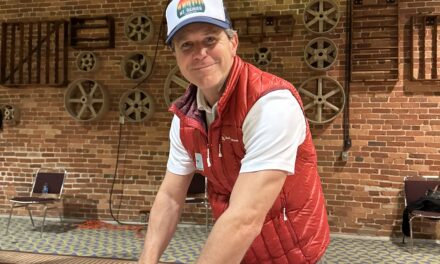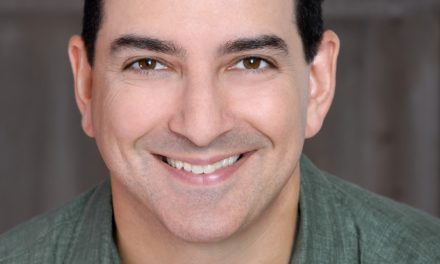
Don Carlos Lee Gibson Jr is an operations leader, golf professional, and author based in Marietta, Ohio. His career has moved through several very different environments, including the U.S. Army, automotive management, resort operations, and golf course leadership. Through each transition, he has built his approach around preparation, discipline, service, and a willingness to keep learning.
Gibson began developing those habits early. Growing up, he played baseball and basketball and ran track at Sullivan South High School. He later served as a Military Intelligence Analyst in the United States Army, an experience that strengthened his ability to study situations carefully and make decisions under pressure.
Golf eventually became one of the strongest threads in his professional life. Gibson studied Golf Operations and Turf Management as well as Teaching and Player Development at the Golf Academy of America. He went on to serve in positions including Head Pro, Player Development leader, Resort Operations Manager, and Senior Director of Operations.
In 2026, Gibson published The Stewardship Standard: A Hospitality Operating System for Private Golf Clubs. The book reflects many of the lessons he has gathered throughout his career. Its central idea is that hospitality should not be treated as one department or one customer service task. Instead, it should shape how an organisation operates, builds culture, and develops lasting relationships.
That philosophy also appears in Gibson’s community work. He has volunteered with Celebrate Recovery, First Tee, mentoring initiatives, Christian faith programs, and KLOVE Radio’s prayer ministry. He continues to study, train, and learn from others while encouraging the same habits in the people around him.
You’ve worked in the military, automotive management, resort operations, and golf. What has helped you adapt to so many different environments?
I think the biggest thing is understanding that the setting changes, but good habits do not change very much. You still have to prepare. You still have to communicate. You still have to understand the people around you.
My experience as a Military Intelligence Analyst taught me to look at the information in front of me before reacting. Golf taught me patience and adjustment. Management taught me that even a strong plan does not work unless people understand it and believe they can execute it.
I have tried to carry lessons from one part of my life into the next instead of treating every career move like I am starting over. A lot of what eventually became The Stewardship Standard came from looking at those experiences together and asking what principles kept showing up.
What inspired you to write The Stewardship Standard?
I kept coming back to the difference between running an operation and actually taking responsibility for what that operation becomes over time.
A lot of organisations are good at customer service. Someone asks for something, you provide it, and the transaction is complete. Hospitality goes further because you are paying attention to how people feel during that experience. Stewardship goes further again because you are thinking about the culture, relationships, and institution you are leaving behind.
In the book, I describe customer service as black and white, hospitality as colour, and stewardship as high definition. Stewardship is where you are looking at the full picture and understanding that details matter.
For private clubs especially, I think that difference is important because you are not simply serving a customer for one afternoon. You are trying to build relationships that can continue for years and sometimes across generations.
Has writing the book changed the way you think about leadership?
Writing forces you to explain what you believe more clearly. You cannot just say, “This is how I lead.” You have to ask why.
One idea I spent a lot of time thinking about was whether a manager is simply responsible for meeting benchmarks or whether the manager is responsible for protecting and strengthening the culture of the organisation.
You can have good retention numbers. Your events can run smoothly. Your operation can look successful on paper. At the same time, people may not feel deeply connected to the organisation.
That is where I started thinking more about stewardship. A manager can keep something functioning. A steward has to think about what is being built and what will remain after that person is gone.
What inspires you to keep pushing yourself professionally?
I believe you have to remain a student. One of the biggest mistakes somebody can make is thinking they have learned enough.
I still take classes and pursue training because somebody always knows something you do not. You can have experience and still learn from the newest person in the room.
Dr. Miles Monroe has also been a major influence on me. His teachings about purpose made me think seriously about using what you have been given instead of simply occupying a position.
I also learned a lot from reading Unreasonable Hospitality. It helped me think more carefully about hospitality as something that can be intentionally built into operations. That idea eventually became part of the foundation for my own book.
How do you help someone become more confident when they are learning something new?
I try not to overload them. In golf, you can give somebody ten corrections on one swing and they will probably leave more confused than when they started. Sometimes the better approach is identifying one thing they can understand and improve immediately. Once they see progress, confidence starts growing.
I think the same thing applies in business. Give people clear expectations. Let them understand why something matters, and then give them enough room to solve part of the problem themselves.
Confidence usually comes from doing. When somebody sees themselves handle a situation successfully, they begin to trust their own judgement more.
Your book breaks hospitality into practical disciplines. Why was it important to make the idea operational instead of simply philosophical?
Because values do not mean much if nobody knows what they look like in practice.
In The Stewardship Standard, I talk about disciplines such as presence, welcome, attention, anticipation, generosity, recovery, and gratitude. Those ideas may sound simple, but the important question is whether they are being practiced consistently.
For example, anticipation means noticing what somebody may need before they have to ask. Recovery is about how you respond when something goes wrong. Gratitude is not only saying thank you. It is creating an environment where people understand that their presence and contribution matter.
If you want hospitality to shape a culture, people need something they can actually practise.
How does golf influence the way you think about leadership and taking risks?
Golf teaches accountability in a very direct way. You hit the shot, you deal with where the ball lands, and then you make the next decision.
You cannot spend the whole round angry about one bad shot. That is a useful lesson for leadership because mistakes are going to happen. The question is what you do next.
Golf also teaches calculated risk. Sometimes the aggressive shot is worth taking. Sometimes the smarter decision is putting yourself in position for the next shot. Business can be similar. Taking a risk does not mean ignoring information. You evaluate the situation and decide what gives you the best opportunity to move forward.
How do you encourage people to bring forward ideas, especially when they may not be confident yet?
People need to know their input matters.
I have dealt with many obstacles by concentrating on the problem, presenting possible solutions, and listening to insight from the team around me. Somebody closer to the daily work may see something the manager has completely missed.
A leader who always needs to be the smartest person in the room eventually limits the room.
I would rather have people bring forward an idea that needs work than create an environment where nobody speaks because they are afraid of being wrong. You can develop an idea. You cannot develop an idea that nobody is willing to share.
You talk about belonging in The Stewardship Standard. Why does that matter in leadership?
Because there is a big difference between someone being satisfied and someone feeling that they belong.
A person may have no complaint about an organisation and still feel no real connection to it. That is important in private clubs, but it also applies to workplaces and communities.
People tend to invest more of themselves when they believe they are part of something. Leaders help create that feeling through consistency, attention, and the way they treat people when nobody is trying to impress anyone.
That is one reason I believe hospitality has to be bigger than customer service. It has to become part of the culture.
What role does your faith play when you face uncertainty or self-doubt?
My relationship with God helps me stay calm and focused.
There are always going to be situations where you do not know exactly what comes next. I have learned that panic usually does not improve the decision. Faith helps me keep perspective and concentrate on what I can actually do.
It also affects how I measure success. I think about whether I am using my abilities well and whether I am treating people the right way while doing it.
What have you learned about motivating a team?
One thing I have learned through golf and resort operations is that every person contributes to the final experience. A member or guest does not necessarily separate the golf operation, food and beverage, outside services, maintenance, or management. They experience the organisation as a whole.
That is why stewardship has to involve everybody. Culture cannot belong only to the general manager.
When people understand how their role affects somebody else, they make better decisions. They also begin to see that even small actions can influence how someone feels about the organisation.
What qualities have mattered most in building your career?
Education, experience, and strong work habits have all mattered. Education gives you tools. Experience teaches you how those tools work in real situations. Work habits determine whether you consistently use what you have learned.
I would add humility to that list now. The longer I have worked, the more I have realised how important it is to know that you do not know everything.
That is also why I keep training and taking classes. Continued growth requires admitting there is still something to learn.
After everything you’ve experienced, what does success mean to you today?
Success is achieving the goals set before you, but I have come to believe the way you reach those goals matters just as much.
Writing The Stewardship Standard made me think even more about legacy. Not legacy in the sense of getting attention, but in asking what condition you leave things in after you have been responsible for them.
Did you strengthen the culture? Did you help somebody become more confident? Did you leave the organisation better prepared? Did people learn something from working with you?
I have managed businesses, worked in golf, served in the military, and volunteered in different communities. The common thread has always been people. If the people I have worked with are stronger, more confident, and better prepared because we crossed paths, that means something to me.
About The Author