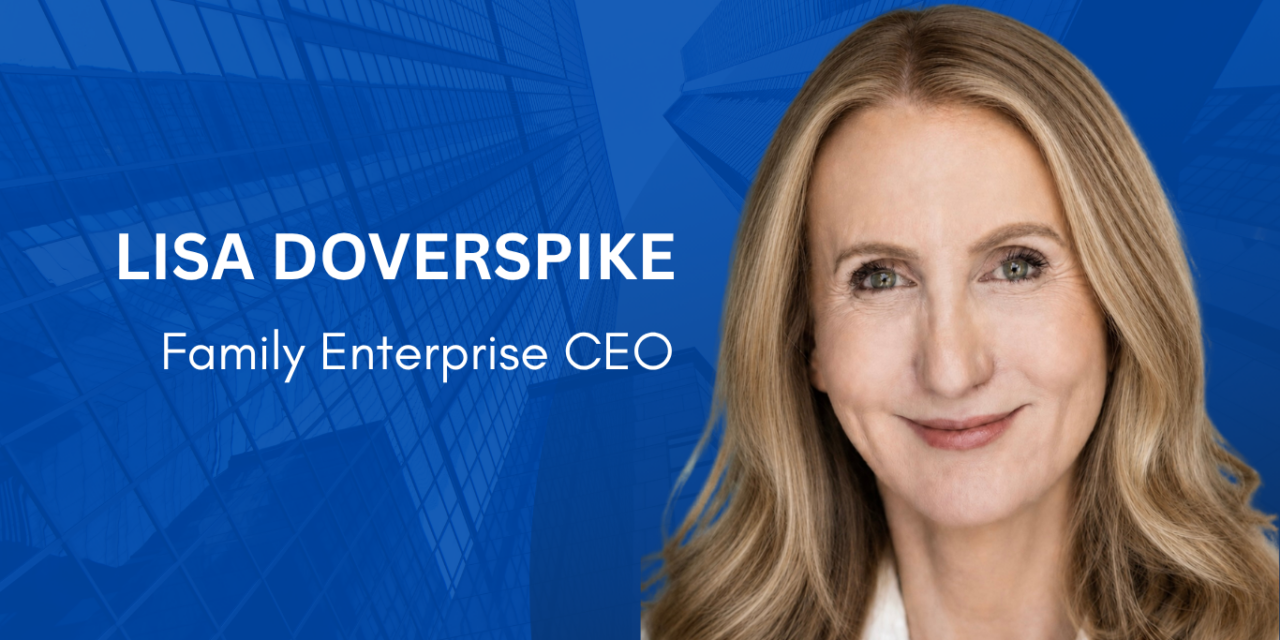
Lisa Doverspike has built her career around helping organizations grow with purpose while remaining financially disciplined, well governed, and prepared for the future. Her experience spans family enterprises, commercial real estate, private equity, digital infrastructure, healthcare, and philanthropy. Across each of those settings, one principle has remained constant: sustainable success comes from pairing strong financial leadership with thoughtful investment in people, culture, and long-term stewardship.
You’ve led organizations through significant growth. What do you believe is the biggest misconception people have about scaling a business?
Growth is often measured by revenue, acquisitions, or headcount, but those numbers tell only part of the story. As an organization grows, so does its complexity. Financial discipline becomes even more important because it creates the foundation for sound decisions and sustainable investment. At the same time, leaders need to strengthen communication, develop future leaders, and build systems that can support what comes next. Lasting growth is about becoming stronger, not simply becoming larger.
How do you maintain focus when you’re overseeing organizations operating in very different industries?
I begin with the organization’s purpose rather than the individual business. While each business has unique priorities, they should all support a common vision and shared values. That gives people the freedom to make decisions that fit their environment while still moving the organization in the same direction. I’ve found that alignment creates far more value than uniformity.
What role does stewardship play in executive leadership?
Stewardship reminds us that every decision has an impact beyond today. Whether we’re allocating capital, developing people, or strengthening an organization, we’re caring for something that will eventually be entrusted to others. That perspective naturally encourages thoughtful investment, responsible governance, and a longer-term view.
You’ve spoken about preserving institutional knowledge. Why is that becoming more important today?
Organizations are evolving faster than ever. Along the way, valuable experience can quietly disappear unless leaders make a deliberate effort to preserve it. Institutional knowledge is more than documentation; it’s the lessons learned, the context behind important decisions, and the relationships that help organizations navigate future challenges with greater confidence.
What qualities do you look for when identifying future leaders?
Technical expertise matters, but I also look for curiosity, accountability, sound judgment, humility, and a genuine desire to keep learning. Some of the strongest leaders I’ve worked with weren’t the loudest voices in the room. They earned trust by listening carefully, asking thoughtful questions, and consistently supporting the people around them.
How has your perspective on leadership changed throughout your career?
Earlier in my career, I thought leadership was largely about having the right answers. Experience gradually taught me that leadership is often about asking better questions. Some of the best decisions I’ve been part of came from respectful conversations where people challenged ideas, listened carefully, and built a stronger solution together. Those moments continue to remind me that curiosity and collaboration are tremendous leadership strengths.
What advice would you give executives trying to build organizations that will succeed for decades?
Think beyond today’s results. Strong financial performance is essential, but enduring organizations also invest in future leaders, healthy cultures, and systems that continue to serve the business as it evolves. The organizations that stand the test of time are built around shared values, disciplined leadership, and people who understand the mission well enough to carry it forward.
What continues to inspire you as a leader after so many years of working with complex organizations?
What continues to inspire me is watching people grow. Seeing someone accept a challenge they once questioned, watching a team solve a difficult problem together, or seeing a long-term vision become reality never loses its meaning. Looking back, those moments stay with me far longer than any individual milestone because they reflect what leadership is ultimately about helping people and organizations become stronger together.
About The Author