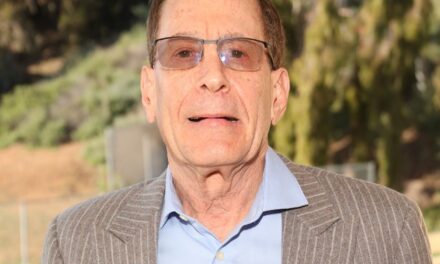
Robert Hoffecker did not begin his hospitality career thinking much about leadership. He was working in guest services, where the lessons were more immediate. A room was not ready. A traveler was frustrated. Someone needed an answer, and Robert had to figure out what to do next.
More than 20 years later, those early experiences still shape the way he works. A Penn State hospitality management graduate, Robert built his career through hotel operations, guest experience, employee development, and tourism partnerships. Along the way, he learned that the person with the biggest title is not always the person with the best answer.
He began paying closer attention to the people doing the work. A housekeeper might notice a problem before a guest does. A maintenance employee may know that a small repair cannot wait. A front desk employee can often tell when a frustrated guest is really worried about something else.
Today, Robert lives in San Juan, Puerto Rico. Living there has also changed how he thinks about hospitality. He sees hotels as part of a much larger community of restaurants, neighborhoods, guides, businesses, and people who shape a visitor’s experience.
Robert tries to give younger employees the confidence to make decisions instead of simply giving them answers. He is also comfortable admitting when he does not know something himself.
Outside of work, sailing, hiking, photography, and exploring Puerto Rico give him time to slow down and pay attention.
Experience has not made Robert certain about everything. In many ways, it has made him more curious.
When you think about the beginning of your career, what inspired you to keep going in hospitality?
I don’t remember having some big moment when I decided hospitality was going to become my career. I started in guest services, and at first I was mostly trying to become good at the job in front of me.
What kept me interested was how much there was to learn. You could have a plan for the day at 8 a.m. and be dealing with something completely different by 8:30. I also started noticing that the people I learned the most from were not necessarily managers. Housekeepers could walk into a room and immediately notice something I had missed. Maintenance employees could hear a strange noise and know we needed to deal with it before it became a real problem. Once I started paying attention, I became much more curious about the whole operation.
What did you misunderstand about leadership when you were younger?
I probably thought good leaders were supposed to have answers quickly. I don’t believe that anymore.
There have been plenty of times when housekeeping told me one thing, the front desk dealt with an unhappy guest, and maintenance explained what was physically possible. Making a fast decision can feel like leadership, but sometimes the better decision is to spend another five minutes listening.
Experience has actually made me more comfortable saying, “I don’t know yet.”
Was there a mistake that changed the way you make decisions?
Earlier in my career, I solved a guest problem quickly and walked away feeling pretty good about it. Later, I found out my solution had created a lot of extra work for another department.
Nobody had done anything wrong. I simply hadn’t asked who else my decision would affect.
That embarrassed me, but it was useful. I started asking one more question before acting whenever time allowed. Who else does this affect? Sometimes the answer changes the entire solution.
How do you help someone become more confident at work?
I try not to rescue people from every uncomfortable decision.
Younger employees have come to me and said, “Do you think we should do this?” After a minute of talking, it becomes obvious they already know what they think should happen. What they are really asking for is permission to trust themselves.
When that happens, I will sometimes turn the question around and ask what they would do if I were not there. You can almost see the conversation change.
Confidence comes from making decisions and discovering that you can handle what happens afterward. That includes occasionally making the wrong decision and learning from it.
Has taking risks been important in your career?
Yes, although most of my risks have not looked particularly dramatic from the outside.
Sometimes the risk was volunteering to handle something I had never handled before. Other times it was accepting responsibility before I felt completely prepared.
There is an uncomfortable stage in your career when you realize nobody will hand you the correct answer. You gather the information you have, listen to people who know more than you about certain parts of the problem, and decide.
I am not sure that feeling ever disappears completely. I actually think that is healthy.
How do you get people to believe in a new idea?
I don’t think you can talk people into believing something forever.
Hospitality has plenty of ideas that sound wonderful in a meeting and become much more complicated when you introduce actual guests, employees, and a busy Saturday afternoon.
I would rather test something small. If we think a new process will solve a recurring problem, let’s try the simplest version and see what happens. Did it actually save time? Did employees use it? Did we accidentally create a new problem somewhere else?
Evidence creates much more confidence than enthusiasm alone.
How has living in Puerto Rico influenced you?
It has made me think more about what happens outside the hotel.
A visitor can have a beautiful room, but when they go home, they may spend just as much time talking about the restaurant someone recommended, the neighborhood they explored, or the person they met along the way.
That changed something for me. I stopped thinking about hospitality as something that ends at the hotel door.
Sometimes good hospitality means encouraging someone to leave the property and experience the surrounding community.
Do your interests outside work affect the way you approach your career?
Probably more than I realized when I was younger.
Sailing is a good example. You can have a plan, but the conditions get a vote. At some point you have to stop being attached to what you intended to do and respond to what is actually happening.
Photography has taught me something different. It makes me pay attention. You start noticing light, expressions, buildings, and ordinary details you would normally walk past.
Both habits are surprisingly useful in hospitality. Pay attention, and don’t become so attached to the plan that you ignore what is happening in front of you.
What do you hope younger people who work with you take away from the experience?
I hope they learn that their judgment matters.
I also hope they notice the people whose work is easy to overlook. Hospitality depends on many people solving small problems before anyone else knows they exist.
If someone eventually becomes a manager, I want them to remember that.
What does success look like to you now?
It looks quieter than I thought it would at 25.
I am less interested in being the person with the answer and more interested in whether the people around me are becoming better at finding answers themselves.
After more than 20 years, I still get things wrong. I still change my mind. I still encounter situations I have never seen before.
I don’t see that as evidence that experience failed me. I think experience taught me to be more comfortable with it.
About The Author