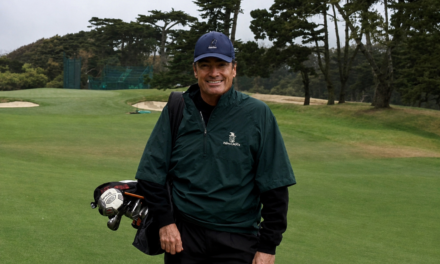
Ali Gillani has built his career around discipline, responsibility, and the belief that success should create stability for more than one person.
Born and raised in Toronto to immigrant parents, Gillani grew up in a close family where hard work, education, faith, and humility were part of everyday life. His father worked in finance and accounting and became an early mentor. His mother helped shape his views on compassion, generosity, and staying grounded.
Gillani later studied Accounting and Business Law at Ryerson University, graduating with honours before earning his accounting license. He went on to establish Soberman Goldstein & Associates, a Toronto-based accounting and advisory firm serving clients in Canada, the United States, and the United Kingdom.
Today, Ali Gillani accountant and entrepreneur, has experience across several industries, including hospitality, healthcare, and international real estate. His approach to business has changed over time. Earlier in his career, he was more focused on growth and opportunity. Experience taught him that expansion without the right systems can put pressure on the people and processes supporting it.
That lesson continues to shape the way he leads, invests, mentors others, and approaches philanthropy through the Truman Foundation. In this conversation, Gillani shares what has influenced his thinking, how he approaches risk, why consistency matters in leadership, and what he has learned from building across different industries.
When you think about the people who shaped you, who comes to mind first?
My parents. They came to Canada looking for opportunity and stability, and I watched them build a life through discipline and sacrifice. My father worked in finance and accounting, so he was my first real mentor in business. He taught me to respect numbers, understand responsibility, and think long term.
My mother taught me something equally important. She emphasized humility, generosity, and keeping family close. Those two influences still shape how I make decisions today.
What gave you the confidence to start your own accounting firm?
I do not think it started as confidence. It was more a willingness to take responsibility.
I had studied accounting and business law, earned my accounting license, and knew I wanted to build something around clear standards. Starting Soberman Goldstein & Associates meant understanding that the final responsibility would come back to me.
That pressure helped me become more disciplined. It also taught me that leadership is not about having every answer. It is about creating clear expectations, making careful decisions, and making sure people can rely on the work being done.
Has your view of risk changed over time?
Completely. Earlier in my career, I sometimes looked at an opportunity mainly through the upside.
As I became involved in more businesses, I learned that growth can move faster than the systems supporting it. There was a period when I accepted too much at once. Communication became more difficult. Small delays appeared. Operations became harder to manage.
Nothing major had to happen for me to understand the lesson. I could see that if I kept pushing at the same pace, quality would eventually suffer.
Now I spend more time asking whether the structure, people, and processes are ready before taking on something new.
How do you inspire confidence in an idea without overselling it?
I try to give people something concrete to work with.
I have never believed that enthusiasm alone is enough. People tend to feel more confident when they understand the plan, the numbers, the risks, and what is expected next.
We see this often in accounting. A business may be generating strong revenue but still lack clear reporting or reliable financial processes. Instead of talking about how large the company could become, we start by organizing the basics.
Once people have a clearer picture of where they stand, they are usually in a better position to make decisions with confidence.
What has entrepreneurship taught you that accounting could not?
Accounting helps you understand what has already happened. Entrepreneurship forces you to make decisions about what should happen next.
Working across restaurants, healthcare, real estate, and professional services has shown me that each industry has different challenges. But many of the fundamentals are the same.
Cash flow matters. Timing matters. People matter. Systems matter.
One of the biggest lessons has been learning not to confuse being busy with making progress. You can have a full schedule and still be spending time on things that are not moving the business in the right direction.
You seem more willing to say no to opportunities now. Why?
I have learned that every new opportunity requires time, attention, and capacity.
Earlier in my career, I thought ambition meant taking every strong opportunity seriously. Now I am much more selective.
If a client wants speed at the expense of accuracy, or if a project exceeds our current capacity, saying no can be the responsible decision. I would rather protect the quality of the work we are already doing than take on something that creates unnecessary pressure.
What inspires you when you need perspective?
Faith, family, exercise, reading, and conversations with people who have more experience than I do.
I also try not to make every important decision immediately. Sometimes I will review a problem, step away from it, and come back later after exercising or spending time with family.
That distance helps. Something can feel urgent in the moment when it really is not. Giving myself time to think usually leads to a better decision.
How do you try to set an example for the people around you?
Consistency is probably the biggest thing.
People notice whether you follow through. They notice whether your standards change when things become stressful. I try to make expectations clear and then hold myself to the same expectations.
I do not think leadership requires being the loudest person in the room. I think people gain confidence when they know someone will show up, stay calm, make a careful decision, and take responsibility when something does not go as planned.
What do you hope younger professionals take from your experience?
One thing I would tell younger professionals is that there is no need to rush into every opportunity at the same time.
There is a lot of pressure to move quickly. You see people launching businesses, expanding, investing, and announcing new projects. It can make patience feel like you are falling behind.
I think it is better to develop strong habits and become dependable first. Learn your work. Keep your promises. Ask questions. Take opportunities, but understand what they require from you.
I still consider myself a student in many ways. The more industries and markets I experience, the more I realize how much there is left to learn.
Has having a family changed the way you define success?
Yes. It made the long term much more real. I want my children to have opportunities, but I also want them to understand where those opportunities came from. Discipline, responsibility, faith, and family matter more to me than simply leaving behind financial assets.
Success means being able to support the people you care about, spend meaningful time with them, and still do work that has value.
If professional achievement consistently takes you away from the things that matter most, then I think it is worth reconsidering how you are approaching success.
How does philanthropy fit into that view of success?
I see it as part of responsibility. Through the Truman Foundation, the focus includes humanitarian relief, poverty reduction, empowerment, and long-term development. I am interested in support that can help create stability over time, not only respond to an immediate need.
My business experience has made me think a lot about sustainability and planning. I try to bring the same thinking to philanthropy by asking whether a project can create meaningful value beyond the short term.
The goal is to help in a way that respects people and gives them a stronger foundation for the future.
What keeps you motivated now?
At this stage, I am more focused on ensuring the businesses and projects I am involved with are stable, well managed, and useful over the long term.
That applies to Soberman Goldstein & Associates, the other businesses I am involved with, and the Truman Foundation. I have learned that growth on its own is not enough. There has to be structure behind it, and the people involved need to be able to manage that growth responsibly.
Earlier in my career, I was more likely to focus on the opportunity in front of me. Today, I spend more time thinking about whether something fits with my existing responsibilities and whether it can be supported properly.
I am still motivated by growth, but I think about it differently now. I want to keep learning, make sound decisions, and ensure the work I do has a positive effect on the people connected to it.
About The Author