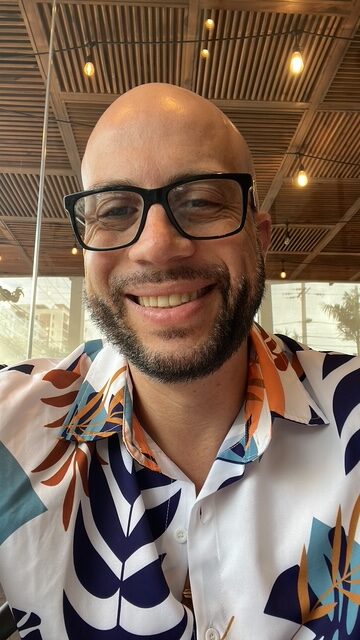
Andres Ruocco grew up in Caracas, Venezuela, where his father introduced him to fitness during early Sunday hikes up the hills. He trained in karate, played soccer daily, and developed a lasting love for movement and discipline. But after high school, life felt uncertain. So, Andres made a bold move—he joined the U.S. Army.
Serving in South Korea and Iraq, Andres learned how to push through discomfort and lead with purpose. That structure stuck with him. After completing his service, he spent years in education sales and veteran support, helping others navigate the VA system. He found joy in helping people feel seen and supported.
During the pandemic, Andres reconnected with the one thing that always grounded him: fitness. He trained hard, became a certified personal trainer and nutrition coach, and went back to school to earn a degree in Sports and Health Sciences.
Now based in Miami, he works with clients of all backgrounds—especially veterans—helping them find strength and confidence through consistency, not hype. He’s a believer in small daily actions: a walk, a check-in, a moment of clarity.
Andres doesn’t call himself a leader, but people watch what he does. From overcoming uncertainty to reshaping his future with discipline and empathy, his story quietly reminds others that change is always possible—even when the path isn’t clear.
Q&A on inspiration, confidence, and success
Q: What inspires you on a daily basis?
Honestly, it’s the people I work with. Veterans trying to rebuild their routines. Clients showing up even when it’s hard. I’ve been in those places—lost, burned out, unsure what’s next. Seeing others try, especially when they don’t feel like it, reminds me that effort is always worth something.
Q: Where do you find inspiration when you’re not feeling motivated?
Discipline has taught me to not rely on motivation. In the Army, you didn’t get to say, “I’m not in the mood today.” You just did the work. When I feel stuck, I move—walk, train, breathe. Action clears my head. Afterward, the clarity comes.
Q: How do you help others feel inspired or confident in themselves?
I listen. That sounds simple, but a lot of people just want to be heard—especially veterans. When I worked at Trajector Medical, I realized many guys didn’t just need help with paperwork. They needed someone who understood where they were mentally. The same goes for fitness coaching. I ask about their goals, but I also ask why those goals matter. Confidence comes from being seen, not just told what to do.
Q: How do you build confidence in your own ideas or decisions?
I look back. I remind myself what I’ve already overcome—basic training, deployment, working jobs that didn’t fulfill me, returning to school later in life. If I got through all that, I can figure out the next step. I also break goals down. Big ideas become manageable when you focus on the next move, not the whole mountain.
Q: What’s something that changed how you view success?
I used to think success meant having everything figured out. Now I see it as showing up consistently. One of my biggest failures was dropping out of college the first time. I didn’t know what I wanted or who I was. Years later, I went back with purpose, and now I’m finishing my degree in Sports and Health Sciences. Same classroom, totally different mindset. That taught me timing and identity matter more than status.
Q: What risk are you glad you took?
Joining the Army. It was completely against my parents’ wishes, and I didn’t know what would happen. But it gave me structure, confidence, and clarity. It shaped the way I handle pressure and adapt to change.
Q: What advice would you give someone afraid to take a leap—whether in business, fitness, or life?
Don’t wait for it to feel perfect. Start where you are. Pick one thing. For me, it was walking again during the pandemic—just a few blocks a day. That led to heavier training, then certifications, then starting my coaching career. You don’t need a perfect plan, just enough momentum to get moving.
Q: How do you define success now?
When someone I’ve worked with tells me they feel stronger—not just physically, but in life. That means the routines stuck. That they’re doing better. That’s the kind of result that doesn’t show up in a photo, but you feel it.
About The Author