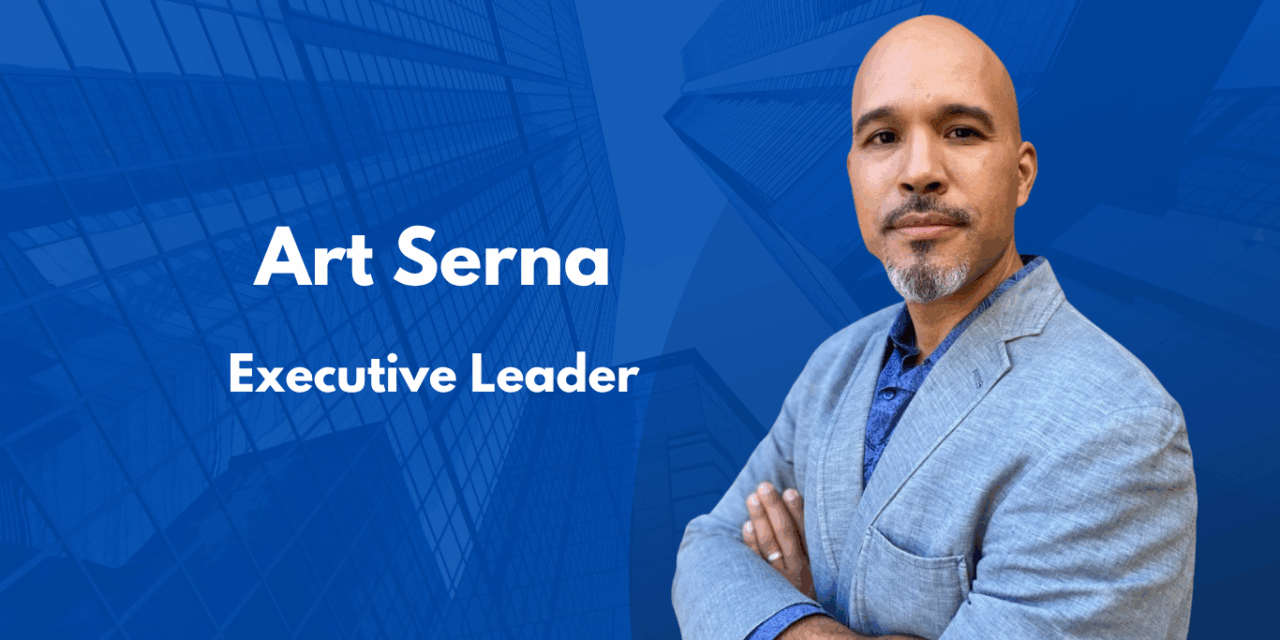
Art Serna is an executive leader, storyteller, and systems innovation strategist known for transforming how organizations approach social impact and human development. With over twenty years of cross-sector experience, his work spans government, nonprofit, and private sectors, where he has guided institutions toward models of equity, collaboration, and regenerative growth. As the former CEO of City on a Hill in Milwaukee, Art expanded access to medical, behavioral, and dental care for underserved residents while managing multimillion-dollar community initiatives.
Earlier, with Teach For America, he helped secure $9.5 million in state investment to strengthen teacher and educational leadership pipelines serving more than 14,000 students daily. His career began in public service, where he improved efficiency and accountability within Texas state systems. Today, Art is the founder of Cosmos Renewed, a Milwaukee-based design and strategy studio helping leaders, philanthropists, and mission-driven organizations reimagine what is possible in times of complexity. The firm focuses on regenerative health systems, community well-being, and personalized learning by blending foresight, executive coaching, and ecosystem design. A first-generation college graduate and bilingual communicator, Art brings a rare combination of analytical rigor and creative empathy to his work. His leadership continues to inspire collaboration, unlock investment, and guide others toward building systems that restore dignity and expand opportunity for all.
What first inspired you to see leadership not just as management, but as a tool for human and community renewal?
My inspiration came from seeing how leadership can either deepen inequity or unlock potential. As a first-generation college student, I saw communities full of talent but limited by outdated systems. I learned that leadership is not about control, it is about creating the conditions for others to grow. Renewal begins when we move from managing problems to nurturing possibilities. I have always been drawn to that intersection where vision meets compassion. Leadership, to me, is sacred work. It is about restoring dignity and building spaces where people can flourish.
Was there a specific experience or mentor early in your journey who shaped how you approach impact and inclusion today?
During my AmeriCorps service, I worked with families struggling to break the cycle of poverty. That experience changed how I saw leadership and service. I realized that inclusion is not just about inviting people to the table; it’s also about creating an environment where everyone feels welcome. It is about redesigning the table entirely. Later, mentors taught me that empathy is a form of strategy. They showed me that transformation begins with listening, not instruction. Those lessons followed me into every organization I served. Systems change only happens when we see people as partners in progress, not as problems to solve.
What have you learned about human nature when people and teams face deep change?
Change often brings fear, but it also reveals courage. I have learned that people do not resist change as much as they resist loss. When teams feel seen and supported, they can move from anxiety to ownership. In moments of disruption, I focus on helping others reconnect with their sense of meaning. Systems change is not mechanical. It is emotional and relational. When people see their role in a larger story, they begin to lead from within. I have witnessed remarkable growth when people realize the future can emerge through them.
What challenges did you face aligning mission with measurable outcomes at City on a Hill?
At City on a Hill, we were addressing complex community needs that ranged from healthcare to housing. The challenge was finding ways to measure impact without losing humanity. Data told part of the story, but listening completed it. We sought to build frameworks that honored both. Expanding medical and behavioral services required striking a balance between compassion and accountability. We managed large budgets while staying faithful to purpose. The key was integration. Over time, we designed better systems that were transparent, effective, and caring. That balance between structure and heart defined our progress.
How do you balance big-picture vision with the practical realities of implementation?
Vision without execution is imagination. Execution without vision becomes repetition. I begin with clarity, focusing on the reason behind the goal before choosing the method. I then invite those closest to the challenge to co-create the plan. They bring insight that grounds the vision in reality. I value experimentation over perfection. Systems evolve through iteration and reflection. The goal is not to have all the answers but to create shared momentum. Transformation becomes possible when vision is translated into a shared language that guides daily actions.
What patterns do you see repeating across government, nonprofit, and private sectors when it comes to innovation and resistance?
Every sector struggles with fear. The government fears risk. Nonprofits fear losing funding. Companies fear losing their reputation. Innovation requires reimagining failure as learning. Many systems built for stability collapse when conditions change. What I have learned is that change happens through relationships, not hierarchies. Cross-sector trust is the missing foundation of progress. Whether in a boardroom or a community meeting, the principle remains the same. People commit deeply when they feel a sense of ownership in the mission. Real innovation begins with shared trust and the courage to take risks.
Was there a turning point when you began viewing challenges through a systems lens?
That shift happened while I worked at the Texas Department of Family and Protective Services. I saw how programs operated in isolation and created waste. Everyone worked hard, but their efforts lacked a sense of connection. That experience made me realize that real improvement depends on relationships and transparency, not volume. A systems lens allows us to see the entire network of actions, incentives, and feedback. Since that time, my goal has been to design systems that renew rather than react. Seeing the whole picture brings wisdom and humility to leadership.
How do policy influence and community engagement inform each other in your approach to transformation?
Policy creates structure, but community gives it meaning. Without lived experience, policy becomes distant and abstract. Without policy, passion cannot scale. My approach is to connect both. I begin with stories from the community, then translate them into systems and strategies. When I worked to secure investment for Teach For America, the focus was not only on funding teachers but also on supporting their professional development. It was on shaping environments where they could thrive. True transformation occurs when policy reflects the authentic voices of those affected. The closer we listen to people, the stronger our systems become.
What have you learned about the relationship between resources, trust, and long-term equity?
Resources are essential, but trust multiplies their effect. I have seen significant amounts of funding pass through systems with little result because trust was missing. Equity begins with honest relationships. It grows when people believe they are working toward a shared purpose. Trust turns resources into movement rather than friction. Building equity takes time, patience, and accountability. It also requires staying the course when progress slows. We often focus on innovation, but what sustains change is the consistency of trust over time.
What does “regeneration” mean to you personally, and how does it differ from reform or innovation?
Reform repairs. Regeneration renews. To me, regeneration means restoring systems to a state of balance and vitality. It is not about fixing broken parts. It is about helping the whole ecosystem thrive again. At Cosmos Renewed, we help leaders design systems that foster healing and growth. Innovation often focuses on efficiency or novelty. Regeneration asks more profound questions about harmony, meaning, and sustainability. It connects people with purpose and aligns progress with the essence of life itself. For me, regeneration is hope put into practice through design and collaboration.
How do you help executives stay centered and visionary amid uncertainty?
I remind them that clarity is not the same as certainty. Uncertainty is part of leadership. What matters is remaining anchored in purpose. I use coaching and systems tools to help leaders reconnect with their deeper motivations. When they understand their reason for leading, their decisions become more focused, even in the midst of chaos. I also teach foresight thinking. It helps them see patterns before they become crises. The best leaders do not try to predict one future. They prepare for many. Curiosity keeps them grounded and adaptable.
How does storytelling function as a tool for systems change?
Stories bring emotion to information and give direction to action. Every system has an underlying narrative that defines who matters and who holds the power to decide. Storytelling helps us rewrite those narratives. I have used stories to unite partners from very different fields. Facts influence thought, but stories influence identity. When people see themselves as part of a larger story, they begin to act differently. My work combines strategy with narrative because truth requires language that resonates with the heart. Change starts when people feel they belong in the story.
How do you measure success when progress is not always visible or immediate?
I measure success by alignment. When people, purpose, and results move in the same direction, that is progress. Some outcomes are clear, like funding milestones or policy wins. Others are quiet, like when trust is rebuilt or a team starts to believe again. Both matter equally. Systems change takes time. Growth often happens before it can be measured. I remind my teams that roots grow before branches appear. The unseen work supports the visible results. Real progress is often quiet before it becomes clear to everyone.
How do your experiences in communities like Milwaukee and Austin shape your view of national conversations on equity?
Working in local settings keeps me grounded in reality. Milwaukee and Austin have taught me that each community has its own rhythm and resilience. National discussions often overlook these differences. True equity must fit the local context. In some areas, faith groups play a vital role in holding communities together. In others, small business owners drive renewal. I begin by listening to what is already strong. National systems should learn from that local wisdom. Justice cannot be copied from one place to another. It must grow from the ground up.
What drives you most today? Is it the transformation of systems, the empowerment of people, or the evolution of your own leadership?
All three inspire me, and they feed each other. Systems cannot change without people, and people grow when systems provide them with opportunities to lead. Early in my career, I focused on results and efficiency. Now I focus on meaning and growth. My work at Cosmos Renewed is both external and internal. Every project teaches me something new about leadership and humanity. What drives me now is legacy. I want to help build systems that allow the next generation to live with freedom, creativity, and wholeness.
About The Author