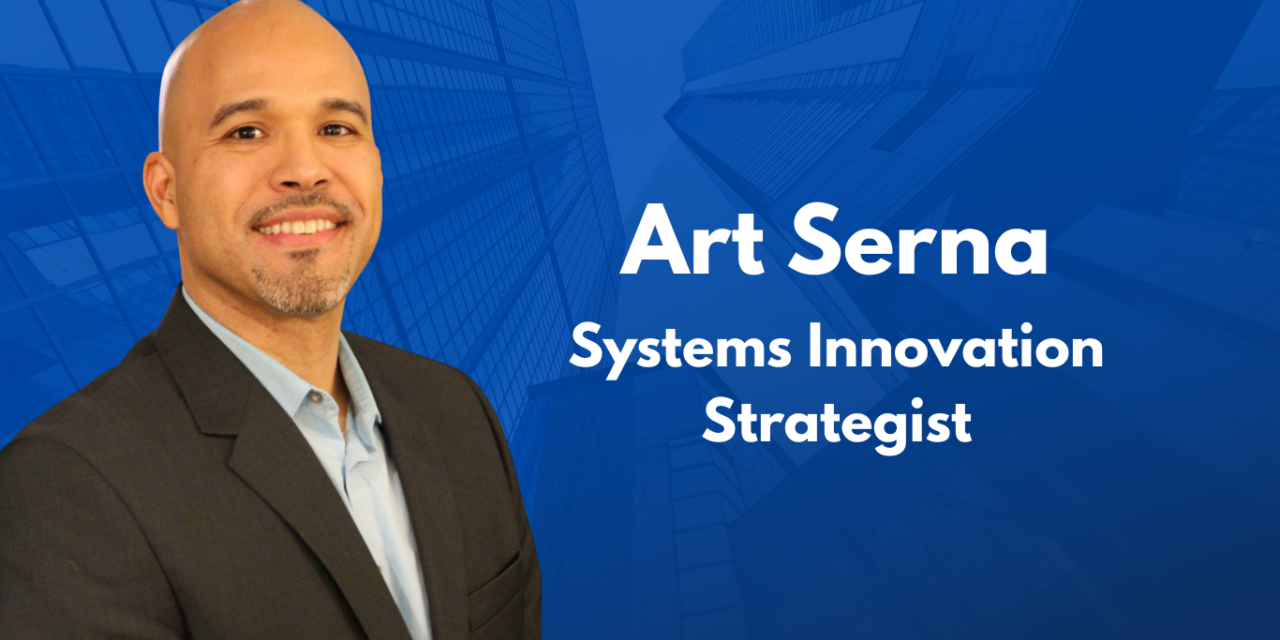
Art Serna is an executive leader, storyteller, and systems innovation strategist who has dedicated his career to strengthening community well-being and transforming how institutions serve people. His work spans more than twenty years across government, nonprofit, and private sectors. He is known for designing approaches that restore dignity, expand opportunity, and support long-term societal growth.
Art began his career in public service, where he focused on improving efficiency and accountability in Texas state systems. These early experiences shaped his belief that meaningful change must reach the structural level. He later joined Teach For America, where he helped secure 9.5 million dollars in state investment to strengthen teacher pipelines that serve thousands of students each year. As CEO of City on a Hill in Milwaukee, he expanded access to medical, behavioral, and dental care for underserved families while guiding multimillion-dollar community initiatives. Today, Art is the founder of Cosmos Renewed, a design and strategy studio based in Milwaukee. The firm helps leaders, philanthropists, and mission-driven organizations imagine new possibilities in times of uncertainty. Cosmos Renewed focuses on regenerative health systems, personalized learning, and community well-being.
Art blends foresight, human-centered design, and executive coaching to help institutions move from outdated models to systems that support healing, resilience, and shared prosperity. A first-generation college graduate and bilingual communicator, Art brings both analytical rigor and deep empathy to his work. His leadership continues to inspire collaboration and unlock pathways for lasting transformation.
How did your early exposure to inequity and public service influence your belief that systems must be redesigned rather than simply repaired, and what continues to drive your passion for this work today?
My early exposure to inequity made me aware of how deeply systems shape people’s opportunities. I saw students, families, and workers who were committed and capable yet still limited by structures they did not control. This experience made it clear to me that repairing systems is not enough. When systems are built on outdated assumptions, they continue to produce unequal outcomes even when we add new programs. In public service, I observed how rigid procedures and unclear responsibilities created frustration and removed dignity from everyday interactions. These moments stayed with me. They taught me that true progress requires redesigning systems so they support people rather than constrain them. Over time, this belief became central to my leadership approach. Today, I remain motivated by the possibility of building systems that restore dignity, create opportunity, and invite collaboration. I am driven by the idea that transformation is possible when we listen deeply and design with intention. This purpose guides my work in every sector and continues to inspire me every day.
You have worked across government, nonprofit, and private sectors. How has operating at these different levels influenced your philosophy on systems innovation and community well-being?
Working across different sectors taught me that no single group can solve major challenges alone. Each sector brings a different strength. Government brings scale. Nonprofits bring deep trust. Businesses bring speed and efficiency. I also learned that each one operates with real limits. These limits often slow progress when groups work in isolation. When I saw these patterns, I began to see systems innovation as a shared responsibility. I learned that transformation requires new relationships and steady collaboration. It must also include communities as partners. These experiences helped shape my belief that true community well-being grows when people, institutions, and ideas come together with a shared purpose.
At City on a Hill, you led initiatives that expanded medical, behavioral, and dental care for underserved families. What did that experience teach you about the relationship between community trust and sustainable impact?
My time at City on a Hill taught me that trust is the foundation of every sustainable outcome. Families engage when they feel respected. They remain involved when they feel seen and heard. Expanding care required more than adding services or new facilities. It required consistent presence and deep listening. It required honest conversations about needs and fears. I learned that sustainable impact grows when community members help shape the decisions that affect them. They become not only receivers of care but co-creators of solutions. This partnership builds hope and confidence. It also strengthens programs so they can last through change and uncertainty.
You often emphasize “regenerative growth” rather than traditional programmatic solutions. How do you explain the difference, and why do you believe regenerative models are essential in this era of social and economic complexity?
Regenerative growth focuses on restoring the conditions people need to thrive. It asks how systems can support long-term strength. It goes deeper than fixing a single problem. Traditional programs often focus on the immediate symptom. They may help in the moment but not shift the system that creates the problem. Regenerative work asks larger questions. It looks for root causes. It builds capacity within communities and institutions. Our world is changing at a fast pace, and many old approaches cannot keep up with this level of complexity. Regenerative models help people grow stronger from within. They honor well-being and create results that last far beyond a project timeline.
Many leaders struggle to move from transactional problem-solving to more profound systemic transformation. What cultural or structural barriers have you seen, and how do you help organizations overcome them?
I often see a strong focus on short-term results. Many teams feel pressure to show quick progress. This pressure keeps them from exploring deeper solutions. I also see structures that keep departments apart. These structures make collaboration difficult. They limit imagination and creativity. I guide organizations to slow down and reflect. I help them name the assumptions that guide their work. I encourage open discussion about old habits that no longer serve the mission. I also help teams build shared leadership practices. These practices create safety for new ideas to emerge. When leaders feel supported, fundamental transformation becomes possible. This process takes time, but it creates lasting change.
Teach For America was a pivotal moment in your career, especially securing the 9.5 million dollar state investment. What did that experience teach you about designing narratives that mobilize policymakers and stakeholders around shared purpose?
That experience taught me that people act when they understand meaning. Policymakers respond to stories that show real outcomes for families and students. They want to see how their support can shape the future. My team created a narrative that connected the teacher pipeline to opportunity for thousands of students. We showed the long-term value of the investment for the state. We used clear stories that people could imagine. When people saw their own role in the vision, they supported it. I learned that honest communication can bring unity. It also builds confidence and shared purpose among very different groups.
As a strategist who blends foresight and design thinking, how do you help leaders operate confidently in uncertainty, especially when traditional planning models no longer apply?
I begin by reminding leaders that uncertainty is a natural part of modern life. I encourage them to see it not as a threat but as a signal that new possibilities exist. Foresight helps leaders notice patterns in society and the economy. It opens space for creative thinking about different futures. Design thinking gives leaders tools to test ideas in small steps before making large commitments. These methods help leaders feel more grounded. They also build confidence because leaders gain flexibility. They learn to respond with curiosity. They learn to adjust quickly when conditions change. This approach supports clarity during uncertain times.
Cosmos Renewed focuses on regenerative health systems and personalized learning. What trends or shifts are you seeing that make these areas especially ready for breakthrough innovation?
I see a growing desire for systems that recognize the whole person, especially in the K-12 and youth development sector. People want care that honors emotional, cultural, and physical needs. They want learning experiences that recognize their strengths. They want approaches that reflect the diversity of lived experiences. New research and recent technologies make these ideas possible. Communities also want more voice in decision-making. They want to shape the systems that affect their daily lives. These shifts create space for bold experimentation. They open the door to solutions that feel human, supportive, and adaptable. These conditions make this moment ready for real breakthrough innovation.
Collaboration is a theme throughout your career. What qualities do you prioritize when building mission-aligned teams, and how do you cultivate a culture where creativity and accountability reinforce each other?
I look for people who care deeply about others. I value curiosity because it opens the door to discovery. I value patience because change takes time. I also value honesty because trust grows through truth. Mission-aligned teams thrive when there is respect. I create spaces where people feel safe to share ideas. I also make expectations clear so accountability is strong. When people feel respected, they take creative risks. When they feel guided, they act with purpose and discipline. This balance allows teams to work with both heart and focus. It creates cultures where promising ideas can grow.
You are known for combining analytical rigor with storytelling. How do you translate complex system dynamics into narratives that move communities, boards, or investors toward action?
I begin with stories from real people. These stories help listeners see the human experience behind the data. I then explain the system in simple steps. I avoid complicated language. I give examples that people recognize from their own lives. I use visuals when they support understanding. My goal is to create clarity, not to remove detail. When people understand the system, they begin to see their role within it. They know how their decisions can shape outcomes. A strong narrative invites people to act. It also creates shared responsibility for the future.
Large-scale change often requires bringing together actors who have competing interests or historical tensions. What approaches have you found effective for fostering authentic cross-sector alignment?
I begin by creating honest conversations. I invite people to share what they value. I encourage open discussion about concerns and fears. I help groups see where their goals overlap. I use co-design sessions so people can build ideas together. This reduces tension because people shift from defending positions to creating solutions. I keep the process transparent. I make sure every voice is included. Alignment grows when people feel heard and respected. It builds trust among groups that once felt distant from each other. This foundation allows for genuine partnership and long-term cooperation.
As a first-generation college graduate and bilingual communicator, how have your personal experiences shaped your understanding of equity, dignity, and human-centered leadership?
My personal story taught me that opportunity is not evenly distributed. I saw how systems can limit people even when they work extremely hard. These experiences taught me that equity requires more than kind words. It requires structural change. My journey also taught me that dignity must guide every decision. People deserve respect in every system that serves them. My background shaped my commitment to lift the voices of people who are often unseen. It taught me to lead with empathy. It also taught me to build solutions that honor culture, identity, and human experience.
Many communities face fatigue from repeated interventions that do not create lasting improvement. How do regenerative approaches help communities shift from program dependency to empowerment and agency?
Regenerative approaches begin by noticing strengths that already exist in the community. They ask people to define their own goals rather than fit into someone else’s plan. This shift helps people move from recipients to partners. It creates ownership and confidence. Over time, people gain skills to solve challenges in their own way. They begin to trust their own capacity. Programs become tools, not lifelines. This builds independence. It also builds pride. Regeneration helps communities grow from the inside out. It creates change that is steady, local, and lasting.
What urgent challenges do social impact institutions face today, and how should leaders rethink their roles to meet these challenges with courage and imagination?
Many institutions face rising complexity. They also face limited resources and declining trust from the communities they serve. These conditions create real pressure. They make old methods less effective. Leaders must rethink their roles in response. They must move from managing programs to shaping ecosystems. They must invite more voices into decisions. They must measure success through deeper forms of impact. Courage helps leaders try new approaches. Imagination helps them design solutions that match today’s realities. These qualities build systems that stay strong through uncertainty.
You mentor emerging leaders across sectors. What guidance do you offer to those who want to build careers rooted in equity, systems thinking, and long-term societal transformation?
I tell emerging leaders to begin with purpose. This work requires steady commitment. I encourage them to learn from many fields. Systems work crosses disciplines. I ask them to listen more than they speak. Communities carry wisdom that books cannot offer. I tell them to seek mentors who help them grow with honesty. I also remind them to stay humble. Systems change takes patience. It asks for empathy and courage. When leaders stay grounded in strong values, they create lasting impact. They also build trust with the people they serve.
Looking ahead, what gives you hope about the future of community well-being, and what continues to motivate you personally in this work of reimagining what is possible?
I find hope in the creativity and strength of communities. I meet people who want to build better futures for their families. I see leaders who are willing to change old patterns. These signs tell me that transformation is possible. I am motivated by the chance to support this work. Each project allows me to help restore dignity and possibility. I believe that systems can heal. I also believe that people can create new futures when they work together. These beliefs give me energy. They remind me why this work matters every day.
About The Author