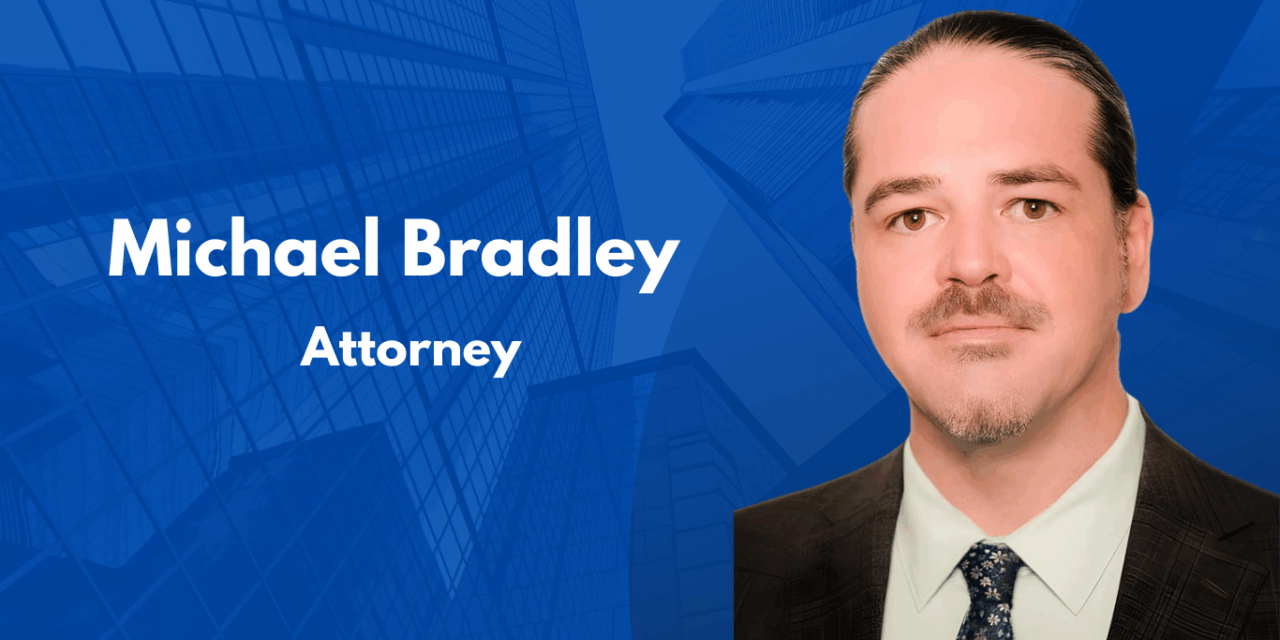
Attorney Michael Bradley is a seasoned Louisiana attorney with nearly two decades of experience advocating for justice across the state. Based in Covington and Franklinton, he has built a trusted legal practice focused on criminal defense, family law, personal injury, and parole advocacy. Bradley began his career as a public defender, where he quickly earned distinction for achieving one of the highest plea-to-dismissal ratios in Louisiana. Since entering private practice, he has continued to fight for individuals and families facing life-altering legal challenges, earning recognition as St. Tammany West’s Favorite Attorney and inclusion among the nation’s elite trial lawyers. Beyond the courtroom, Bradley is a leader in local justice reform. He co-founded and currently chairs the Criminal Division of the 22nd Judicial District Bar Association, where he promotes ethical standards, mentorship, and systemic improvements. Known for his sharp legal insight, strategic thinking, and deep empathy, Bradley combines a results-driven approach with a commitment to fairness and dignity. His clients consistently praise his honesty, preparation, and unwavering support. Whether defending the accused or advocating for injured clients, Bradley remains focused on making the legal system more efficient, compassionate, and accountable. With every case, he ensures that justice is not just a principle, but a lived experience for those he serves.
What first inspired you to pursue a legal career rooted in advocacy and justice reform, particularly in Louisiana’s criminal justice system?
I was drawn to a career in law after witnessing how unfair the system could be for ordinary people. Growing up in Louisiana, I saw injustice treated as normal. That troubled me. When I began as a public defender, I realized how many individuals lacked basic representation. That pushed me to act. I could not fix everything, but I could stand beside those who felt powerless. That experience opened my eyes to the need for more profound change. Over time, this work grew into a mission. I became committed to making the legal system more just and accessible.
In your early work as a public defender, what was one case or moment that left a lasting impression on your approach to law and justice?
One case that stuck with me involved a young man falsely accused of a felony. He had been in jail for months without trial. When I took the case, we found evidence that proved his innocence. The charges were dismissed. That moment changed my view of justice. It showed how quickly a life can fall apart without help. This was not a big headline case. It was quiet and human. That experience reminded me that law is not just about statutes. It is about standing up for people and helping them find a way forward.
Your work spans criminal defense, family law, and injury cases. What have you learned about the human condition from seeing clients at their most vulnerable moments?
I have learned that people can be resilient even in their darkest moments. Whether they are going through a custody battle or recovering from an injury, they often feel scared and alone. These moments reveal their pain but also their courage. I try to listen more than I speak. Understanding their stories helps me advocate better. The law is not just about rules. It is about the real lives behind those rules. Every case teaches me that people want to be seen and heard. That connection is what makes my work meaningful.
As someone deeply involved in parole advocacy and systemic reform, what challenges have you faced trying to push for fairness within an often rigid legal structure?
The most complex challenge is breaking old habits within the legal system. Many judges and attorneys are used to doing things a certain way. Change can be slow. People still believe that being tough on crime always equals justice. I disagree with that. I work to shift those beliefs by sharing facts and personal stories. Reform takes patience and courage. It requires steady work, not just big moments. I have found allies over time. Together, we build support for a system that values fairness. Each small step forward keeps me going.
How has your role as co-founder and chair of the Criminal Division of the 22nd Judicial District Bar Association shaped your broader vision for reforming Louisiana’s justice system?
Serving in that role gave me a wider view of the system. It showed me how many professionals care deeply about fairness. We created programs to support young lawyers and improve legal education. I began working across boundaries with judges and prosecutors. That collaboration led to better ideas. It also reminded me that change requires teamwork. The legal system can evolve when people listen and act together. My work with the Bar Association strengthened my belief in long-term reform. It gave me tools to build a better, more just legal culture from the inside.
Looking back, was there a pivotal moment—perhaps in a courtroom or during client preparation—that crystallized the importance of your work and its impact on families and communities?
There was a case involving a teenage boy facing serious charges. His mother was afraid he would be lost in the system. We worked hard and found a better path for him. The court agreed to a treatment-based program. Years later, I got a letter from his mother. Her son had graduated and started working to help others. That letter meant more to me than any award. It showed that one case can change a life. The law should protect people’s futures. That belief has stayed with me ever since.
Your legal career is defined by fighting for the underrepresented. How do you stay grounded and motivated when the system resists change?
I stay grounded by focusing on one client at a time. The legal system can feel heavy, but each person matters. I remember why I started this work. I also have a strong support system. Family, friends, and colleagues remind me to keep going. Small wins matter, too. A dismissed charge or a fair custody agreement can make a big difference. Change does not always come fast. But steady effort leads to real progress. That belief keeps me motivated even when things feel stuck.
What parallels do you see between your clients’ struggles today and those you encountered earlier in your career as a public defender? How have those parallels evolved—or not?
Many of the same problems still exist. Poverty, lack of legal knowledge, and racial bias continue to affect people. As a public defender, I saw how hard it was for clients to trust the system. That has not changed much. What has improved is public awareness. People talk more about fairness now. There is more support for change. But in rural areas, many still fall through the cracks. I have more experience now. That helps me fight smarter. But the work is far from done.
As someone who’s earned professional accolades and client praise, how do you balance public recognition with the personal responsibility of representing real lives in court?
Awards are nice, but they are not my focus. Every client comes to me in a moment of crisis. That is what matters most. I take that trust seriously. Recognizing in the legal community means I must work even harder to live up to expectations. I prepare carefully. I speak honestly with my clients. I put in the time. This job is not about attention. It is about service. I balance recognition by staying committed to the basics, showing up, listening, and doing my best daily.
In a legal system often defined by procedure and precedent, how do you bring a human-centered approach to your practice?
I begin by treating every client with respect. I ask questions and take the time to hear their full story. People are not just case files. They are individuals with real problems and emotions. I work to explain the law in simple terms. That helps them feel more in control. I present their humanity in court, not just the legal facts. This approach builds trust and improves outcomes. A human-centered practice means staying connected to people, not just to processes.
What do you hope younger attorneys—especially those entering the field with reform in mind—take away from your journey and work in Louisiana?
I hope they understand that real change comes from consistency. Young lawyers should focus on doing the work with honesty and care. Reform does not happen overnight. It takes time, learning, and listening. I want them to know that every case matters. It is easy to get caught up in politics or big-picture goals. However, true reform begins with how you treat your clients. That respect builds momentum. I also hope they remain humble. Law is a craft that always requires growth. Stay curious and stay kind.
You’ve spoken about making the legal system more efficient and equitable. Can you share an initiative or reform effort you’re particularly proud of?
One effort I am proud of is helping create a faster process for early parole review. We saw that people were staying in jail for far too long for nonviolent offenses. That was a waste of lives and resources. Our group pushed for a pilot program to speed up hearings. We worked with local leaders and reentry specialists. The results were strong. More people were released with support, and fewer returned to jail. This reform proved that small changes can make a big difference. These kinds of improvements help restore fairness in the system.
In an era where trust in institutions is waning, how do you help clients feel heard and supported, especially when facing overwhelming odds?
I am present and honest. I return calls and answer questions. That builds trust. Clients often feel ignored or judged. I ensure they know I see them as people, not just problems to solve. I do not promise perfect outcomes, but I promise effort. That effort includes careful preparation and real advocacy. When people feel respected, they open up. That helps us work better together. Trust is built through action, not words. Every small step matters when someone feels overwhelmed.
How does your work in rural Louisiana—specifically Covington and Franklinton—inform your understanding of justice at a local level, compared to national narratives?
Working in small towns shows me how personal justice can be. Everyone knows each other. That can create both opportunity and bias. Resources are limited, so people often go without help. National conversations do not always apply to local life. In Covington and Franklinton, we see the impact of poverty, addiction, and broken systems up close. I focus on real solutions that fit our community. That might mean working with churches, local groups, or families. Justice has to be tailored. It cannot be one-size-fits-all.
What drives you today: the courtroom victories, the policy changes, or the lives changed along the way? And has that changed since you first started practicing law?
At first, I was driven by courtroom success. Winning cases felt like proof I was making a difference. That still matters, but my focus has changed. Now, I care more about the lives I help shape. Seeing someone rebuild after a case or reunite with family means more than any verdict. Policy changes are also significant. They create long-term impact. But the personal stories stay with me. They are what fuel me. This shift has made my work more rewarding. I now see justice as a journey, not just a goal.
About The Author