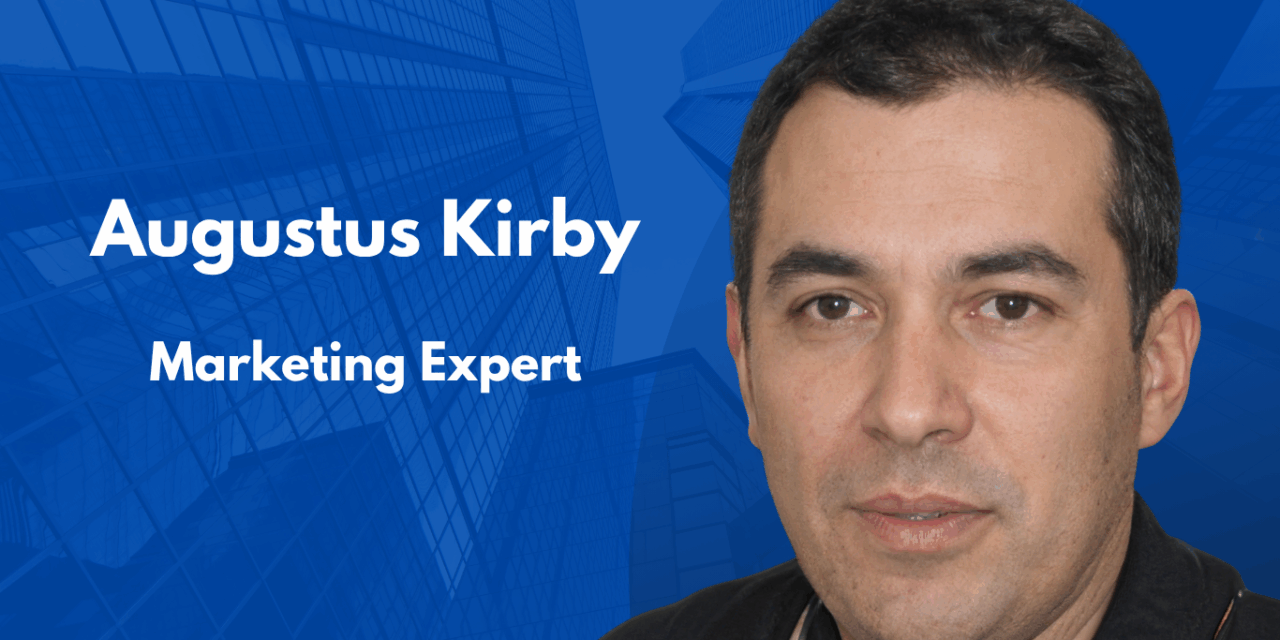
Augustus Kirby of New York is a marketing strategist known for blending data-driven innovation with ethical branding. With over a decade of experience, including six years in executive leadership, he has guided businesses through the complexities of digital transformation using AI-powered personalization, automation, and predictive analytics. His work has consistently led to measurable growth, improved customer retention, and smarter marketing spend across diverse industries. Kirby is particularly respected for making advanced strategies accessible to clients, translating complex systems into actionable insights.
His approach prioritizes clarity, transparency, and long-term trust, positioning him as a thought leader in a fast-moving landscape increasingly shaped by technology and consumer skepticism. His expertise spans programmatic advertising, audience segmentation, sentiment analysis, and data privacy, areas where precision and integrity must go hand in hand.
Kirby’s commitment to ethical marketing has made him a trusted advisor to both startups and established brands looking to scale responsibly. Beyond his professional achievements, Augustus Kirby of NYC is an avid kayaker who competes nationally and internationally. He is also deeply committed to philanthropy, supporting initiatives that provide educational access and digital tools for underserved youth. Whether in boardrooms, classrooms, or on the water, New York’s Augustus Kirby brings the same bold, thoughtful energy, driven by a belief that the future belongs to those who innovate with purpose and principle.
What first inspired you to pursue a career in marketing?
I’ve always been intrigued by the intersection of data, psychology, and storytelling. Early on, I realized that marketing allowed me to merge those interests in a way that felt purposeful. Understanding what drives people, and then using technology to meet them where they are, fascinated me. I wasn’t interested in guesswork, I wanted measurable impact. Marketing gave me a way to be creative with structure and intention. Over time, that passion evolved into helping brands grow in ways that are both strategic and ethical. That blend of logic and creativity continues to inspire my work every day.
What’s changed the most in marketing since you started your career?
The biggest shift has been the acceleration of technology and the expectations it creates. When I began, digital strategies were largely siloed. Now, with AI and automation, marketing is dynamic and continuous. Personalization, once a luxury, is now a baseline expectation. Brands need to anticipate behavior, not just react to it. At the same time, there’s more skepticism among consumers. People want transparency and authenticity. What hasn’t changed is the need to understand your audience. Tools have evolved, but the fundamentals, trust, clarity, and relevance, are still the backbone of effective marketing. Technology amplifies; it doesn’t replace.
Clients say you’re especially good at demystifying complex strategies. How do you approach that?
I believe clarity leads to confidence. Many businesses feel overwhelmed by buzzwords or evolving tools like machine learning or programmatic ads. My job is to translate those concepts into practical, actionable strategies. I avoid jargon and focus on what each element does and why it matters to their goals. I also prioritize visual frameworks, roadmaps, timelines, and flowcharts, to simplify the journey. When clients understand not just what’s happening, but how and why, they’re empowered to make better decisions. It’s not about showing off expertise, it’s about aligning vision with execution in a way that makes sense to everyone.
You’re known for your focus on ethical branding. Why is that central to your work?
Ethical branding isn’t just a moral stance, it’s a strategic imperative. Consumers today are informed and vigilant. They know when a brand is cutting corners or using data irresponsibly. I help clients see that trust and transparency are business assets. When you align your marketing with your values, you build long-term loyalty. Ethics guide everything I recommend, from consent-based data collection to honest storytelling. It’s not about perfection, it’s about consistency and integrity. I want the brands I work with to succeed in ways that are sustainable, responsible, and respected. That’s the foundation of modern marketing leadership.
You also mentor young marketers and support youth education programs. What motivates that involvement?
I believe in creating pathways for others, especially those who don’t have access to traditional opportunities. Early mentorship shaped my own career, so I pay that forward. Whether it’s through workshops, speaking at schools, or funding tech resources for underprivileged students, I see education as empowerment. The marketing world can be opaque from the outside. I want to demystify it, especially for those from diverse backgrounds. If one conversation or one opportunity helps someone discover their voice and future, it’s worth it. Community engagement isn’t a side project, it’s integrated into how I define success.
How do you balance consulting, mentoring, and personal life?
I treat balance as an intentional habit, not a fixed state. I build structure into my week to protect time for the things that recharge me, kayaking, travel, reading, and time offline. Those aren’t indulgences; they’re part of how I stay sharp. I’ve learned that creativity and clarity come from being grounded. If I’m constantly running, I’m not thinking deeply or showing up with presence. That balance also allows me to be fully invested when I’m working with clients or mentoring. It’s about managing energy, not just time. Living well helps me lead well, and I don’t separate the two.
What’s the one thing you want clients and consumers to understand about modern marketing?
Marketing today is not about pushing products, it’s about building relationships. Success comes from delivering value, listening to your audience, and evolving with them. That requires tools like AI and analytics, but also empathy and intuition. Brands that succeed are the ones that communicate clearly, act with integrity, and respond to real human needs. Personalization is powerful, but only when it’s paired with purpose. I want clients to see marketing as a conversation, not a broadcast. Done right, it’s a force for connection, trust, and growth. The future belongs to brands that understand that distinction, and live by it.
About The Author