Gen LaGreca is an award-winning executive producer, film writer, and novelist. Her writings offer innovative plots and themes that inspire freedom and personal achievement. Her most recent movie Noble Vision has won over two dozen film-festival awards. Her four novels have won thirteen literary awards, garnered praise from magazine magnate Steve Forbes, Nobel laureate Milton Friedman, Past President of the American Medical Association Edward Annis, and others.
She has written the stage play adaptations of two of her novels, Just the Truth and Noble Vision. Her commentaries have appeared in Forbes, The Orange County Register, Real Clear Markets, and other publications.
LaGreca is the founder and president of Winged Victory Foundation Inc. The charitable 501(c)3 organization’s mission is to communicate and champion the ideas of freedom through the magic of storytelling and the arts.
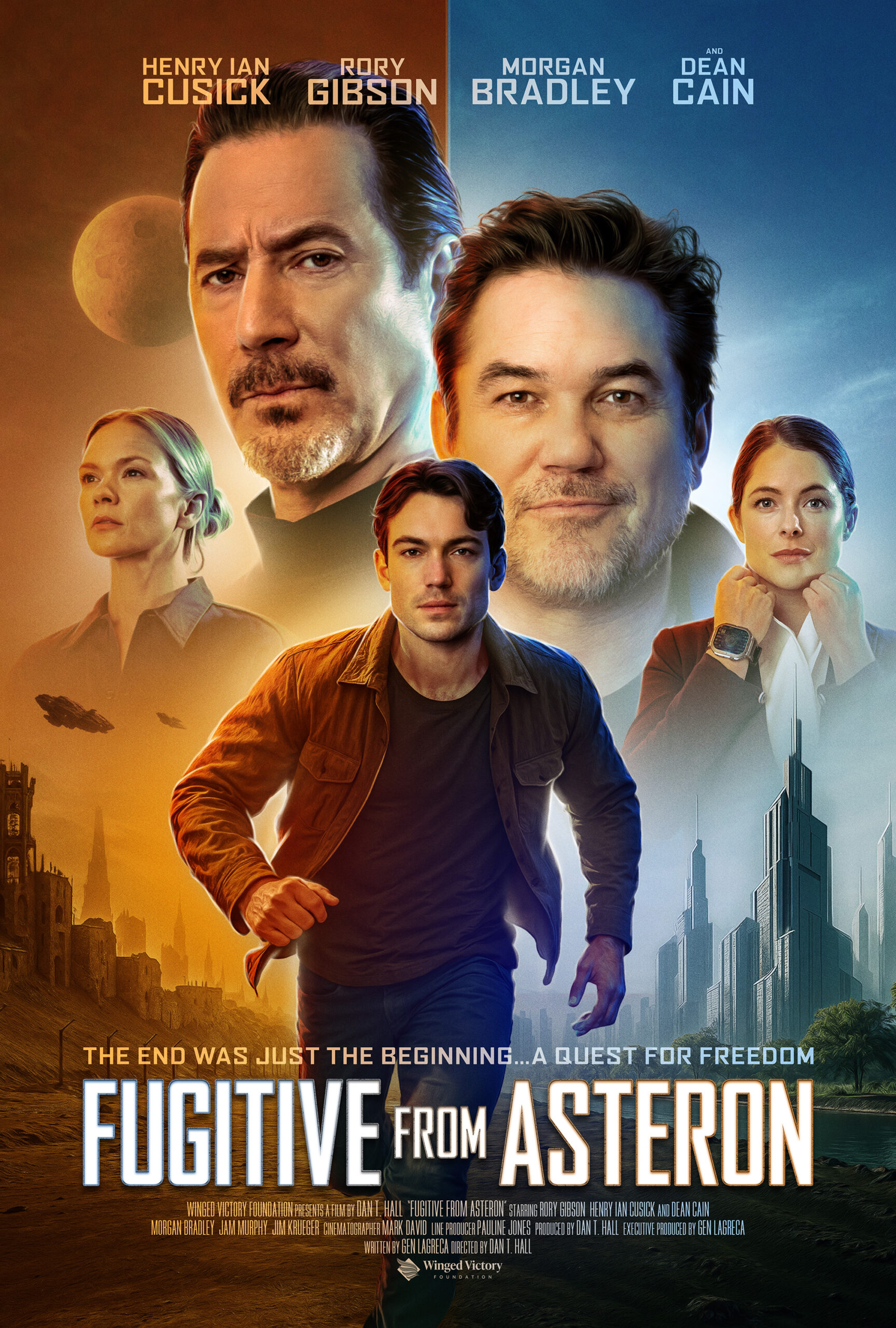
LaGreca’s latest film, the highly anticipated sci-fi drama Fugitive from Asteron, adapted from her award-winning novel, stars Henry Ian Cusick (Lost, MacGyver, The 100), Rory Gibson (The Young and the Restless), Morgan Bradley (American Skyjacker), and Dean Cain (Lois & Clark: The New Adventures of Superman).
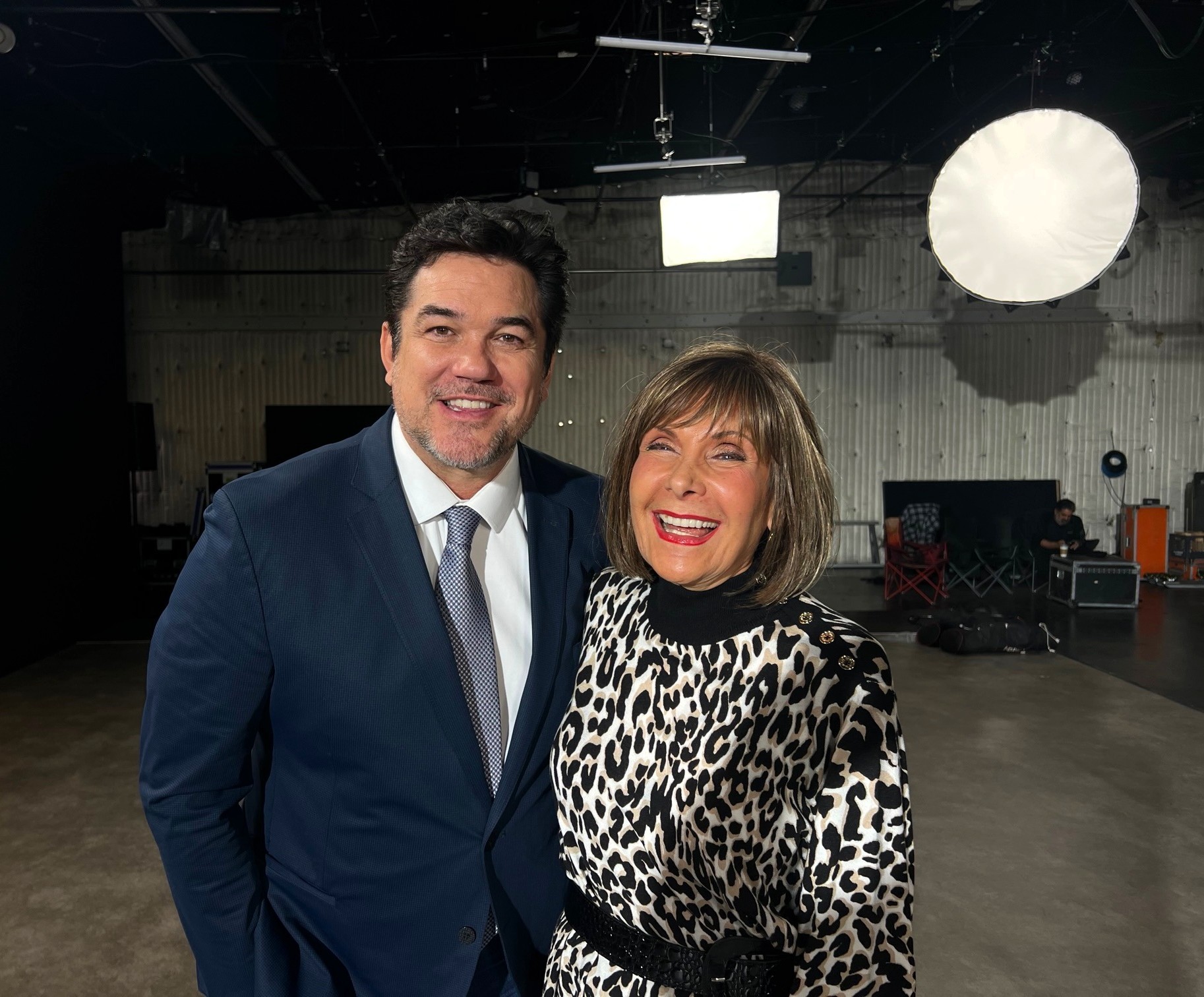
Dean Cain, Gen LaGreca
Trailer: Asteron Trailer on Vimeo
Jam Murphy (Through the Modern Looking Glass) and Jim Krueger (writer, Mortal Kombat: Shaolin Monks) round out the all-star cast. Paul Ruddy is the film’s casting director. The film’s cinematographer is Mark David (American Cowslip) and line producer is Pauline Jones (Jurassic Domination). Directed by Dan T. Hall (Noble Vision, Greek Fire – Demon Spirit) and executive produced by Winged Victory Foundation, the film, currently in its final stages of post-production, was shot in both Southern California and Central Indiana.
In Fugitive from Asteron, young pilot Arial (Gibson) escapes from the oppressive Planet Asteron by stealing the spacecraft of the ruler, Feran (Cusick). With a mysterious cargo on board, Arial lands on the future Earth and adopts a new name, Alexander. Feran hotly pursues him for the cargo, a powerful, new instrument that is a vital part of Feran’s secret plans for Earth. Alexander allies with pilot Kristin Merrett (Bradley) to unravel the cargo’s nature and confront an urgent threat that jeopardizes Earth and all he holds dear. The story weaves together adventure, romance, and mystery, as Alexander embarks on a quest to save the Earth and an inner journey to discover freedom, human happiness, and the pursuit of a life worth living. Cain plays Mykronie Whitman, the head of the Interplanetary Travel Division at Merrett Aerospace Systems, who escaped from Planet Asteron 25 years ago.
We had the opportunity to speak with LaGreca about the new film.
Fugitive from Asteron is adapted from your award-winning novel. What was it like translating a story you originally created on the page to the screen?
It was thrilling to see the characters and the world that I created come alive! The story went from words on paper to flesh-and-blood people in real settings. I wrote the screenplay to be true to the novel, so what I see on the screen is the same story I created in words.
Writing the screenplay for the novel required judicious cutting. I had to identify the most essential elements of the story and stick to them. For example, as the protagonist is hunted down by the villain, I had to show an incident or two of this and the hero’s narrow escape, rather than show more incidents that were in the novel. So, essentializing the story is very important.
Also, multiple scenes in the same setting in the novel had to be condensed where possible. For example, two separate scenes in a spacecraft had to be condensed into one, with the important information given in the two scenes now presented in the one scene.
Also, learning the skill of “show, not tell,” was vital in transforming the novel into the film. For example, the film opens with the lead character lying in a jail cell in chains with bruises from a beating. This took a few paragraphs to describe in the novel, but the camera just pans over him, and you have him and his situation shown in seconds.
It was exciting to learn the craft of screenwriting, as opposed to novel-writing, and an absolute thrill to see the cinematic expression of my story.
The film mixes science fiction, romance, and philosophical drama. How did you strike the balance between thrilling entertainment and deeper moral or human themes?
The key to mixing the philosophy, which are the moral and political ideas, or any ideas into a story, is to embed them in the plot. For example, take the evils of a dictatorship. Take a classic movie that depicts a dictatorship’s cruelty to people, Dr. Zhivago. A character in that story comments, the personal life is dead. That’s the thematic idea, namely, that the individual has no life outside of serving the collective, and it’s embedded in the plot action, as Dr. Zhivago’s family home is being raided, looted, and expropriated by the new government.
That’s how it works in Fugitive from Asteron. An important theme is the discovery of a personal life in a free world. That’s shown through a young pilot who lives in a controlled society all his life and who escapes to a free world. For example, it’s a cute scene when he discovers cheesecake for the first time. He’s never had tasty food and menu choices on the starving world he came from. He eats so much cheesecake that he gets a stomachache.
The story centers on a young pilot escaping an oppressive world to find freedom on Earth. What inspired this particular vision of freedom — and how do you hope audiences connect with it?
The young pilot discovers as an adult the kind of things we’ve known our entire lives and take for granted. This calls our conscious attention to the great enrichment of our lives that freedom brings. For example, on the future Earth, our young refugee discovers for the first time that he can choose his own individualized clothing, his own job, and his own partner, and he can live without guards constantly watching him. All of that was missing from the controlled world of Asteron. It makes us appreciate how precious freedom is and how much we need to protect it.
Henry Ian Cusick and Rory Gibson lead a strong international cast. How did you approach casting, and what qualities were you seeking in the actors who portray Arial/Alexander and Feran?
Our casting director, Paul Ruddy, did a fantastic job and gave us a very talented cast.
Rory Gibson plays our hero, Arial, who hides his identity under the name of Alexander when he escapes to Earth. He’s had an abused life that’s resulted in an inner struggle to smile, laugh, and feel carefree and happy. Rory Gibson delivered great subtlety in facial expressions and in his way of pausing before delivering important lines, giving them real emphasis. He was perfect in the role. Add to that his good looks, and we have a memorable hero!
Henry Ian Cusuck plays Feran, the tyrannical ruler of Asteron. Ian played the role with a mixture of control and ruthlessness, with selective outbursts of anger, which made his character seem calmly diabolical.
Dean Cain is wonderful as the young pilot’s boss in the new job he gets on Earth, and also as the father figure the young man never had. There’s a chemistry between them that works very well.
We filmed this movie almost entirely in Los Angeles in February of 2025, right after the fires, while the cast and crew were grappling with serious personal issues and disruptions to their lives. Thousands of actors auditioned for our roles. They wanted very much to work, and I’m pleased that our film gave them the opportunity at a time when they needed the work and needed to return to normality after a catastrophe.
The concept of “oppression versus freedom” feels timely. Do you see parallels between Asteron’s society and contemporary reality?
“Liberty requires constant vigilance” is a phrase heard at the founding of our country. Fugitive from Asteron reminds us of how precious freedom is and how easily it can slip away. There are dictatorships around the world today in which people are trapped and yearning for freedom the way Arial and his secret girlfriend Reevah yearn for it on Planet Asteron. Euphemistic names used on Asteron are reminiscent of 1984 and of many real-life examples: The Room for “Attitude Adjustment” is the name of the Asteronian prison cell in which we meet our young hero in the first scene. Asteron’s “Calming Probe” is a kind of lobotomy in which rebellious citizens lose their free will and become compliant. Brainwashing in contemporary societies serves that same purpose.
The film’s visuals and world-building look ambitious. Can you share how you and director Dan T. Hall collaborated to create the tone, look, and emotional aesthetic of the film?
Asteron is an unhappy, drab place, and I think the lighting, sets, wardrobe, makeup, etc., reflect that mood. Unsmiling workers dress in gray uniforms, and our director depicted a decaying city that looks stark and brutalist like the impoverished, starving place it is. The future Earth is a much more cheerful place, where people dress in colorful outfits, smile, and laugh, and the sets are brighter with technological advances like holographs, private planes for personal travel, robots integrated into daily life for gardening, cleaning, serving food, etc.
I think Dan Hall and our team effectively created a stark contrast between these two worlds, and our special effects are ambitious for an indie film.
You’ve mentioned that the film represents a “quest for truth.” What truths does Fugitive from Asteron explore in today’s cultural climate?
Our character Senator Robert Goodwin, played by Jim Krueger, the great and prolific comic book writer and Comic Con celebrity, says that if your destination is happiness, then freedom is the path to take you there. Freedom is a precondition for human happiness. That’s the truth that our young hero, Alex, discovers. He needs to heal the wounds of a brutal past and feel the impact of freedom before he can smile, laugh, and find happiness like the Earth people around him.
Your nonprofit production company, the Winged Victory Foundation, is dedicated to promoting the ideas of freedom through art. How does this film embody that mission?
The blend of high-stakes action, first love, moral tension, and philosophical depth give the movie an uncommon richness that stays with the viewer long after the end credits play. This is what we strive for at the Winged Victory Foundation: a compelling plot story that’s also deeply personal and with thematic depth that highlights and celebrates the freedom to think and act for oneself, without an outside, controlling authority. The film perfectly suits our mission.
With post-production nearly complete and recent attendance at AFM, what are your hopes for the film’s debut and distribution?
We had a lot of interest from distributors at the American Film Market 2025. Science fiction is very popular and in short supply. We have a name cast, state-of-the-art special effects, and a personal, romantic story unfolding within a high-stakes adventure. We have something that will thrill a national and international audience. We hope to find distributors who believe in the story, are enthusiastic about carrying it, and are able to deliver it to the large audience that will love it.
Science fiction has traditionally been a genre of ideas — from 2001: A Space Odyssey to The Matrix. Where does Fugitive from Asteron situate itself within that landscape?
Our film carries on the great tradition of thought-provoking sci-fi with social and political tones. We have a gripping, high-stakes rebellion against tyranny, blended with themes of first love and a profound inquiry into human happiness, which are precisely the kind of intellectually stimulating and emotionally resonating science fiction that comprises the stuff of classics. The novel of the same name, on which the film is based, received a prestigious Eric Hoffer Book Award, named after the popular American philosopher and social critic.
How involved were you in the creative decisions during filming — script, visual design, or post-production editing?
As the executive producer and writer, I was involved in every aspect of this film’s creation, and the people I worked with allowed my input to ensure that the Winged Victory Foundation’s vision of what they wanted, as the film’s sponsor, was met. Along with the casting director Paul Ruddy, our line producer Pauline Jones, and our director Dan T. Hall, I participated in the talent auditions and selections. I got involved in wardrobe selections and weighed in on the look of the special devices, like Feran’s futuristic weapon he calls Coquet and the mysterious cargo of the story. All script changes had to be approved by me, and the team honored that stipulation. Director Dan Hall, who’s also the editor of the film, has done me the courtesy of sharing the clips with me and discussing my comments and feedback as we go from rough cut to the pending final screener. So, I’m very grateful for everyone, and Dan, especially, for working closely with me and affording me this respect and consideration. In the process of collaboration, I, in turn, have learned a lot from them about filmmaking.
Coming from a background in science and business before writing, how have those disciplines influenced your storytelling approach to speculative fiction?
I’ve had a multifaceted career as a screenwriter, producer, and novelist, and before that as a professional in business and science. I think my broad experience gives an outside-the-box, thought-provoking flavor to my stories as I try to mix cinematic flair with real-life experiences. My background, I think, helps me tackle important issues and themes through interesting characters, dramatic tension, and honest storytelling..
Many of your works — Just the Truth, Noble Vision, and now Fugitive from Asteron — center on individualism and integrity. Is that a conscious throughline in your creative work?
Yes, we’re about bold characters challenging the authorities and conventions of their times and breaking free to do great things. The many festival awards our films have won show we don’t shy away from challenging norms.
What message or experience do you most hope viewers take away after watching this film?
That they saw a good story, the plot gripped them, they liked the characters, and they felt hope for their own lives and for a future in which the good will win.
Finally, as a multi-award-winning author and producer, how do you see your artistic evolution continuing beyond Fugitive from Asteron? Any hints on your next project?
Yes! I’m in the process of writing the screenplay for my novel, Just the Truth, an award-winning political thriller that resonates with an audience concerned about truth and accountability in journalism. It connects with people searching for political thrillers, investigative journalism stories, and suspenseful contemporary fiction. The novel’s manuscript was copyrighted in 2015 and published in spring 2016, foretelling of political pressures to rig an election and hijack journalism by politically powerful forces and their media supporters, issues blaring in the headlines months later. As with all my stories, Just the Truth is a purely fictional, nonpartisan quest for truth and the protection of a free press that unite people of different political persuasions to seek what’s right and good for a society. Just the Truth was ahead of the curve as a cautionary tale on how truth is lost when those in power can corrupt journalism to serve their interests instead of serving the truth. It’s highly relevant and thought-provoking for today’s world.
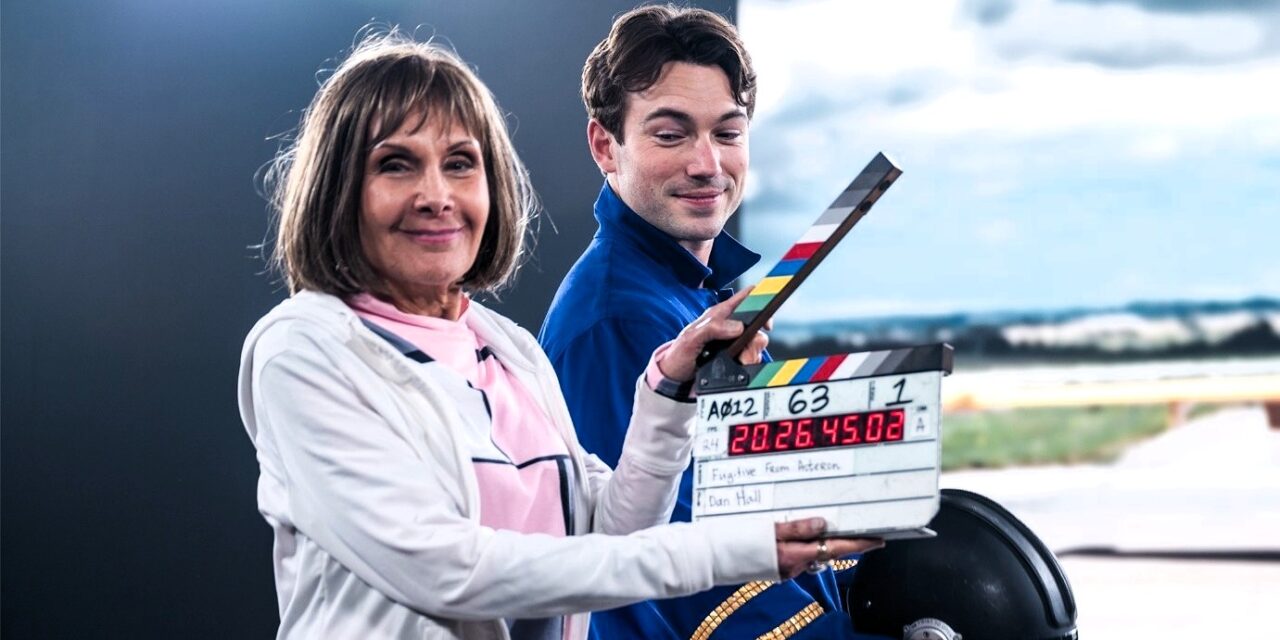
Featured image: Gen LaGreca, Rory Gibson | Photos & Video courtesy of Winged Victory Foundation
Instagram: @wingedvictoryfoundation Facebook: WingedVictoryFoundation
About The Author