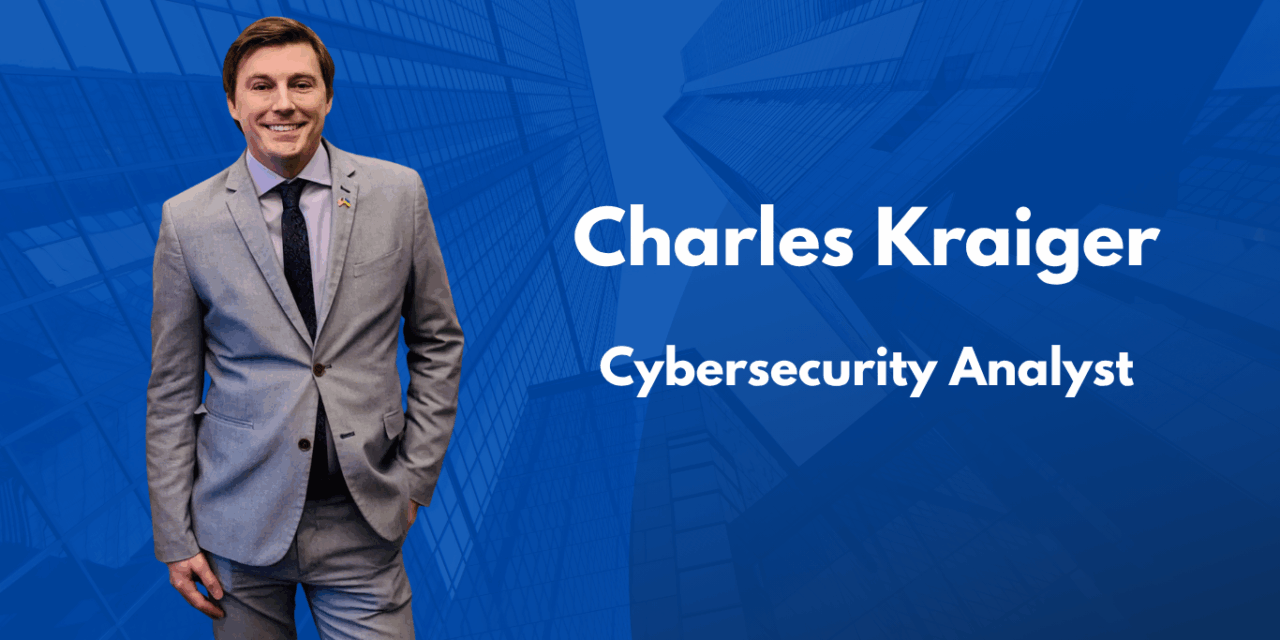
Charles Kraiger is a cybersecurity analyst and foreign affairs professional whose career bridges technology, policy, and global development. With over a decade of experience, he has established a reputation for transforming complex digital challenges into strategic opportunities for stability and growth. His work focuses on advancing cybersecurity as both a technical safeguard and a tool for trust, resilience, and inclusive progress.
Charles began his professional journey in international development, advising on governance, communications, and public affairs initiatives. These early experiences shaped his belief that sustainable security depends on transparency, education, and collaboration. Over time, his path evolved toward cybersecurity and regional risk analysis, where he led teams that delivered actionable intelligence on emerging threats and digital vulnerabilities. A graduate of Michigan State University, Charles earned a master’s degree from Georgetown University and pursued executive education at Harvard. He also studied modern European history and comparative politics at the University of Oxford. A formative period in Rwanda deepened his understanding of recovery, ethics, and human resilience.
Today, Charles continues to champion secure and inclusive digital systems while mentoring the next generation of cybersecurity and policy professionals. His leadership embodies a commitment to integrity, global cooperation, and the conviction that technology should empower, rather than divide, the world.
What first drew you to the intersection of cybersecurity and international affairs?
My interest began with a realization that security is no longer confined to borders. It is digital, interconnected, and deeply human. Early in my career, I saw how information integrity shaped governance and trust in developing nations. As societies became more digitized, the vulnerabilities multiplied, but so did the opportunities to protect them. Cybersecurity became a natural extension of my work in stability and development. It combined my passion for policy with a desire to safeguard the systems people rely on. That intersection, where technology meets human progress, continues to drive my professional purpose.
You’ve worked in both policy and technical environments. How do you see cybersecurity as more than just a technical discipline?
Cybersecurity is ultimately about trust. Technology provides the tools, but people and institutions define the outcomes. My policy background enables me to recognize that technical defenses must be aligned with governance, communication, and ethics. You can patch a system, but without a culture of accountability, risk persists. The most effective strategies combine technical precision with a clear understanding of human behavior and organizational context. Cybersecurity is not just code or compliance. It is about preserving confidence in the systems that enable modern life. When approached holistically, it becomes a foundation for both innovation and stability.
Can you share how your early experience in international development shaped your approach to digital security today?
Working on governance and communication programs early in my career taught me that security depends on trust, transparency, and access to information. In regions recovering from conflict or instability, digital tools can accelerate development. However, they can also amplify risks if not properly managed. That awareness shaped my belief that cybersecurity must be inclusive and context sensitive. Protecting systems is not only about technology. It is about empowering institutions and individuals to use it responsibly. Those lessons from development work still guide my approach. Security succeeds when it strengthens resilience without limiting opportunity.
As a cybersecurity analyst and leader, what qualities do you look for when building or mentoring high-performing teams?
I look for intellectual curiosity, integrity, and adaptability. The technical landscape evolves daily, so continuous learning is essential. Beyond technical skill, I value humility and collaboration. Cybersecurity thrives on teamwork where analysts, policy advisors, and engineers bring unique strengths. I encourage open communication, critical thinking, and appreciation for diverse perspectives. Emotional intelligence is as important as technical expertise, because our work involves managing uncertainty and pressure. When teams share knowledge freely and approach challenges with rigor and empathy, they not only perform better but also build trust across the organizations they serve.
What are some of the most common challenges you’ve seen organizations face when trying to strengthen their digital resilience?
The biggest challenge is often cultural rather than technical. Many organizations view cybersecurity as an IT issue instead of an organizational priority. That mindset limits investment, slows response, and weakens preparedness. Another hurdle is fragmentation, where systems do not communicate or teams work in silos. Successful resilience efforts start with transparent governance, executive commitment, and collaboration across departments. It is about embedding security into daily operations, not treating it as a checklist. When organizations foster shared ownership of risk, they become more agile and better prepared for disruption.
You’ve worked on regional risk analysis and emerging digital threats. What trends concern you most about the current global cybersecurity landscape?
I am particularly concerned about the growing convergence of cyber operations with geopolitical strategy. State-linked campaigns continue to target critical infrastructure, supply chains, and information integrity, as seen in the news. At the same time, artificial intelligence is amplifying misinformation and lowering the barrier for sophisticated attacks. The challenge is not only technical but strategic, as nations must balance defense, privacy, and open communication. We need stronger international norms and cooperation to prevent escalation. Cybersecurity cannot be treated as an isolated discipline anymore. It is part of the broader fabric of global stability and requires coordinated leadership.
How did your experiences in Rwanda and your studies at Oxford and Georgetown influence your global outlook on resilience and recovery?
Rwanda taught me what true resilience looks like and how communities rebuild trust and functionality after devastation. That experience profoundly shaped my worldview. Later, studying at Oxford and Georgetown deepened my understanding of how history, politics, and technology intersect. I saw that recovery, whether national or digital, depends on inclusive systems and ethical leadership. Those lessons remind me that security is never just about protection. It is about enabling growth and dignity. Every initiative I lead carries that perspective. Resilience is not merely the ability to withstand shocks but to emerge stronger and fairer.
In your view, how can governments and the private sector collaborate more effectively to ensure a secure and inclusive digital future?
Collaboration must move beyond information sharing to a genuine partnership. Governments bring authority and policy reach, while private companies hold much of the world’s data and innovation capacity. We need frameworks that align incentives and encourage transparency without discouraging investment. Public and private partnerships should focus on mutual trust, shared training, and common standards. Inclusion is equally essential, since cybersecurity capacity must extend to smaller organizations and developing nations. A secure digital future requires shared responsibility. When collaboration is built on respect and collective interest, security becomes a unifying goal rather than a competitive edge.
You’ve emphasized the importance of translating complex technical insights into actionable policy. How do you bridge that communication gap?
Clarity and context are key. Policymakers do not need to become engineers, but they must understand risk in practical terms. I translate technical findings into stories that show who is affected, what is at stake, and how decisions change outcomes. Visuals, plain language, and real examples help bridge the divide. On the other hand, I also help technical teams appreciate the policy landscape. Effective communication goes both ways. The goal is not to oversimplify but to ensure accuracy with accessibility. When both sides understand each other, faster and more ethical decisions follow.
You mentor emerging professionals in cybersecurity and international affairs. What advice do you give to those hoping to build impactful, globally minded careers?
First, cultivate curiosity because technology and policy evolve constantly. Build a strong technical foundation, but also study geopolitics, ethics, and communication. Seek mentors who challenge your thinking. Experience matters more than titles; consider volunteering, contributing to research, or supporting global initiatives. Learn to write clearly and think critically.
Most importantly, remember that cybersecurity is about people. Integrity, empathy, and cultural awareness will take you further than any certification. Impactful careers are built on purpose. Choose work that strengthens trust and stability, and your influence will grow naturally over time.
Finally, what continues to motivate you personally in this work?
I am motivated by the belief that secure systems create opportunity. Every protected network or improved policy helps safeguard someone’s ability to learn, work, or communicate freely. Cybersecurity may appear technical, but its human impact is immense. I find purpose in connecting strategy with service and helping organizations not only survive threats but also gain confidence in the digital world. Mentoring others keeps me inspired because seeing new professionals grow reminds me why this work matters. It is challenging, but knowing it contributes to global stability makes it deeply fulfilling.
About The Author