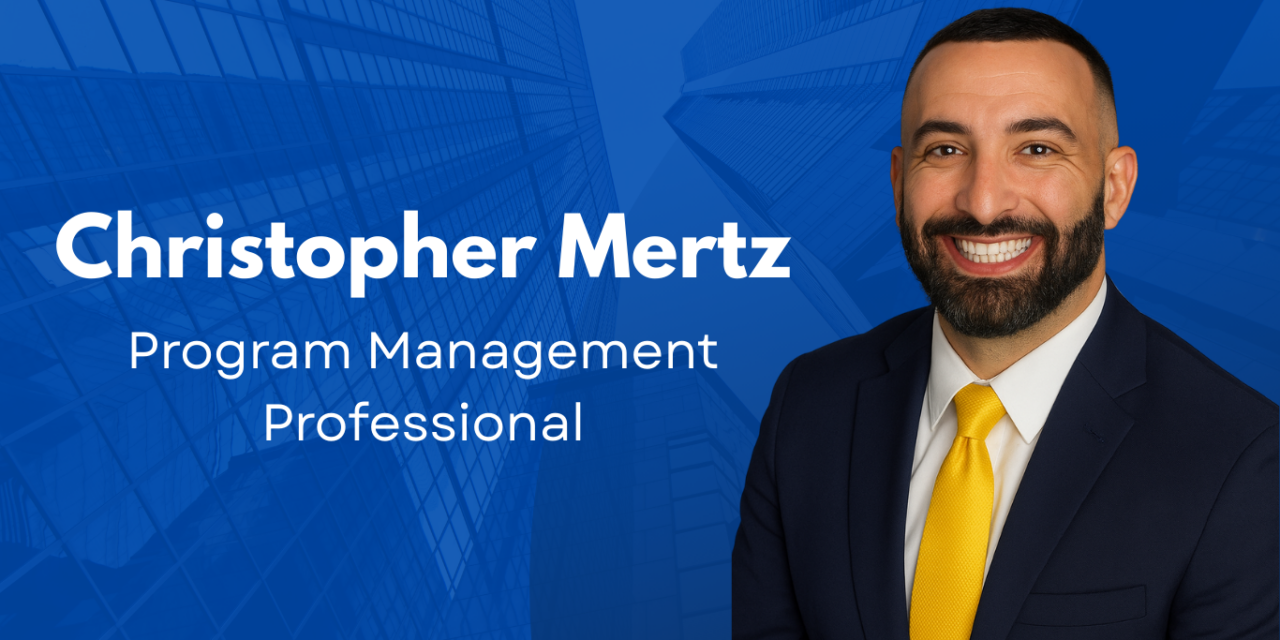
Christopher Mertz is a Florida-based program management professional, mentor, and community advocate whose leadership is rooted in faith, discipline, and service. He approaches both life and work with intention, beginning each day with prayer and reflection to ensure clarity, focus, and alignment with purpose. Guided by the belief that discipline consistently outlasts motivation, Christopher brings structure, accountability, and steady execution to every project he leads.
As a dedicated father, he views family as the foundation of meaningful leadership. Daily routines with his daughter and evenings spent with loved ones keep him grounded and reinforce his commitment to modelling integrity, patience, and consistency. These values shape not only his personal life but also his professional approach to program management, where strategic planning is paired with humility and collaboration. Christopher’s leadership philosophy was forged through experience, including a defining professional setback that reshaped his understanding of resilience. He believes failure is not final, but formative, serving as preparation for more decisive, more purposeful leadership.
Beyond his corporate work, Christopher is deeply invested in mentoring young men and strengthening families across Florida. His advocacy focuses on character development, personal responsibility, and long-term growth. For Christopher Mertz, true success is measured by balance: professional excellence, unwavering character, and a life dedicated to serving others. Each day is an opportunity to lead with faith, build with discipline, and contribute meaningfully to his community.
Your leadership is grounded in faith, family, and discipline. How did those early foundations shape the way you approach responsibility, service, and decision-making today?
Faith, family, and discipline shaped my understanding of responsibility long before my career began. Faith taught me that leadership is stewardship, not control. Family grounded me in humility and accountability because the way I show up at home matters just as much as how I perform professionally. Discipline gave me structure when emotions or circumstances tried to pull me off course. Together, these foundations guide how I make decisions today. They remind me to serve with intention, act with integrity, and remain consistent even when no one is watching. That consistency is what allows trust, impact, and growth to take root.
You often say that discipline outlasts motivation. How has that principle influenced the way you lead teams, manage projects, and stay consistent through difficult seasons?
Discipline has been the anchor of my leadership. Motivation comes and goes, but discipline carries you through the days when energy is low or pressure is high. In team leadership and project management, this principle keeps standards clear and execution steady. It means showing up prepared, following through on commitments, and doing the work even when progress feels slow. Discipline also creates predictability, which builds trust. When people know you will be consistent, they feel secure enough to perform at their best. Over time, discipline compounds into results that motivation alone can never sustain.
A professional setback became a defining moment in your journey. What did that experience teach you about resilience, humility, and long-term growth?
That setback humbled me in ways success never could. It forced me to confront my assumptions and reassess my priorities. I learned that failure is not a verdict; it is an instruction. The experience deepened my faith and strengthened my patience. It reminded me that growth often comes through discomfort and delay.
Most importantly, it reshaped how I view resilience. Resilience is not pushing harder out of pride. It is listening, recalibrating, and trusting that preparation happens even when outcomes are unclear. That moment became a turning point that refined my character and sharpened my leadership.
You begin each day with prayer and scripture. How does that spiritual practice translate into clarity and execution in your professional and community work?
Prayer and scripture centre me before the noise of the day begins. They help me lead from conviction rather than reaction. That quiet time creates clarity. It allows me to approach challenges with patience and purpose instead of urgency or fear. Spiritually grounding myself first shapes how I communicate, collaborate, and execute. It reminds me that my role is to be faithful in action, not anxious about outcomes. From there, I move forward with intention, aligning goals with values and execution with service. That rhythm keeps my work focused, steady, and meaningful.
As a Florida-based community advocate, what challenges do you see most clearly affecting families and young men today, and where do you believe leadership is most urgently needed?
One of the most pressing challenges I see is a lack of consistent mentorship and stable family support, especially for young men. Many are searching for identity and direction without strong role models. Leadership is urgently needed at the relational level, not just the institutional one. We need leaders who are present, accountable, and willing to invest time, not just resources. Communities thrive when people feel seen and supported. Addressing these challenges requires patience, trust, and long-term commitment. Real change begins when leaders show up consistently and walk alongside families rather than trying to fix them from a distance.
You balance corporate program management with grassroots mentorship. How do those two worlds inform each other, and why is it essential for leaders to stay connected to real community experiences?
Corporate work sharpens my discipline, organization, and strategic thinking. Community work keeps my heart grounded and my perspective real. Each informs the other. Managing programs teaches me how to scale impact, while grassroots mentorship reminds me why the work matters in the first place. Leaders who stay disconnected from the community risk losing empathy and relevance. Staying engaged with real people keeps decisions human and priorities aligned. It also builds credibility. When people know you are present beyond your title, trust grows. That balance allows me to deliver results while staying rooted in service.
Fatherhood plays a central role in your life. How has being a parent reshaped your understanding of leadership, patience, and legacy?
Fatherhood reshaped my understanding of leadership completely. It taught me that presence matters more than perfection. Being a parent sharpened my patience and deepened my sense of responsibility. Every decision I make now carries a long-term lens because legacy is no longer abstract. It is personal. Fatherhood also reminded me that leadership begins at home. How I model discipline, faith, and character daily shapes more than words ever could. That awareness influences how I lead others. It keeps me humble, intentional, and focused on building environments where people feel safe, supported, and valued.
Many people struggle to stay aligned with their values under pressure. How do you maintain integrity and focus when expectations are high and outcomes are uncertain?
Alignment under pressure requires intentional habits. I return to my core values daily through prayer, reflection, and accountability with trusted people. When pressure rises, it is tempting to compromise for speed or approval. Integrity requires slowing down enough to choose wisely. I also remind myself that outcomes do not define identity. That perspective creates freedom. Staying focused means prioritizing what matters most and letting go of distractions that pull me away from purpose. Consistency in small decisions builds strength for larger ones. That discipline protects alignment when the stakes are high.
Your approach blends prayer, collaboration, and execution. How do you move from reflection to action without losing momentum or purpose?
Reflection without action leads to stagnation, while action without reflection leads to misalignment. I move between the two intentionally. Prayer creates clarity. Collaboration refines ideas. Clear goals turn vision into direction. From there, execution becomes disciplined and measurable. Momentum is sustained by accountability and structure. I break large objectives into manageable steps and track progress consistently. This approach keeps purpose intact while driving results. Action becomes meaningful because it is rooted in intention. That balance allows me to move forward confidently without losing sight of why the work matters.
You are deeply invested in mentoring young men. What patterns do you see in the challenges they face, and how do you help them build confidence, discipline, and direction?
Many young men struggle with identity, discipline, and direction. They often lack consistent guidance and positive reinforcement. I focus on helping them build daily habits that create confidence and structure. We talk about responsibility, self-respect, and long-term vision. I emphasize that discipline is a form of self-respect, not punishment. By setting clear expectations and walking alongside them, trust grows. Mentorship is not about giving answers. It is about helping them believe in their capacity to grow. Over time, confidence follows consistency, and direction becomes clearer.
In your experience, what separates leaders who inspire lasting trust from those who only deliver short-term results?
Lasting trust is built through consistency, honesty, and humility. Leaders who inspire trust show up the same way in success and difficulty. They listen as much as they speak. They own mistakes and share credit freely. Short-term results can be driven by pressure, but long-term trust requires character. People follow leaders who care about them as individuals, not just contributors. When trust is present, accountability strengthens rather than weakens relationships. That foundation allows teams and communities to move forward together with confidence.
You emphasize building strong families as a cornerstone of healthy communities. What practical steps do you believe leaders and institutions should take to support that goal?
Strong families are built through stability, presence, and support. Leaders and institutions must prioritize access to mentorship, parenting resources, and economic opportunity. Policies matter, but relationships matter more. Practical support should be paired with guidance that strengthens character and accountability. Families thrive when they feel supported rather than judged. Leaders can help by creating environments that encourage responsibility, connection, and growth. Investing in families is not charity. It is foundational work that strengthens communities for generations. When families are strong, everything else becomes more sustainable.
Florida is diverse in culture, economics, and opportunity. How do you adapt your leadership and advocacy to meet people where they are rather than applying one-size-fits-all solutions?
Florida’s diversity requires leaders to listen first. Solutions must reflect lived experience rather than assumptions. I adapt by building relationships and understanding local context before taking action. What works in one community may not work in another. Flexibility and humility are essential. Meeting people where they are creates trust and relevance. Leadership is not about imposing ideas but partnering with communities to co-create solutions. When people feel respected and heard, engagement increases. That approach allows leadership to be effective across diverse environments.
Many professionals chase success but feel disconnected from meaning. How do you define true success, and how has that definition evolved?
True success is alignment between purpose, character, and impact. Early on, success looked like achievement and recognition. Over time, it evolved into consistency, service, and peace. Success now means fulfilling my responsibilities with integrity while staying present for my family and community. It means contributing to something larger than myself. Professional excellence matters, but not at the expense of values. When work and purpose align, success becomes sustainable. That balance brings fulfilment that external measures alone cannot provide.
When mentoring others, what habits or mindsets do you believe are most critical for sustaining growth when motivation fades?
I emphasize habits over hype. Growth requires consistency, patience, and accountability. When motivation fades, structure carries you forward. I encourage people to build routines that support their goals and values. I also stress the importance of mentorship and self-reflection. Growth accelerates when you are willing to learn and be corrected. Staying humble keeps progress steady. Long-term impact is built through daily discipline, not occasional bursts of effort. Those habits create resilience and confidence over time.
Looking ahead, what gives you hope about the future of communities in Florida, and what continues to compel you to serve with intention every day personally?
I find hope in people who are willing to grow and lead with integrity. I see families investing in each other and young leaders stepping up with courage. These signs remind me that change is possible. What motivates me is the opportunity to serve with intention and help others realize their potential. Each day is a chance to live out faith through action. I believe that disciplined, values-driven leadership can strengthen communities. That belief fuels my commitment to continue building, mentoring, and serving with purpose.
About The Author