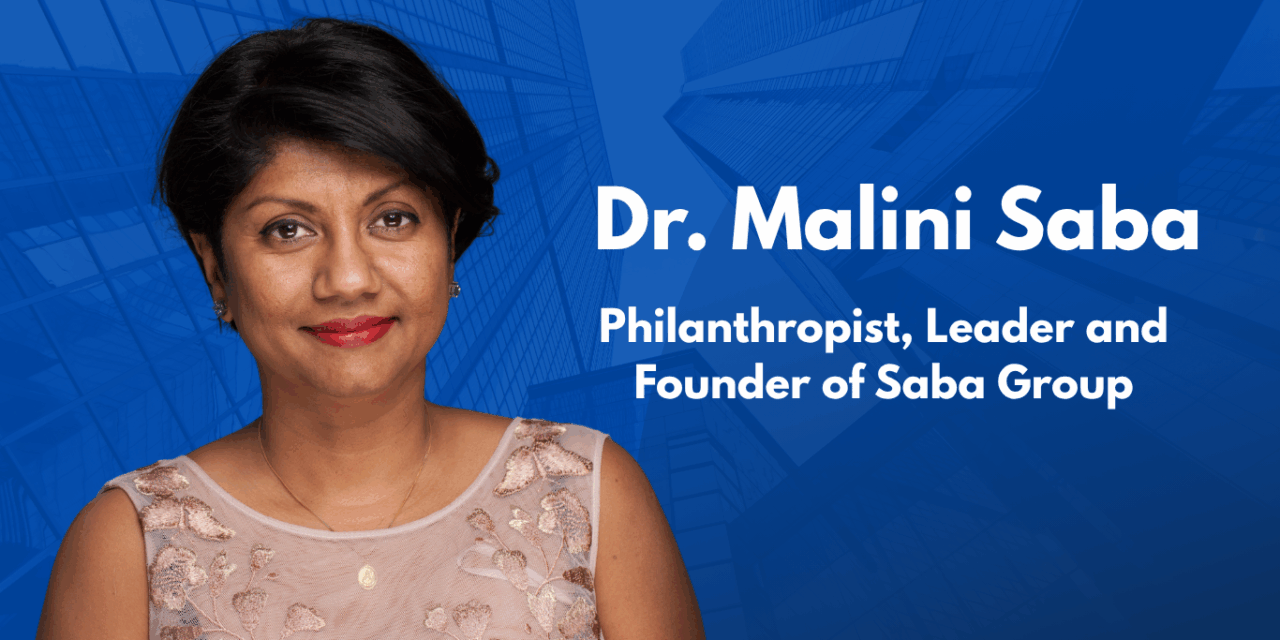
Dr. Malini Saba has built her life around the belief that real success comes from understanding people — not just profits. For over three decades, she’s worked across continents and industries, from agriculture and energy to healthcare and technology, always with a clear goal: to create something lasting that helps others move forward.
Raised in a middle-class immigrant family, she learned early what perseverance looked like. She didn’t inherit a business empire; she built one. As the founder and chairwoman of Saba Group and the Saba Family Foundation, she’s proven that compassion and leadership can coexist — and that business can be a force for good.
Her foundation, funded entirely through her own ventures, supports women and children around the world, helping them gain access to healthcare, education, and financial opportunity. “We come here to give, not take,” she often says, a reflection of her philosophy that giving back isn’t charity — it’s responsibility.
Dr. Saba has faced setbacks, including losing everything more than once, yet each time she rebuilt stronger. Her resilience, calm decision-making, and belief in self-reflection define her leadership style.
She’s not driven by recognition — though her global awards and partnerships speak volumes. What sets her apart is her quiet persistence. Whether it’s through a new business idea, a philanthropic project, or a simple conversation, Dr. Saba reminds others that real progress begins when we act with purpose and keep moving forward, no matter how many times we must start again.
You’ve built a career across continents and industries. What continues to inspire you to take on new challenges?
Curiosity. I’ve always been deeply curious about how systems work — not just businesses, but people and societies. Early in my career, working in commodities and trade taught me that success isn’t about control; it’s about understanding how every part fits together. I’m inspired by potential — the potential to improve something, to fix what’s broken, to create opportunity where none existed. That’s what keeps me moving forward.
Many people struggle with fear when taking big risks. How did you learn to move past it?
Fear doesn’t go away — you learn to walk alongside it. I’ve lost everything three times in my life, and each time, I rebuilt. The first time was painful. The second time taught me resilience. The third time, I learned peace — that failure doesn’t define you unless you stop. I used the pain as fuel. I rebuilt in two years because I had experience, and I refused to let self-pity take root. When you accept that risk is part of growth, fear loses its power over you.
What do you think inspires confidence in others — especially when leading diverse teams or new ventures?
Confidence isn’t loud. It’s consistency. People follow you when they see you show up — even on the hard days. I’ve worked with teams across cultures and time zones. Whether you’re in Dubai, Delhi, or London, people respond to clarity and empathy. I don’t pretend to have all the answers. Instead, I create a space where ideas can breathe. That’s how confidence spreads — not from speeches, but from example.
You often talk about clarity and mindfulness in leadership. How does that play a role in your work?
I don’t make decisions out of emotion. I meditate every day — even if it’s ten minutes — because clarity saves me from reaction. When you lead across high-stakes industries like oil, real estate, or healthcare, you can’t afford to decide in chaos. Clarity lets you see the long game. Success for me isn’t about wealth; it’s about being content inside. When you reach that point, decisions become simpler.
You’ve said before that you don’t follow — you lead yourself. Where does that mindset come from?
From watching what happens when people follow too closely. Markets shift, governments change, crises hit — if you’re waiting for someone else’s direction, you’re already behind. I pay attention to what’s not being done. That’s where opportunity hides. For example, when we entered industrial commodities, most focused on volume. I focused on infrastructure — ports, transport, storage. The unglamorous work. That’s what made it sustainable.
You fund your own foundation — that’s rare. Why take that approach?
I don’t want philanthropy to depend on donors’ moods or market trends. I decided early that 50% of my company’s returns would fund the Saba Family Foundation. That structure keeps me accountable. It also proves that you can build impact and profit together. Our focus isn’t on giving handouts but on building systems — education, healthcare, jobs — that sustain communities long after we’re gone.
You’ve mentored many women in business. How do you help them build confidence in their ideas?
By asking better questions. Instead of “Is this a good idea?”, I ask “Who needs this, and how will it work for them?” Many women second-guess themselves because they’ve been taught to seek permission. Confidence grows when you stop asking for approval and start testing your ideas in real life. I remind them that mistakes aren’t setbacks — they’re data.
What does inspiration mean to you personally?
Inspiration is quiet. It’s when something shifts inside you — not because of a speech or a quote, but because you see what’s possible. I’ve been inspired by the women I meet in rural cooperatives who run businesses with no formal education. Their determination keeps me grounded. I see myself in them — not as a leader above, but as part of a shared journey.
If you could give one piece of advice to someone afraid to start over, what would it be?
Start small, but start. Don’t wait for the perfect moment — it doesn’t exist. When I was rebuilding after losing everything, I didn’t have grand plans. I just took the next step in front of me. Action creates clarity. Stillness creates doubt. Move, even if it’s slow. And never measure your worth by someone else’s timing.
Looking back, what has been your biggest source of strength?
My sense of purpose. I’ve faced sexism, racism, betrayal — but those things don’t define me. They shaped me. I remind myself that we come here to give, not take. Every challenge has taught me to understand myself better, and that understanding is what gives me strength.
About The Author