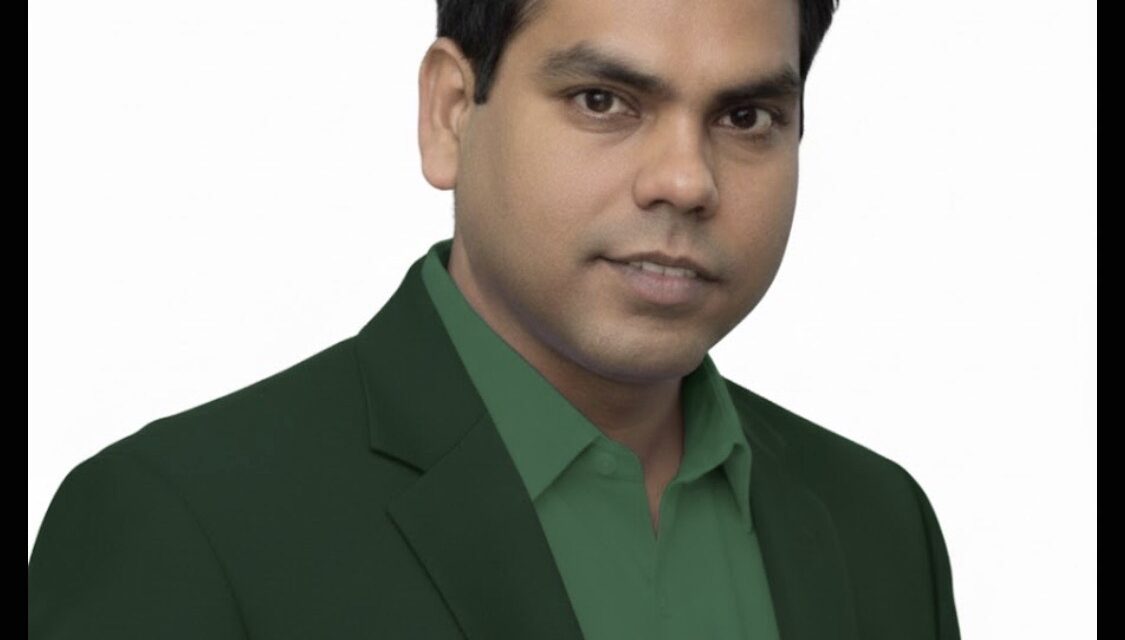
Dilip Shah is a scientist and biochemist based in Philadelphia, Pennsylvania. His story is built on patience, strong training, and a habit of following questions until they lead somewhere useful.
He grew up in Nepal, where cricket and soccer were part of daily life. Sports gave him a feel for teamwork and discipline. Science gave him the bigger pull. He wanted to know how things worked, down to the smallest parts.
He went on to earn a B.Sc. in Chemistry, an M.Sc. in Biochemistry, and a Ph.D. in Biochemistry. His academic path was supported by fellowship awards from the governments of Nepal and India. That support helped him focus on deep learning and long projects that take time.
Shah’s early research looked at oxidative stress and the body’s antioxidant systems. He studied how these forces shape immune cell function in autoimmune diseases like systemic lupus erythematosus and rheumatoid arthritis. His work highlighted intracellular glutathione as a key player in immune balance and inflammation.
Over time, his research expanded. He worked on laser based vaccine adjuvants designed to improve immune responses to influenza antigens. He also studied lung biology and neonatal lung development, including mitochondrial dysfunction and mitophagy in bronchopulmonary dysplasia.
Today, his work focuses on immunotherapeutic and targeted drug development strategies, including CAR T cell and antibody drug conjugate mechanisms. Across each stage, the pattern stays consistent. He builds skills, tests ideas carefully, and keeps moving toward answers that can matter in real disease.
Q&A: Dilip Shah on Inspiration and the Long Game
What tends to inspire you when the work gets hard or slow?
I go back to the basics. I grew up in Nepal, and patience was part of life. Things were not instant. In research, the slow periods are often where you learn the most. When an experiment does not work, it forces you to look closer. That is frustrating, but it can also be motivating.
You keep returning to immune balance and cellular stress. Why does that theme matter so much to you?
Because it shows up everywhere. In my early work, oxidative stress and antioxidant systems helped explain immune cell behaviour in autoimmune diseases like systemic lupus erythematosus and rheumatoid arthritis. Later, when I looked at lung biology and neonatal lung development, cellular stress showed up again, just in a different setting. When the same theme keeps appearing, it feels worth staying with it.
What do you think you do that helps others feel more confident in a project or idea?
I try to make the work feel clear and manageable. One way is by breaking complex problems into smaller pieces. Another is by being consistent with how I show up. In a lab setting, people notice routines. They notice who checks the data twice, who documents things carefully, and who stays calm when results are messy. That kind of steadiness can make others trust the process.
Can you share a specific example of taking a risk in your work?
Moving into laser based vaccine adjuvant research was a stretch from my earlier focus, even though it still relied on immunology. The idea that controlled micro sterile inflammation from a handheld, non ablative fractional laser could improve immune responses is not the kind of thing you assume will work on day one. It takes careful steps. The risk was committing time to a method that required learning new details and collaborating across areas.
What did your education years teach you about what it takes to get somewhere meaningful?
Depth matters. I earned degrees in chemistry and biochemistry, and I was supported by fellowship awards from Nepal and India. That support created time, and time is important in science. It taught me that progress often comes from staying with a problem longer than you think you need to. You do not always see the payoff right away.
What role did sports play in shaping how you work?
Cricket and soccer taught me teamwork in a very practical way. You can have talent, but you still need coordination. You need people to cover each other. A lab is similar. Projects move faster when people share knowledge and work in sync. Sports also taught me how to handle loss without turning it into a crisis. That is useful when experiments fail.
How do you approach setbacks without losing momentum?
I treat setbacks as information. If something fails, it does not mean the whole idea is wrong. It might mean the method is wrong, or the timing, or the controls. I also keep a simple habit that helps. I write down what I expected, what happened, and what I will change next time. It keeps the setback from becoming personal.
Your work has touched autoimmune disease, vaccines, and neonatal lung development. How do you decide when to pivot?
I try not to pivot for novelty. I pivot when the next question connects to what I already know. With autoimmune disease, I was studying immune regulation under stress. With vaccine work, I was still working inside immune response, just in a different context. With neonatal lung development, the link was cellular stress, mitochondria, and tissue injury. The path looks varied, but the core questions stay related.
What does inspiration look like in your daily routine?
It is not always a big moment. Sometimes it is reading a paper and seeing a method that solves a small problem you have been stuck on. Sometimes it is a clean dataset after weeks of noisy results. I also stay interested in emerging innovations, because they can change what is possible in a lab.
What do you hope your current focus area contributes to over time?
Right now I focus on immunotherapeutic and targeted drug development strategies, including CAR T cell and antibody drug conjugate mechanisms. I care about targets that are precise and treatments that are safer. Over time, I hope the work supports therapies that are effective without creating unnecessary harm.
If someone wants to build a career like yours, what is one practical thing they can do this month?
Pick one core skill and strengthen it through repetition. It could be data analysis. It could be an immunoassay method. It could be how you document experiments. The small improvements compound. That is the part people miss because it is not dramatic, but it works.
When you look back at your path so far, what thread connects it all?
Curiosity with patience. I started with a desire to understand how things work, and I stayed with that. From Nepal to my work in Philadelphia, the pattern is consistent. Learn the fundamentals, do the work carefully, and follow the question until it leads to something real.
Learn more about Dilip Shah and his work at https://www.dilipshahscience.com/
About The Author