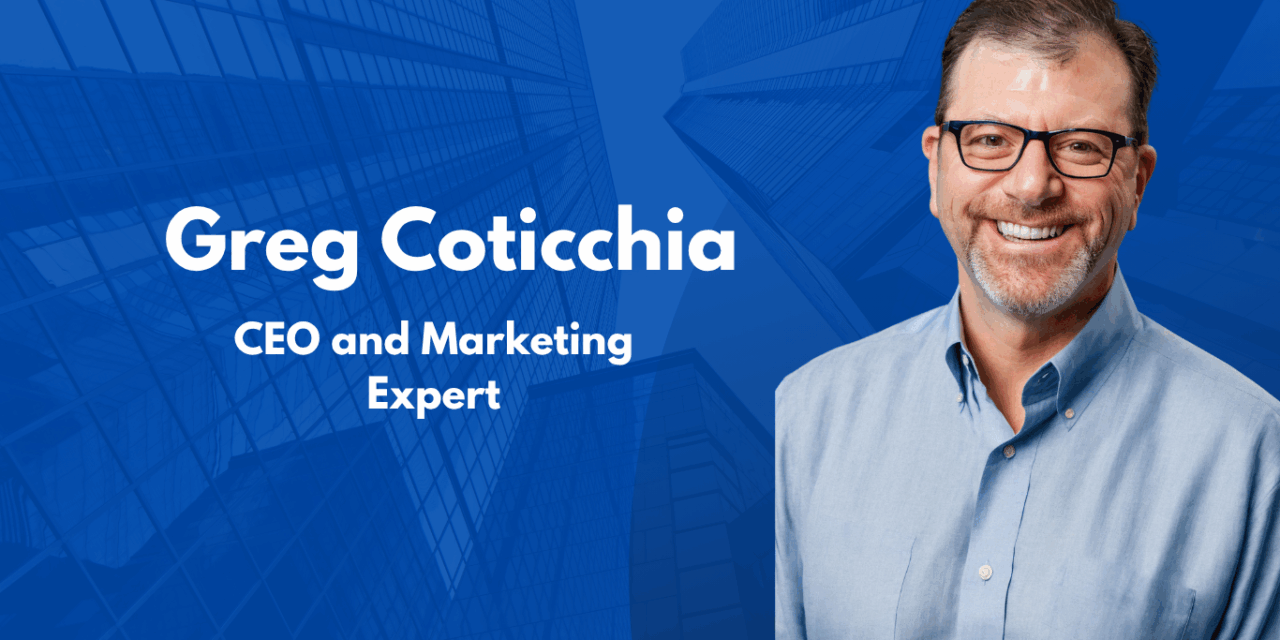
With an illustrious three-decade career, Greg Coticchia is a Partner and Coach at CEO Coaching International, dedicated to helping leaders achieve extraordinary results. His journey is a masterclass in entrepreneurship and corporate leadership, marked by his roles as a six-time CEO, two-time COO, and an accomplished author. He possesses a rare talent for scaling organizations from early-stage startups to billion-dollar enterprises. One of his most notable achievements was at the helm of the global company, Sopheon. He engineered a dramatic strategic pivot, moving the business from its traditional consulting roots to a modern, agile, and scalable SaaS model, which ultimately led to a lucrative exit.
Greg has a keen eye for business development and has actively participated in over 17 mergers and acquisitions, alongside raising more than $73M in venture capital. He has also played an executive role in organizations ranging from $0M to over $1B in revenue. His legacy in product innovation is profound, having been responsible for the launch of over 100 products and solutions, a key driver of business value.
Furthermore, his commitment to education is evident in his creation of the world’s first product management degree at Carnegie Mellon University, where he served as its founding executive director. He holds degrees from the University of Pittsburgh and certifications from Carnegie Mellon and Duquesne University. Greg’s coaching philosophy centers on using his firsthand experience to empower CEOs to drive business value through innovation and commercialization.
What’s the biggest misconception about being a six-time CEO?
That it gets easier. It doesn’t. Experience helps, sure—but every business, every team, and every market is different. There’s no rinse-and-repeat. What matters most is how quickly you adapt, how well you learn from pain, and whether you’re willing to have the hard conversations without flinching. Being a CEO is not about perfection—it’s about velocity, clarity, and accountability.
You created the first Product Management Master’s program at CMU. Why was that so important?
Product Management is the heartbeat of growth. But too often, companies either treat it like a project management role or worse—like a suggestion box. I created the program because product needs to be understood as a discipline with rigor, not just instincts. Innovation doesn’t happen because of ideas—it happens because of execution. That’s what product management enables when done right.
What’s the best non-career lesson you’ve learned while traveling?
In Italy, I got completely lost. No Wi-Fi, no plan, no timeline. And I realized: sometimes the best moments come when you surrender control. As leaders, we’re always optimizing, planning, pushing. But growth—real personal growth—often happens when you stop trying to “manage” everything and allow yourself to simply experience.
What’s the one big idea most CEOs can’t seem to execute well?
Letting go. CEOs want scale, but they refuse to stop being the bottleneck. They haven’t built systems or empowered the next layer of leadership. You don’t get to a billion-dollar company by still trying to make $100 decisions. Your job is strategy and culture—not chasing every operational rabbit down a hole.
Dinner with any historical figure—who and why?
Nikola Tesla. A visionary who never cracked commercialization. I’d love to talk shop with him—not just about ideas, but about the brutal realities of bringing innovation to market. Vision is step one. Execution and adoption are what separate the success stories from the “what could have been.”
What’s a simple daily habit that helps you stay sharp?
A five-minute reset. Between meetings or big decisions, I step away, breathe intentionally, and reboot. No phone, no notes. Just stillness. It clears the cache. Otherwise, by 3 PM, your brain’s running on fumes and you’re making sloppy decisions. It’s not about working more—it’s about staying sharp.
How do you know when it’s time to pivot a business?
The market tells you—you just need to be willing to listen. With Sopheon, customer data screamed for flexibility and scale. Our consulting model couldn’t deliver that. So, we pivoted hard into SaaS. It wasn’t easy—it disrupted revenue in the short term—but we were playing the long game. You either adapt, or you become irrelevant.
What do you tell young entrepreneurs after they hit their first real failure?
Write it down. Everything. While it’s still raw. Every assumption, action, and outcome. Don’t bury the lesson under ego or excuses. That failure is tuition—and you already paid. Might as well get the full education. Build a playbook from it, and don’t repeat it.
What book do you recommend the most to aspiring business leaders?
Good to Great by Jim Collins. It’s not trendy, but it’s foundational. Especially the “Hedgehog Concept”—it forces clarity around what you do better than anyone else, what drives your economics, and what you’re deeply passionate about. Most companies fail not from lack of effort—but lack of focus.
If not a coach or exec, what would you have done?
High school history teacher. I’m obsessed with how patterns repeat in both civilizations and companies. Strategy, after all, is just applied history. Helping young people recognize patterns and make smarter choices? That’s a legacy worth building.
About The Author