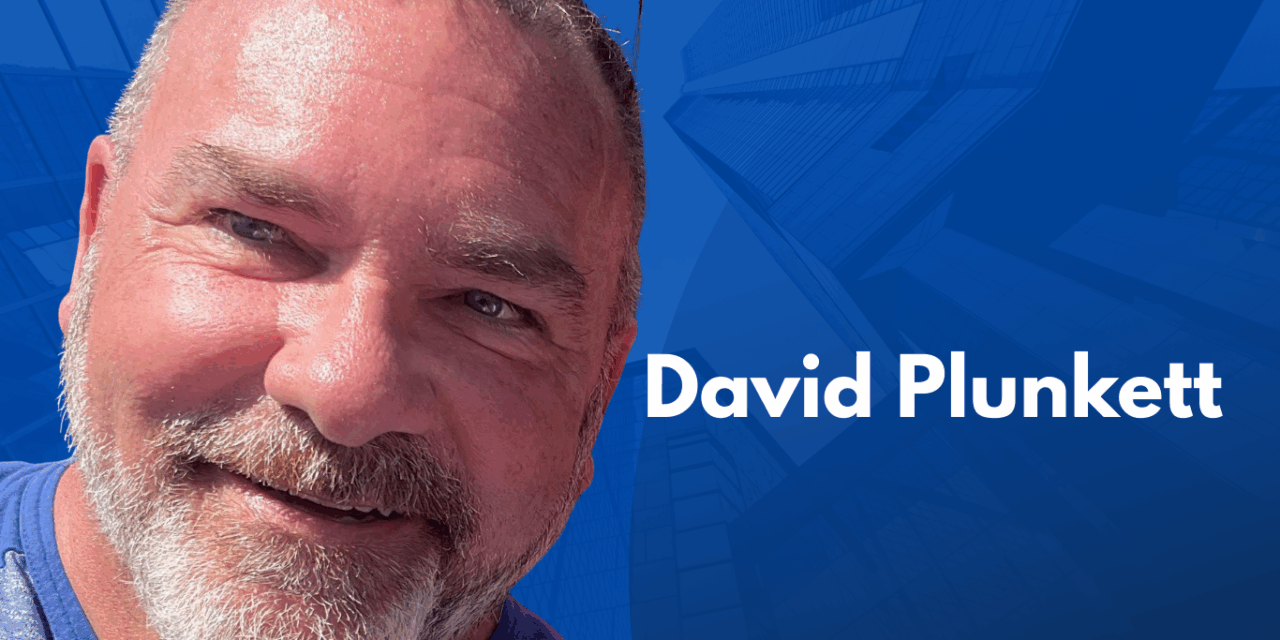
David Plunkett’s story begins in Lynn, Massachusetts, where he grew up watching his father work as a mechanic and his mother care for patients as a nurse. Their example shaped the way he moved through the world. He learned early that showing up, working hard, and helping others were non-negotiables. Those lessons carried him through sports, boxing, and later into coaching baseball and guiding young scouts—many of whom went on to become Eagle Scouts under his leadership.
David followed a steady path in school, earning degrees from North Shore Community College, Merrimack College, and later an MBA from Suffolk University. His career grew step by step through roles where he led teams, solved problems, and helped people navigate challenges with clarity and calm.
Life tested him in deeper ways too. He spent 32 years married to his high school sweetheart before losing her in 2020 after an 11-year battle with breast cancer. He carried that experience forward, giving his time and energy to fundraising and supporting others facing similar journeys. In 2025, he remarried and welcomed two stepchildren into his life, blending his family with openness and warmth.
Today, David Plunkett runs his own businesses while living on a farm filled with horses, donkeys, sheep, dogs, and a cat. Caring for animals and spending time outdoors keeps him grounded. Through every chapter—work, family, loss, rebuilding—he has set an example of steadiness and heart. His story shows how quiet leadership, patience, and compassion can leave a lasting mark on the people around him.
You grew up in a working-class home in Lynn, Massachusetts. What from your early life still shapes how you think today?
I go back to my parents a lot. My father was a mechanic, and my mother was a nurse, so I grew up watching two people who worked hard no matter how tired they were. In our house you didn’t complain—you showed up. That mindset never left me. Even now, when I’m faced with a big decision, I hear my dad’s voice saying, “Start with what’s in front of you. Fix the small things first.” That simple approach has helped me get through a lot of complicated moments.
You’ve coached baseball and served as a Boy Scouts scoutmaster for seven years. How did working with young people influence the way you lead adults?
When you coach kids or guide scouts, you learn that every person needs something different from you. Some boys needed confidence. Others needed structure. Some just needed someone to listen. Helping several scouts become Eagle Scouts taught me that growth isn’t a straight line. Adults are the same. I lead with patience because most people want to do well—they just need support at the right time.
Many people see you as someone who inspires confidence in ideas and decision-making. Where does that come from?
I think it started in sports and later in boxing. When you’re in a ring, even as a kid in the Silver Mittens or Golden Gloves, you learn that panic solves nothing. You slow things down. You breathe. You trust your training. In business, when someone brings me an idea, I treat it the same way. Don’t rush. Break it down. Ask the right questions. People feel confident when they’re not being judged—only guided.
You’ve taken on big responsibilities in your career. How do you decide when a risk is worth taking?
I take risks the same way I approached climbing a mountain trail once with my sons when they were young. The path was steep, and we had no idea how long it would take. I told them, “We don’t look at the top—we focus on the next ten feet.” That’s how I’ve made most major decisions. You look at the next step, not the entire mountain. If the next step makes sense, you take it. If it doesn’t, you pivot.
What inspires your ideas today?
Real people’s problems inspire me. At every job I ever had, from West Lynn Creamery to the roles I hold today, I paid attention to what frustrated people and what slowed them down. Most of my good ideas came from listening before speaking. I’ll also say that living on a farm keeps my mind clear. When you’re feeding horses at dawn or trying to convince a stubborn donkey to cooperate, you learn patience and creativity. That quiet space is where ideas show up.
You navigated a long, difficult chapter during your first wife’s 11-year battle with breast cancer. How did that experience affect your sense of purpose?
It changed everything. When you spend over a decade helping someone fight something that heavy, you stop sweating small things. You understand what really matters. After she passed in 2020, fundraising for breast cancer wasn’t something I chose—it was something I felt responsible to do. It also taught me that strength doesn’t always look like being tough. Sometimes strength looks like showing up on the hardest days even when no one else sees it.
You remarried in 2025 and blended a larger family. How does family influence your work and leadership now?
Family keeps me grounded. My sons, my stepkids—they all remind me that life keeps moving and you have to move with it. Having Zander work with me brings a sense of continuity. Rebecca working in Boston in marketing gives me another window into how younger people think. They inspire me because they see possibilities I might overlook.
What would you tell someone who wants to bring a big idea to life but doubts themselves?
Start smaller than you think you need to. People freeze because they believe the idea needs to be perfect before they move. Nothing great starts perfect. Also, surround yourself with people you trust. When I worked with young scouts, I told them: “No one earns Eagle Scout alone.” The same applies to grown-ups. And finally—don’t wait for fear to go away. Fear doesn’t disappear. You just learn to walk with it.
What keeps you motivated today?
Purpose. Helping people. Being useful. And honestly, the farm. There’s something about the rhythm of caring for animals that gives you clarity. Life makes more sense when you’re doing simple, honest work before the sun comes up.
About The Author