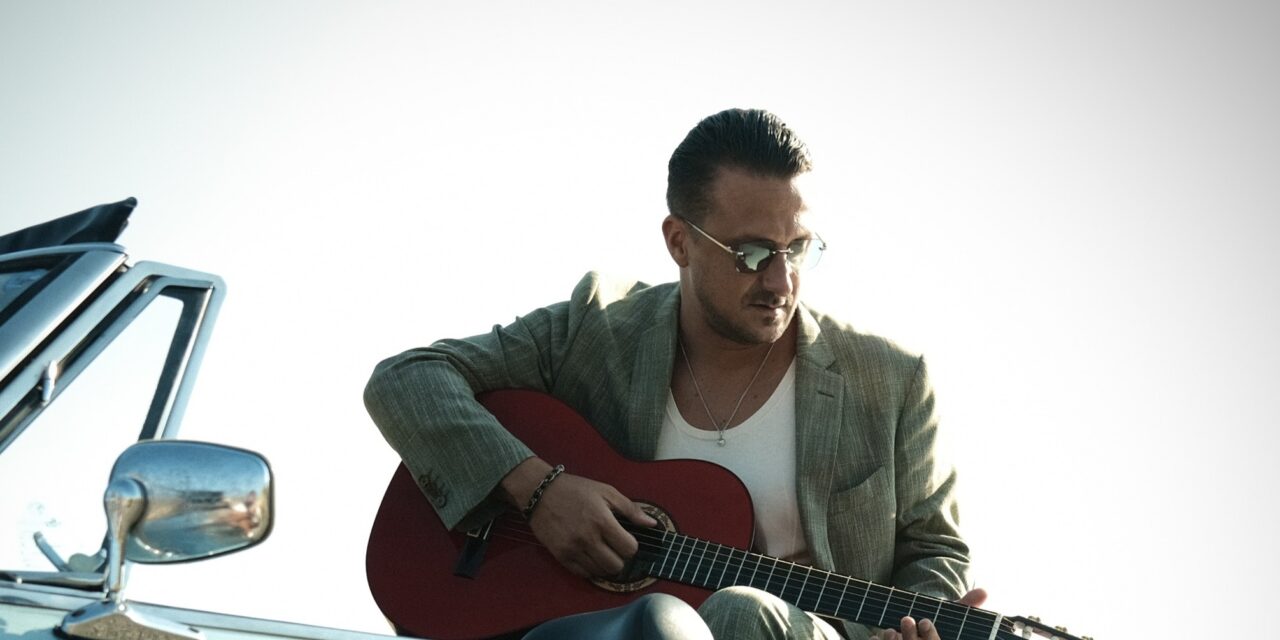
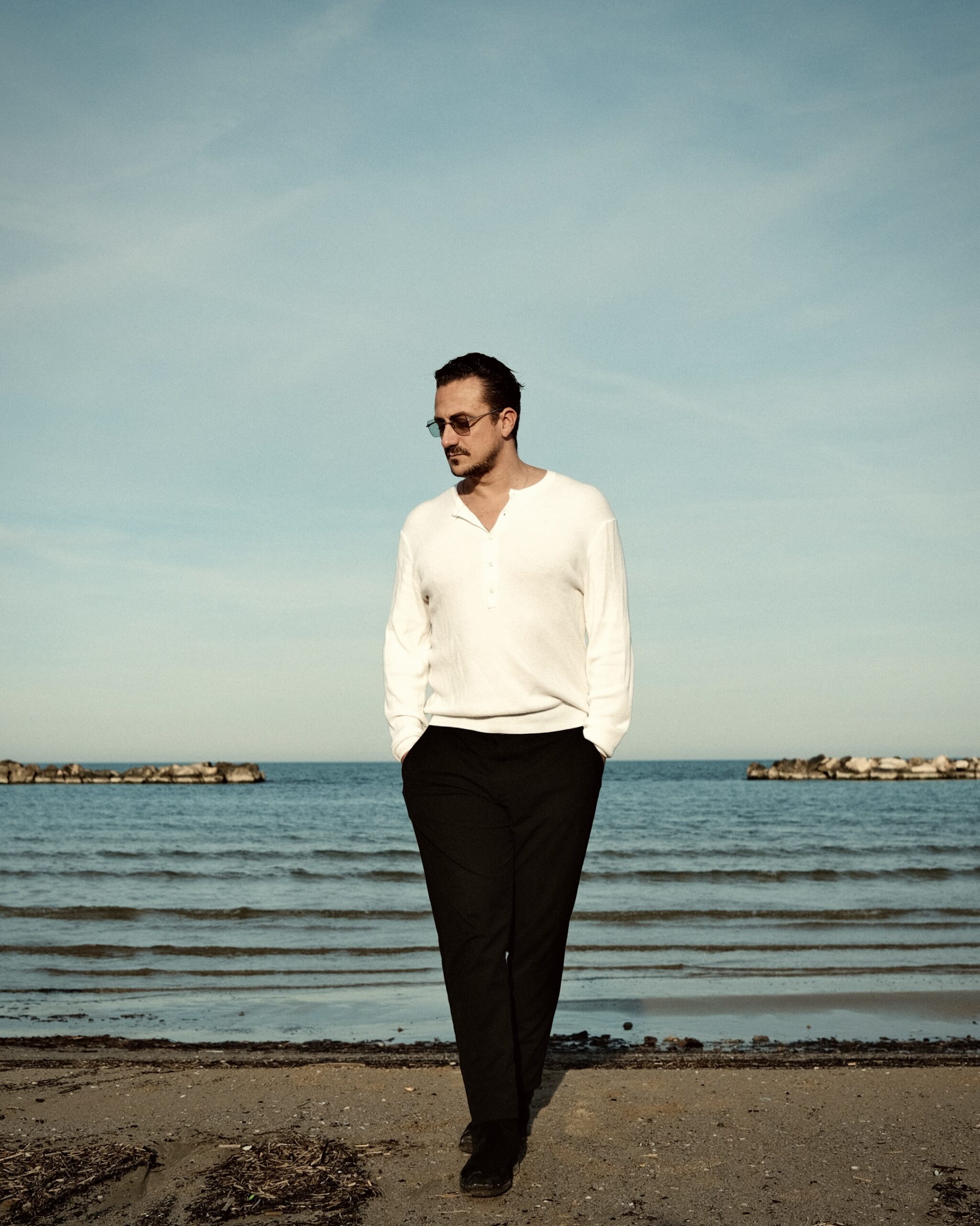
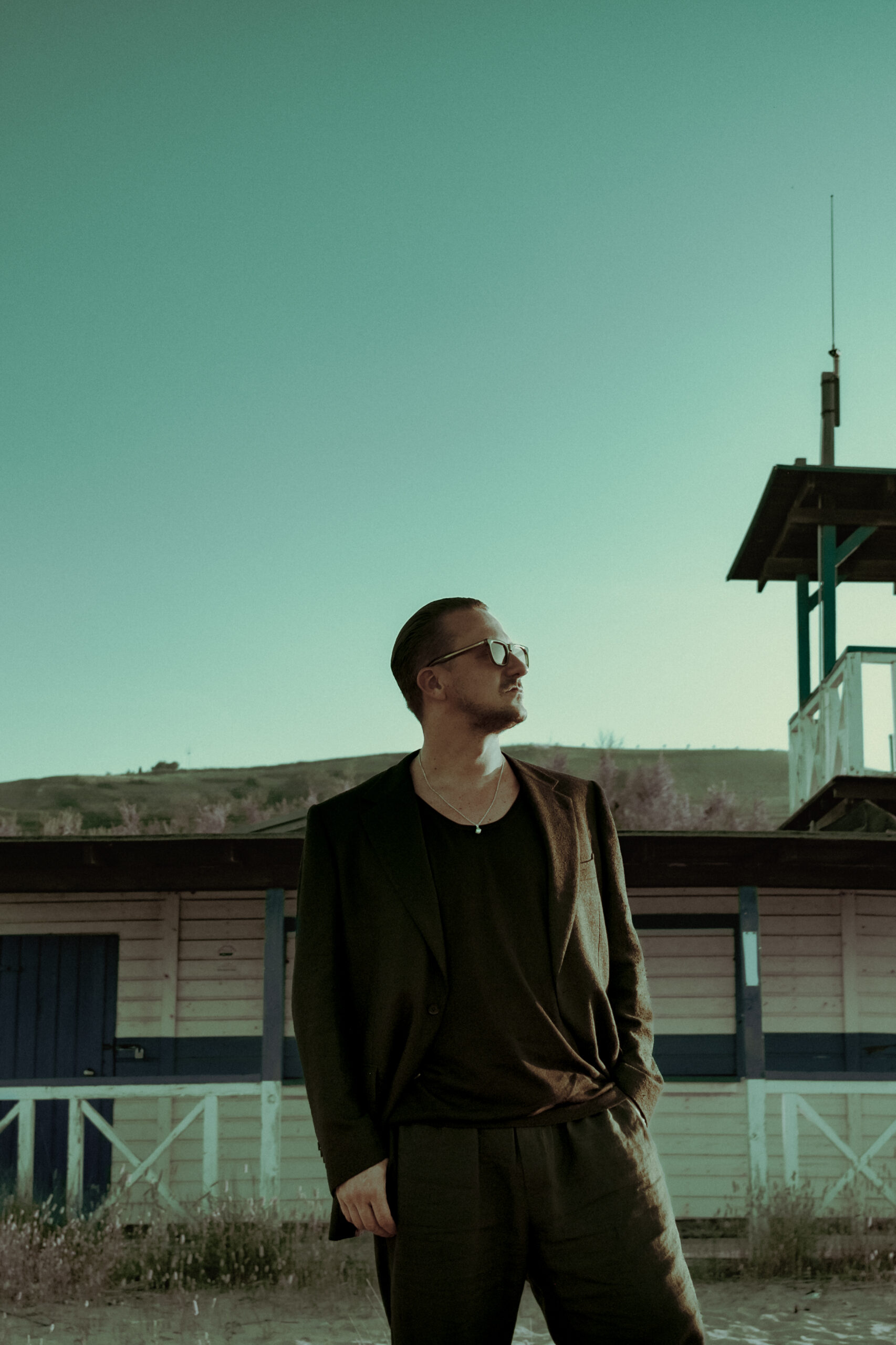
Giulio Nenna is an Italian multiplatinum producer, composer, orchestra director, and solo instrumental artist, with more than 40 platinum certifications and collaborations spanning artists such as Irama, Shiva, Ana Mena, Alfa, Rkomi, Ste, and international orchestral ensembles. He has conducted orchestras for RAI and at the Sanremo Festival, including performances for Irama and Riccardo Cocciante (author of the musical Notre Dame de Paris), and has contributed to major live productions across Italy and Europe.
As music director for VIVO Concerti, a composer for Rockin’1000, and a collaborator in film music with Rodeo Drive Productions, Nenna brings a distinctly cinematic sensibility to his work.
His instrumental single Puerta del Sol introduces his first solo project and serves as the lead track from his forthcoming album In My Past Lives, due this spring, a collection that explores memory, identity, emotional archaeology, and artistic reincarnation through a Mediterranean, guitar-driven sound.
You’ve helped shape the sound and identity of many artists over the years. What inspired you to step forward with your own voice and create a deeply personal work like In My Past Lives?
Before I began my career in pop music, I was already on this path. Instrumental writing, atmosphere, silence, and a more contemplative way of composing were part of my world from the very beginning. Pop came later — and it gave me an extraordinary journey, shaping me professionally and emotionally. But that original impulse never disappeared. It stayed inside me.
In My Past Lives is my return to that place, but with a different level of awareness. Today I feel the need to reclaim a more meditative and emotionally essential dimension of music — something closer to spirituality than entertainment. A space where music doesn’t have to explain itself, compete, or chase immediacy, but can simply exist, breathe, and resonate.
So this project is not a break from my past — it’s an evolution of it. It’s the same inner language I had years ago, now expressed with maturity, clarity, and the life experience I’ve gained along the way.
Each track feels like a chapter in a larger emotional arc — from birth to love, loss, and rebirth. How did you approach structuring the album as a journey through memory, transformation, and inner life?
I wanted the album to feel less like a collection of songs and more like a ritual journey. Each piece represents an emotional threshold, almost like a chapter in a symbolic life cycle: birth, discovery, longing, love, separation, death, and rebirth. I was very interested in the idea that music could mirror the way memory works — not in a linear way, but as a sequence of emotional states, echoes, and returns.
So, the structure of the album became essential. I thought carefully about the order of the tracks, the emotional weight of each chapter, and the way one piece could prepare the listener for the next. I wanted the album to feel like walking through different rooms of the same soul. Some chapters are warmer and more open, others more introspective or suspended, but all of them belong to the same inner narrative.
At its core, In My Past Lives is about transformation — about the idea that we carry many versions of ourselves, and that music is the key to remind us of them.
Your music evokes vivid imagery, from the flamenco warmth of Puerta del Sol to the intimate melancholy of Recuerdos de Ti. How have Mediterranean sensibility and cinematic tradition influenced your compositional language?
They are central to everything I do. The Mediterranean, to me, is not just a geography — it is an emotional and spiritual landscape. It carries light and shadow, sensuality and nostalgia, ritual and movement. Those contrasts are deeply present in my music. The warmth of the guitar, certain modal colors, the sense of dust, wind, sunset, distance — all of that comes very naturally to me.
At the same time, I have always felt very connected to cinematic composition, especially Italian film music. I grew up with the idea that music should be able to create images, to suggest space, memory, and emotional depth. Composers like Ennio Morricone left a profound mark on me in that sense. I am drawn to melodies that feel visual, to arrangements that open landscapes, and to music that seems to hold a story even without explaining it.
So, in my work, Mediterranean roots and cinematic language meet very organically. One gives me emotional texture; the other gives me narrative form.
Coming from a world of pop production and hit-making, what did it mean for you to move into purely instrumental storytelling? Did the absence of lyrics feel more liberating, more exposing, or both?
We live in a world where so many words are spoken, repeated, and overused that they often lose their weight. For decades, songs have revolved around the same themes — and naturally, they tend to circle back to familiar phrases and narratives.
Sometimes, what is not said opens the most powerful inner worlds — something subliminal. With instrumental music, you can create a vibration that awakens an emotional dimension in the listener and then leave their own feelings to translate it into thought — and, eventually, into words. To me, that is one of the most profound forms of communication. It’s also why certain film scenes become immortal: the music alone can carry an entire universe of emotion without needing explanation.
Beyond that, removing lyrics makes the music immediately universal — no language barriers, no cultural translation needed. It can travel straight to the core, anywhere in the world.
This piece introduces In My Past Lives with a minimal and intimate atmosphere. What does it represent for you on a personal level, and why did it feel right as the opening chapter for listeners?
This piece represents a threshold. It is the moment before language, before identity is fully formed — something like an awakening, or the first breath of consciousness. I wanted the opening of the album to feel pure, intimate, and almost sacred, as if the listener were entering a private inner space for the first time.
On a personal level, it reflects a state of deep listening — the moment in which we reconnect with something ancient in ourselves, something fragile but essential. That is why the arrangement is minimal. I wanted every element to feel necessary, suspended, and emotionally transparent.
As an opening chapter, it felt right because it does not impose — it invites. It opens the door gently but already contains the soul of the entire record: memory, vulnerability, and the sense that what we are hearing belongs to a much longer journey.
The In My Past Lives video playlist creates a visual thread across the album’s chapters. How did you conceive this series so that it could reflect the same emotional movement — from birth to rebirth — that defines the music?
From the beginning, I wanted the visual world of In My Past Lives to be inseparable from the music. The videos are not just illustrations of the tracks; they are extensions of the same emotional universe. I conceived them as a sequence of symbolic fragments — almost like visions or memories — each one carrying the atmosphere of a specific chapter while still belonging to a larger arc.
I was interested in images that could feel timeless: landscapes, movement, solitude, ritual, the body in relation to nature, the sense of crossing from one state into another. That allowed the visual series to mirror the album’s emotional path in a way that felt organic and poetic.
The overall intention was to make the listener feel that each chapter is part of a larger cycle — not just a song, not just a video, but one step in a passage from origin to transformation. To translate my ideas into the video works, the contributions of directors Alexander Coppola and Mario Silvestrone were immensely important.
You’ve conducted orchestras for RAI and at Sanremo, working with large ensembles and expansive arrangements. How has that experience shaped the more introspective, cinematic dimension of this album?
Working with orchestras taught me a great deal about emotional architecture. When you conduct large ensembles, you develop a very deep awareness of space, tension, movement, and the relationship between silence and impact. You learn how a single melodic gesture can expand when supported by arrangement, and how dynamics can completely transform the emotional meaning of a piece.
Even though In My Past Lives is much more intimate in spirit, that experience is still very present in the way I compose and produce. I think in scenes, in emotional layers, in the way elements enter and leave a frame. Even the most minimal pieces are shaped by that cinematic sense of structure.
So, in a way, the orchestral world gave me scale, while this album gave me intimacy. In My Past Lives exists precisely in the dialogue between those two dimensions.
After exploring these “past lives” through music, where do you feel this journey is leading you next? Do you see yourself going even deeper into instrumental composition, or returning to the pop world with a renewed perspective?
I feel this journey is opening both paths at once. In My Past Lives is not a detour for me — it is a necessary expansion of who I am as an artist. It has reconnected me with a more contemplative, cinematic, and essential relationship with music, and I definitely feel the desire to go even deeper into that world.
At the same time, this experience is also transforming the way I relate to pop. I think returning to that space with this new awareness can only make my work richer, more intentional, and more emotionally honest. So, I do not see these worlds as separate anymore — they nourish each other.
What matters most to me now is to keep following what feels true — whether that takes the form of instrumental composition, visual storytelling, or new collaborations. This project has reminded me that the real path is always the one that brings you closer to your own artistic essence.
https://www.instagram.com/giulionenna/
About The Author