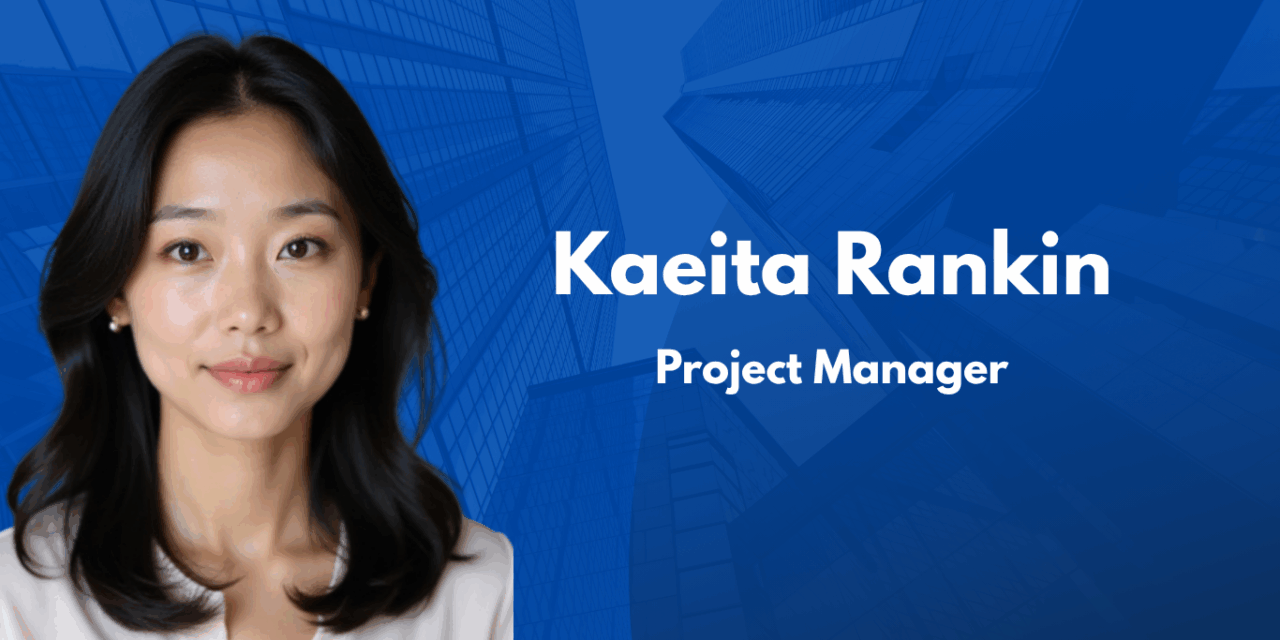
Kaeita Rankin is a seasoned project manager who has dedicated her career to guiding teams through complex projects and helping organizations achieve measurable success. With over a decade of experience, she has built a reputation as a dependable leader who can balance strategy with execution.
Kaeita’s professional journey began in operations, where she quickly developed a knack for coordinating processes and ensuring efficiency. Transitioning into project management, she honed her ability to manage budgets, schedules, and teams across industries ranging from technology to organizational development. Her structured yet flexible approach allows her to manage shifting priorities without losing sight of long-term objectives.
A believer in clear communication, Kaeita is often the link between executive leadership and technical teams, ensuring everyone is aligned. She is skilled in risk assessment, process improvement, and stakeholder management, consistently driving projects forward while maintaining strong relationships with those she works alongside.
Her qualifications include a bachelor’s degree in business administration as well as certifications in Agile and Lean methodologies, tools she uses to foster adaptability and efficiency. Colleagues often describe her as detail-oriented, resourceful, and approachable, someone who motivates others to bring their best to the table.
Outside of work, Kaeita finds balance in hiking, community volunteering, and traveling. These personal passions feed her creativity and broaden her perspective, which she applies to solving problems in her professional life.
Kaeita Rankin is more than a project manager—she is a dedicated leader who inspires teams, delivers results, and creates lasting impact in every organization she serves.
What inspired you to pursue a career in project management after starting out in operations?
When I began my career in operations, I was drawn to the structure, systems, and measurable results that came with ensuring processes ran smoothly. Over time, though, I realized what truly energized me wasn’t just optimizing workflows but connecting the dots between people, performance, and outcomes. I wanted to understand the “why” behind every initiative and help teams see how their work contributed to something larger. Project management gave me that opportunity. It allowed me to combine my love for organization with leadership, strategy, and collaboration—helping people achieve goals that once seemed out of reach.
How has your background in operations influenced your approach as a project manager?
My operations background gave me a deep appreciation for efficiency and structure, which continues to influence how I approach projects. It trained me to analyze systems, identify areas for improvement, and understand how small process changes can lead to major results. But perhaps the most valuable lesson was learning that processes only work when people do. Operations taught me to focus on communication, consistency, and accountability. Now, as a project manager, I use those principles to ensure that every project not only runs smoothly but also aligns with the organization’s long-term goals.
What do you think sets a great project manager apart from a good one?
A great project manager goes beyond managing tasks—they lead people. Good project managers focus on deadlines, budgets, and deliverables, but great ones understand how to bring out the best in their teams. They listen, adapt, and build relationships rooted in trust. Great project management is about empathy, clarity, and empowerment. When people feel heard and valued, they take ownership of their work, and that’s when projects truly thrive. I’ve learned that it’s not just about finishing the project; it’s about how you lead people through the process and what they learn along the way.
How do you handle situations where priorities or project goals suddenly shift?
Change is inevitable in project management, and how you handle it defines your leadership. When priorities shift, I start by understanding the reason behind the change. Once the “why” is clear, I re-evaluate timelines, resources, and objectives, then communicate the new direction to the team. Transparency is key—people need to understand not just what’s changing, but how it impacts their work. I also focus on maintaining morale during these transitions. By fostering open dialogue and flexibility, I help my team stay solution-focused rather than overwhelmed. Change doesn’t have to derail progress—it can often spark innovation.
You’ve worked across multiple industries. How do you adjust your management style for different environments?
Every industry has its own rhythm and culture, so adaptability is crucial. My first step in any new environment is to listen, observe, and understand what success looks like for that organization. In technology, agility and speed often drive success, while in organizational development, communication and alignment take center stage. I adjust my leadership style by blending structure with flexibility—providing clarity while allowing room for creativity. No matter the industry, I prioritize building trust and clear communication. Once those foundations are in place, it becomes much easier to guide teams toward shared goals, regardless of the setting.
What role does communication play in your day-to-day leadership?
Communication is at the heart of everything I do as a project manager. I often act as the bridge between executive leadership and technical teams, ensuring that everyone stays aligned and informed. Clear, consistent communication prevents misunderstandings and keeps projects moving forward efficiently. I also encourage open conversations where team members can share ideas or raise concerns without hesitation. This transparency builds trust and accountability. For me, communication isn’t just about sharing information—it’s about creating understanding. When everyone feels heard and informed, collaboration becomes smoother, and the overall project outcome improves significantly.
How do you maintain team motivation during high-pressure projects?
During high-pressure projects, I focus on creating an environment of support and recognition. People often perform their best when they feel valued, so I make it a point to acknowledge progress, no matter how small. I also encourage open communication, where team members can share challenges and brainstorm solutions together. Keeping everyone connected to the bigger purpose behind the project helps sustain motivation through tough moments. I remind the team that pressure doesn’t always have to mean stress—it can be a sign that we’re doing something impactful. When people believe in their work, their energy naturally follows.
Can you share a lesson from a project that didn’t go as planned?
One project early in my career faced significant delays because we underestimated the complexity of stakeholder approvals. At first, it was discouraging, but it became a valuable learning experience. I realized how critical it is to anticipate risks early, communicate proactively, and map out every dependency before execution begins. Since then, I’ve become meticulous about stakeholder engagement—ensuring expectations are set clearly from the start. That project taught me resilience and humility. Mistakes can be frustrating, but they’re also opportunities to refine processes and grow as a leader. It reinforced my belief that progress often comes from reflection.
How do your personal interests, like hiking and volunteering, influence your work?
My personal interests play a big role in shaping how I lead and problem-solve. Hiking teaches me patience and perspective—it reminds me that every big goal is reached step by step. It’s a lesson I carry into managing long-term projects. Volunteering, on the other hand, deepens my sense of empathy and teamwork. It’s about listening, supporting, and helping others achieve something meaningful. Both activities help me stay grounded, creative, and balanced. They remind me that leadership isn’t about control—it’s about service. Those experiences outside of work directly influence the way I guide teams and approach challenges.
What advice would you give to someone just starting out in project management?
I would tell them to focus on mastering communication and building relationships before anything else. Tools and certifications are valuable, but they can’t replace emotional intelligence and adaptability. Listen more than you speak, ask questions, and learn from every project—even the difficult ones. Understand that leadership is not about having all the answers but creating an environment where others can thrive. Stay curious, stay humble, and never stop learning. Project management is about progress, not perfection, and every experience—good or bad—teaches you how to lead with more confidence and compassion.
About The Author