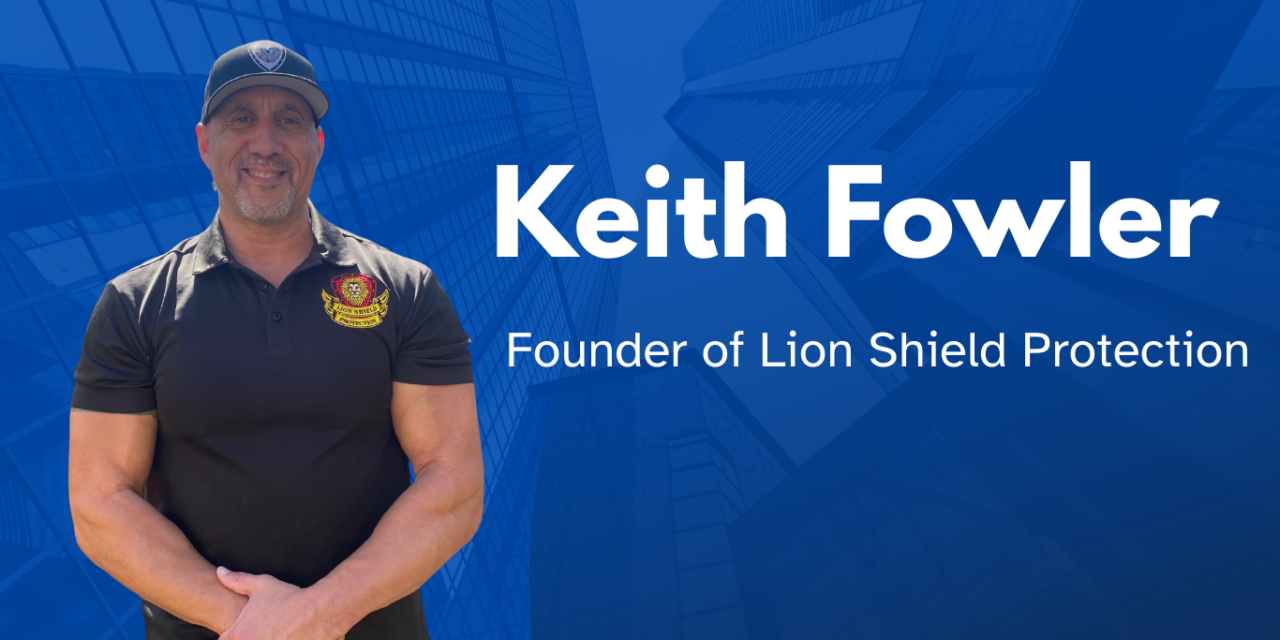
Keith Fowler is an entrepreneur and the founder of Lion Shield Protection, a respected security company based in Orange County, California. Known for his hands-on leadership and strong work ethic, he has built a career rooted in discipline, consistency, and trust. Fowler began his journey in trade school, where he learnt the value of precision and responsibility. He later earned a Bachelor’s Degree in Criminal Justice and Organisational Leadership from Mountain State University, giving him the strategic foundation to lead teams and manage complex operations.
Keith Fowler launched Lion Shield Protection with a clear vision: to raise standards in an industry that often struggles with reliability. His company now provides armed and unarmed security officers to shopping centres, private venues, events, and schools across six Southern California counties. He is known for leading by example, often saying, “You cannot ask your team to do something you would not do yourself.” This practical and accountable approach has shaped the culture of his business and earned him respect within the industry.
Outside of work, Fowler stays grounded through weightlifting, boating, wakeboarding, and sport. These activities keep him focused and disciplined, qualities he brings into his professional life. He is also deeply committed to philanthropy, supporting cancer-related charities such as St. Jude Children’s Research Hospital, CHOC Hospital, Shriners Hospital, the Jimmy Fund, and Orangewood for Kids.
How did your career in the security industry begin?
I came into the industry in a very practical way. After secondary school, I went straight into trade programmes because I wanted to learn skills I could use immediately. Trade school teaches you discipline. You learn to be on time, finish what you start, and take responsibility for the result. Those lessons became the foundation for everything that followed. When I eventually stepped into security roles, I realised how much those early habits mattered. Security work is built on consistency and attention to detail.
What role did your education play in shaping how you lead and run a business?
Trade school taught me how to work. University taught me how to lead. Studying Criminal Justice helped me understand the systems and behaviour that shape this industry. Organisational Leadership gave me a framework for communication, accountability, and team structure. When I started Lion Shield Protection, those pieces came together. I didn’t just want to know how to do the job—I wanted to build something durable with a strong internal culture.
What was the driving idea behind launching Lion Shield Protection?
The idea was to raise the standard. I saw companies focused on filling posts instead of building relationships or training officers properly. I wanted something different. In the beginning, I handled nearly everything myself—scheduling, payroll, client calls, even taking last-minute shifts. I remember covering a post at a private event and the client saying, “I didn’t know the owner comes out here.” My answer was, “I won’t ask my team to do anything I wouldn’t do.” That has guided me ever since.
What has been the biggest challenge in growing a security company?
Credibility. When you’re new, trust doesn’t come automatically. You have to prove yourself one decision at a time. In security, people rely on you for safety, so promises mean very little without consistent action. In the early years, I worked some extremely long days to ensure we delivered exactly what we said we would. Those moments built our reputation. Clients saw the commitment, and officers understood the standard.
How is the industry changing, and how do you adapt to those changes?
Technology is becoming a bigger part of the job—smart cameras, sensors, digital reporting systems. Those tools help, but they don’t replace people. Human judgement and awareness are still at the core of what we do. Our approach is to stay current with technology while keeping the foundational skills strong. I often say, “Technology supports the officer, not the other way around.”
You’re known for being a hands-on leader. Why is that important to you?
Leadership isn’t about titles. It’s about example. When your team sees you turn up, communicate clearly, and take responsibility, it sets the tone. Company culture starts at the top. If I want officers to take pride in their work, I have to demonstrate that same pride. When people feel their leader is truly in it with them, performance and morale both improve.
How do your hobbies outside of work influence your career?
Fitness and sport keep me balanced. Weightlifting teaches discipline and resilience. Boating and wakeboarding remind me to slow down and enjoy the moment. Baseball and football taught me teamwork from a young age. You can have all the talent in the world, but if the team isn’t aligned, you won’t succeed. I apply that lesson every day with my staff.
Why are cancer-related charities such a major focus for you?
Supporting organisations like St. Jude, CHOC Hospital, Shriners Hospital, or the Jimmy Fund gives you perspective. You see families dealing with something far bigger than anything we face at work. It puts everything in context. It also reinforces that success isn’t just professional. It’s about what you contribute to the people around you.
Looking back, how do you define success today?
Success isn’t a finish line. It’s something you work at daily. It’s about integrity—doing what you say you will, treating people fairly, and creating a positive impact. When your team grows, when clients trust you, and when your community benefits from what you built—that’s success. If you can build something real and help people along the way, you’re on the right path.
About The Author