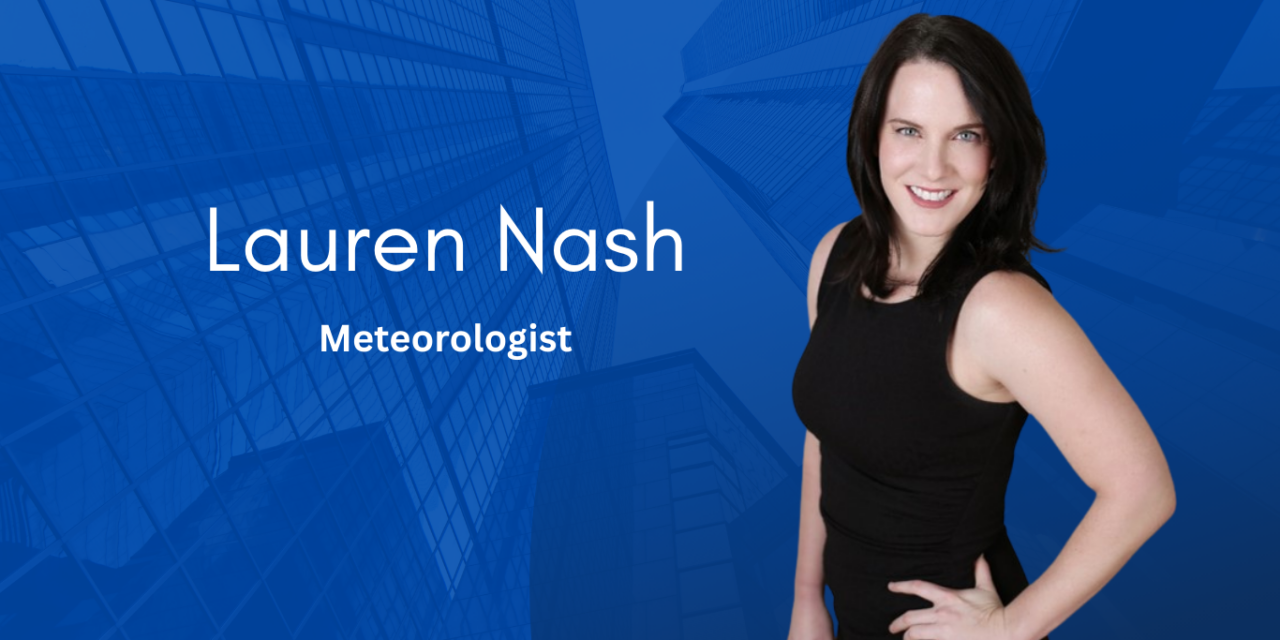
Lauren Nash is a seasoned meteorologist and public-facing science professional known for translating complex weather events into clear, actionable insight. With experience spanning broadcast media, emergency operations, and community engagement, she has built a reputation for calm leadership and credible communication during high-impact weather situations. Throughout her career, Lauren has appeared in nationally recognized weather coverage and educational media, including widely viewed demonstrations that bring atmospheric science to life for broad audiences. Her ability to explain severe weather phenomena in accessible ways has made her a trusted voice during moments when accurate information matters most.
She has also contributed to professional meteorological organizations, sharing early-career perspectives and supporting the advancement of science communication within the field. Lauren has served inside Emergency Operations Centers during two major hurricanes, working alongside multidisciplinary teams responsible for real-time decision-making and public safety coordination. In these high-pressure environments, she supported life-saving efforts by helping interpret evolving weather data and ensuring stakeholders had the information needed to respond quickly and effectively. These experiences shaped her strong sense of responsibility and reinforced the human impact of timely, accurate forecasting.
Beyond her professional work, Lauren remains deeply committed to service. She has volunteered extensively with organizations supporting individuals experiencing homelessness and has held active roles within both her sorority and the Junior League. Through these efforts, she has focused on leadership development, community outreach, and hands-on service initiatives that create measurable local impact. Today, Lauren continues to apply her expertise at the intersection of science, communication, and service. She brings integrity, adaptability, and purpose to every role she takes on, driven by a belief that informed communities are safer, stronger communities.
You have worked across broadcast media and emergency operations. What first inspired you to pursue meteorology as a career?
I grew up fascinated by storms. I remember standing by the window as a child, watching the sky shift colors before a thunderstorm and wondering how something so beautiful could also be so powerful. That curiosity never left me. In school, I gravitated toward science and math because they helped explain the patterns I observed. Over time, I realized meteorology offered more than intellectual challenge. It offered public service. Weather affects everyone. I chose this field because I wanted to help people understand what was happening around them and make informed decisions that could protect their families and their homes.
You are known for translating complex weather events into clear, actionable insight. How do you approach making science accessible without oversimplifying it?
I start by respecting the audience. People do not need every technical term, but they do deserve accuracy. When I communicate, I focus on what matters most. What is happening, why it matters, and what someone should do next. I avoid jargon unless I can define it clearly in plain language. I also use relatable comparisons that connect atmospheric processes to everyday experiences. My goal is never to impress someone with complexity. It is to empower them with clarity. When people understand the science, they feel less anxious and more prepared, and that is always the priority.
You have served inside Emergency Operations Centers during two major hurricanes. What did those experiences teach you about leadership under pressure?
Working in an Emergency Operations Center changes your perspective. The atmosphere is intense because every decision has real consequences. I learned quickly that calm communication can steady a room. When data updates arrive rapidly, you must interpret them carefully and speak with precision. There is no room for speculation. Those experiences reinforced the importance of teamwork. Meteorologists collaborate with emergency managers, public safety officials, and community leaders. Each person plays a role. I saw firsthand how clear information supports life saving action. It strengthened my sense of responsibility and deepened my respect for the people who serve during crises.
During high-impact weather events, how do you balance urgency with accuracy in public messaging?
Accuracy must always lead. In fast evolving situations, it is tempting to move quickly, but moving quickly without verification can cause confusion. I focus on confirmed data and clearly communicate what we know, what we do not know, and what may change. Transparency builds trust. When forecasts shift, I explain why. I also emphasize practical steps people can take immediately. Urgency does not mean alarm. It means prioritizing safety. People respond better when they feel informed rather than frightened. My responsibility is to provide clarity so communities can act confidently, even when conditions are uncertain.
You have appeared in nationally recognized weather coverage and educational media. How does public visibility influence your approach to communication?
Public visibility carries responsibility. When millions of people may hear your words, you must be thoughtful about tone and clarity. I prepare thoroughly before any appearance. I anticipate questions and consider how different audiences may interpret information. I remind myself that behind every screen is a family deciding whether to evacuate or a teacher planning a school schedule. That perspective keeps my focus on service rather than performance. Visibility also creates opportunities to inspire curiosity about science. When viewers understand how the atmosphere works, they become more engaged and more resilient during severe weather.
What role do professional meteorological organizations play in strengthening science communication?
Professional organizations create space for collaboration and growth. Early in my career, I benefited from mentors who shared guidance on communication and ethics. Contributing to these organizations allows me to give back. We discuss emerging technologies, evolving forecasting models, and the importance of public trust. Science communication is not static. It evolves as audiences and media platforms evolve. Through these networks, we share best practices and encourage young meteorologists to view communication as a skill that deserves as much attention as technical forecasting. Strong communication supports the credibility of the entire field.
How have your volunteer efforts with organizations supporting individuals experiencing homelessness shaped your professional perspective?
Volunteer work keeps me grounded. It reminds me that weather impacts people differently depending on their circumstances. A cold front means something very different to someone without shelter. Serving in these communities reinforces why clear communication matters. Forecasts influence warming centers, resource allocation, and outreach efforts. My volunteer roles within my sorority and the Junior League have also strengthened my leadership skills. Organizing initiatives, collaborating with diverse teams, and focusing on measurable outcomes mirror the teamwork required in emergency operations. Service informs my work and ensures that I never lose sight of the human dimension behind the data.
In moments when forecasts evolve rapidly, how do you maintain public trust?
Trust grows from consistency and honesty. I never present a forecast as absolute when uncertainty exists. Instead, I explain probability in clear terms. If new data changes the outlook, I address it directly and explain the reasoning. People understand that science evolves. What they need is transparency. I also maintain a steady tone and body language during broadcasts. Confidence without arrogance reassures viewers. Over time, communities learn that I will provide the most accurate information available and update it responsibly. That reliability strengthens trust long after a storm passes.
What advice would you give to young women considering careers in meteorology or science communication?
I would encourage them to pursue both technical excellence and communication skill. Do not separate the two. Learn the science thoroughly, but also practice explaining it clearly. Seek mentors who challenge you and support you. Step into leadership opportunities, even when they feel intimidating. I have learned that preparation builds confidence. When you know your material, your voice carries authority. I also believe representation matters. Seeing women in visible scientific roles helps shift expectations. The field benefits from diverse perspectives. Your insight and dedication can shape safer, stronger communities.
Looking ahead, how do you see your role evolving at the intersection of science, communication, and service?
I want to continue strengthening the bridge between data and community action. Technology will advance forecasting capabilities, but human connection will remain essential. I plan to expand educational outreach so more people understand how weather models work and how to interpret risk. I also hope to remain involved in emergency operations and mentorship initiatives. At every stage of my career, I return to one belief. Informed communities are safer communities. Whether I stand in a broadcast studio or sit inside an operations center, my purpose stays the same. Clear science saves lives, and I am committed to serving that mission.
About The Author