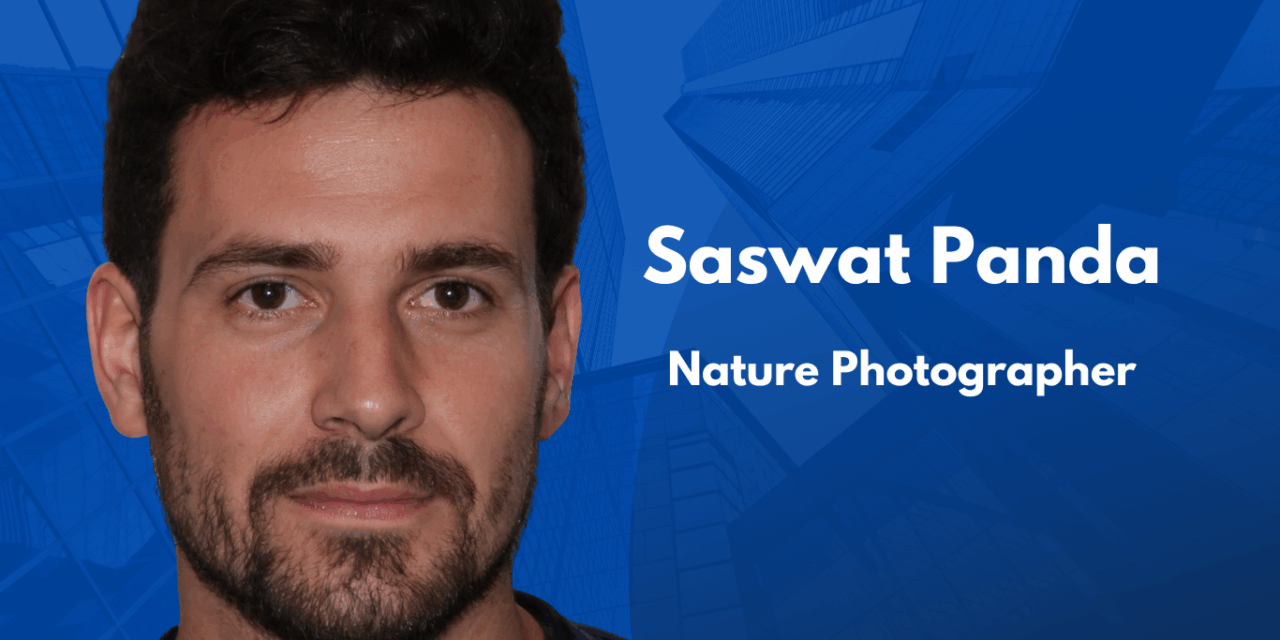
Saswat Panda is an award-winning nature photographer based in Atlanta, Georgia, known for capturing the subtle beauty of wildlife and wild landscapes across North America and beyond. With a background in environmental science and a lifelong passion for the outdoors, Saswat has developed a signature style that blends scientific curiosity with artistic expression. His work has been featured in National Geographic, Outdoor Photographer, and the Smithsonian Magazine.
Growing up near the Appalachian foothills, Saswat developed an early fascination with the rhythms of the natural world. After earning a degree in Environmental Studies from the University of Georgia, he spent several years working with conservation nonprofits before turning to photography full time. His early portfolio, centered on the Okefenokee Swamp and the Georgia coast, earned him regional acclaim and led to a series of national photography residencies in Alaska, the Pacific Northwest, and the Sonoran Desert.
Saswat’s photographs are noted for their quiet intensity, often focusing on overlooked species, changing ecosystems, and the tension between human presence and wild space. Whether photographing red wolves at dawn or a thunderstorm breaking over the Great Smoky Mountains, he seeks to tell stories that inspire ecological awareness and emotional connection.
Today, Saswat leads seasonal photo workshops, collaborates with environmental organizations, and maintains a strong social media presence where he shares behind-the-scenes insights into his fieldwork. He is also currently working on his first photo book, Still Wild, which explores the endangered spaces of the American South.
Your career path is a unique fusion of environmental science and art. How did that transition from working with conservation nonprofits to becoming a full-time nature photographer come about, and what role does your scientific background play in your work?
My background in environmental science is the foundation of everything I do. It was never a true transition, but more of a natural progression. Working with nonprofits, I saw a gap between scientific data and public connection. I realized that while data is crucial, an emotional connection is what truly inspires action. My photography became a way to bridge that gap, allowing me to tell the stories behind the science.
You grew up near the Appalachian foothills. Can you share a specific memory from that time that you feel ignited your lifelong fascination with the natural world?
I remember a day as a child when a storm rolled in, and the wind began to roar through the ancient trees. I felt the raw power of nature in a way I never had before. It wasn’t just a weather event; it was a living, breathing force. That moment ignited a deep-seated curiosity about the rhythms of the natural world, a fascination that has guided my path ever since.
In an age of instant gratification and viral content, how do you maintain your “do no harm” ethical philosophy when there’s so much pressure to get a sensational shot?
The pressure is real, but I believe it’s a distraction from the true purpose of the work. I remind myself that a photograph is never worth compromising an animal’s well-being. This requires immense patience and discipline. Rather than chasing a dramatic, staged moment, I wait for a natural one to unfold, which often results in a more authentic and powerful image.
Your first book, Still Wild, focuses on the endangered spaces of the American South. What is it about this region that makes it so significant to you personally and to the conservation narrative?
The American South is home. My connection to places like the Okefenokee Swamp and the Georgia coast is deeply personal. This region is often overlooked in mainstream conservation narratives, but it holds a wealth of unique ecosystems and incredible biodiversity. Through Still Wild, I want to shine a light on these vulnerable landscapes and show people why they are worth protecting.
When you’re not behind the lens in a remote location, what do you do to recharge? What are your favorite things to do back home in Atlanta?
My life behind the camera is very deliberate, so my downtime is often the opposite. I love hiking without my gear, just to observe and be present. I also enjoy simple things like exploring the city’s green spaces or visiting local museums with friends and family. It’s important to find balance and to connect with people outside of my work.
You’re a strong advocate for community-led conservation. Why do you believe this grassroots approach is more effective than traditional, top-down models?
I’ve seen firsthand that local communities are the true custodians of their environments. They have generations of wisdom about their land that science cannot always replicate. When we empower these groups, they gain a sense of ownership, leading to more resilient and enduring conservation outcomes. My role is to use my platform to amplify their stories and show the world that the most effective change starts from the ground up.
What’s the most challenging part of your fieldwork that the average person might not consider when they see a beautiful, finished photograph?
The biggest challenge is often the waiting. It’s a test of patience, physically and mentally. I might spend weeks in the same location, enduring harsh weather, with no guarantee of a single frame. The work is physically demanding, but the emotional resilience needed to deal with disappointment and uncertainty is what truly defines the journey.
With so many photographers documenting environmental issues, what do you feel is the most critical role for nature photography in today’s world?
Today, photography has a moral imperative. It’s no longer just about capturing beauty; it’s about igniting a profound emotional connection in a world that is increasingly disconnected from nature. While data and reports are essential, a single powerful photograph can bypass the noise and speak directly to a person’s heart, inspiring a sense of wonder and responsibility that compels them to act.
As a teacher at seasonal workshops, what is the single most important lesson you hope to impart to the next generation of nature photographers?
The most important lesson has nothing to do with camera settings. It’s about cultivating a deep sense of respect for the natural world. I teach my students that the camera is a tool for storytelling, and the best stories are told with integrity. I want them to leave with an ethical framework that prioritizes the welfare of the environment above all else, making them responsible visual storytellers for our planet.
Where do you see the future of conservation heading, and what role will visual media play in that future?
I believe the future of conservation is collaborative. It will be a movement led by empowered communities working in concert with scientists and artists. Visual media, especially photography, will be the vital bridge connecting these efforts. My hope is that it will be used to tell a new story, one of resilience, collaboration, and hope, showing that it’s not too late to build a more sustainable future.
About The Author