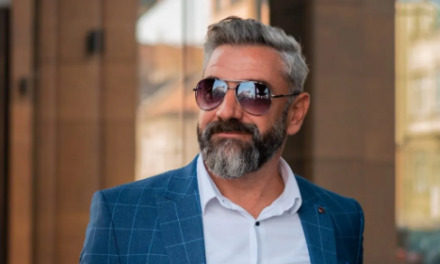
Suha Atiyeh is an accomplished marketing executive based in Birmingham, Alabama, with over a decade of experience in building and scaling high-impact, full-funnel marketing strategies. Her career is distinguished by a deep understanding of the entire customer lifecycle, from initial acquisition to long-term retention and advocacy. She excels at synthesizing market research, competitive analysis, and performance data to develop cohesive brand narratives that resonate across diverse audiences and channels. Suha has a proven history of transforming marketing departments from cost centers into significant revenue-generating engines for companies across the fintech, healthcare, and retail sectors. She operates with a firm belief that strategic marketing must be both an art and a science, blending creative intuition with rigorous analytical discipline to achieve exceptional results and build lasting brand equity in competitive landscapes.
A graduate of the University of Alabama at Birmingham’s Collat School of Business, Suha remains deeply connected to her community. She is a passionate advocate for female entrepreneurship, volunteering her time as a mentor for a local initiative that supports women in launching and growing their own businesses. She is frequently sought after for her insights on market trends and effective brand positioning. Suha’s comprehensive approach and unwavering commitment to excellence have solidified her reputation as a transformative leader capable of navigating complex challenges and consistently delivering sustainable, measurable growth for her clients and their stakeholders.
How do you define “influential marketing” in a world saturated with digital noise?
Influential marketing today is not about shouting the loudest; it is about whispering the truth. Influence happens when a brand’s purpose aligns perfectly with a consumer’s values. It requires a deep understanding of human psychology, an ethical approach to data, and a commitment to storytelling that is honest, not just polished. When you treat your audience as intelligent partners, not just targets, your message naturally carries more weight. That is true influence.
You advocate for “Return on Empathy” (ROE). How does a large corporation actually measure empathy?
Measuring empathy requires looking beyond simple conversion rates to metrics of trust and relationship depth. We look at qualitative data: sentiment analysis, response rates to customer feedback, and the perceived utility of personalized offers. Quantitatively, it involves measuring customer lifetime value, brand advocacy scores, and, crucially, the “cost of indifference”; how much loyalty is lost when empathy is absent. It is complex, but the data is there if you choose to interpret it through a human lens.
What is a non-negotiable ritual you have maintained to stay grounded amid a chaotic schedule?
My non-negotiable ritual is an hour of “distraction-free darkness” before bed. I turn off all screens, leave my phone out of the bedroom, and read a physical book or simply sit in silence. This deliberate disconnection is essential because my work thrives on absorbing information; if I do not give my brain a hard reset, I lose my strategic edge. It is not just about sleep; it is about protecting my creative headspace from digital clutter.
Tell us about a time a major marketing campaign failed, and what that taught you about creative risk.
Early in my career, I championed a cutting-edge, data-driven campaign that was mathematically perfect but culturally tone-deaf. It failed because we prioritized algorithmic precision over genuine human relevance. The lesson was humbling: the most sophisticated technology cannot compensate for a lack of simple, relatable creative messaging. I overcame it by integrating more humanistic checks and balances into the process; now, every major strategy is vetted by a dedicated, non-data-centric creative review board.
If you had to bet on one emerging technology that will fundamentally change how brands connect with consumers, what would it be?
I believe the next frontier is the practical application of emotional AI in customer service and content creation. I am not talking about simple chatbots, but systems that can genuinely discern nuanced emotional states from text or voice, and then respond with appropriate, empathetic language. This technology allows brands to scale personalized care without sacrificing authenticity, transforming digital interactions from transactional exchanges into meaningful conversations.
Who was the most influential mentor in your career, and what single piece of advice changed your trajectory?
My most influential mentor was an art historian, not a marketer. She taught me that history and culture are cyclical; what seems new is often just a repackaged truth. Her advice was simple: “Always start with the human story, because the medium is temporary, but the human heart is not.” This shifted my focus completely. It taught me to study why people care about anything, which is far more valuable than studying how they click on a button.
Why is the collaboration between the tech startup scene and the local arts community so critical for innovation?
The two sectors operate on different, necessary forms of creativity. Tech excels at efficiency, scalability, and optimization; the arts thrive on questioning the status quo and imagining possibilities outside of existing constraints. When they collaborate, tech gains a crucial layer of emotional depth and human purpose, which leads to better design and user experiences. Conversely, the arts gain access to scalable platforms and tools, ensuring their cultural impact is amplified for a digital-first world.
Where do you go, or what do you do, when you need to recharge your creativity?
I find my creative clarity by traveling light and spontaneously. Last month, I spent a weekend hiking and deliberately left all my work devices behind. It is less about the destination and more about forced observation; seeing how other people live, what local businesses thrive, and what narratives shape a small community. This act of intentional detachment and immersion in a new environment always replenishes my creative reservoirs better than any structured retreat could.
What is the single most important piece of advice you would give to a new marketing graduate right now?
Stop chasing the latest platform certification and instead cultivate a profound curiosity about human behavior. Learn the foundational principles of psychology, economics, and storytelling. Platforms, algorithms, and ad formats are transient; a solid understanding of why people buy, connect, and trust is the ultimate, recession-proof skill set. Your career longevity depends on being a strategic translator between technology and humanity. Embrace lifelong, adaptive learning.
What do you hope your biggest contribution to the marketing industry will be five years from now?
I hope my biggest contribution will be solidifying the idea that ethical marketing is not a compromise; it is the superior long-term business strategy. I want to see “empathetic data stewardship” become a standard, non-negotiable pillar of every marketing curriculum and C-suite strategy. Ultimately, if I can help usher in an era where brands compete on the quality of their relationship with customers, rather than the invasiveness of their tracking, that will be a successful legacy.
About The Author