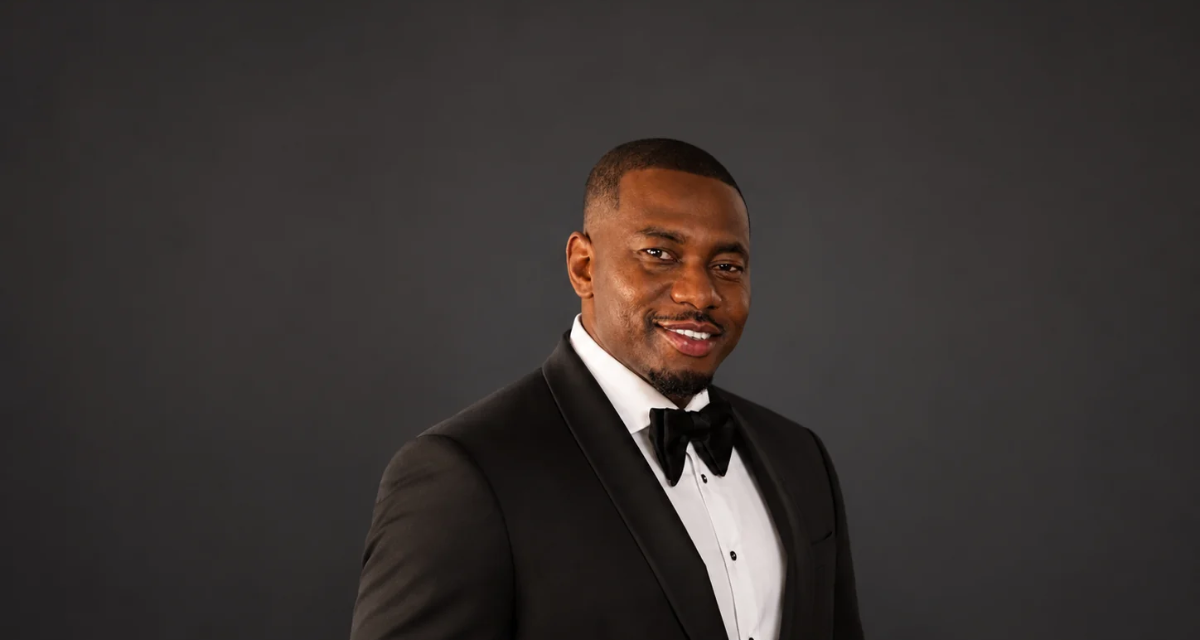
Therrian Fontenot knows what it’s like to spend years developing a skill. Growing up in Louisiana before moving to Los Angeles, California, he discovered an interest in football that eventually earned him a full athletic scholarship to Fresno State.
After graduating from Leuzinger High School in 2000, Fontenot attended Fresno State, where he continued playing football at the college level. He later left school early to pursue a professional career in the NFL.
Today, Therrian Fontenot lives in Tampa, Florida, where his interests have expanded beyond the football field. He enjoys golf, weightlifting, and staying physically active. While these activities share certain qualities with football, they also offer different experiences and opportunities to learn.
Golf, in particular, presents a different kind of challenge. Unlike football, where preparation often revolves around a team, golf requires patience with individual mistakes and a willingness to keep practicing without immediate results.
Fontenot has also begun exploring charitable work through Help2Others, an organization in its early stages. It’s another area where he has opportunities to learn, contribute, and develop new interests.
His background offers an interesting look at what happens when someone who spent years becoming good at one thing starts exploring others. Rather than treating unfamiliar experiences as obstacles, there’s value in approaching them with curiosity.
For Fontenot, his football years remain an important part of his life, but his current interests leave room for new experiences, different challenges, and the freedom to keep learning.
You spent years working to become a better football player. What’s it like starting something where you’re no longer the experienced person?
It’s actually refreshing in some ways. When you’ve played football for years, you develop certain expectations for yourself. You know what you should be able to do, and you can usually recognize when something isn’t working.
With something like golf, it’s different. You can understand what you’re supposed to do and still struggle to execute it. You might hit a great shot and then follow it with a terrible one.
I think adults sometimes avoid that feeling because nobody likes looking inexperienced. But if you only do things you’re already good at, you’re going to miss out on a lot.
What has golf taught you that you didn’t necessarily learn from football?
Golf has made me think more about how much attention I give to one mistake. In football, there’s usually another play coming quickly. You have teammates, coaches, and a lot happening around you.
In golf, you have more time to think about what went wrong. Sometimes that’s helpful, but sometimes it makes things worse.
You can spend the next few holes thinking about one bad swing, even though there’s nothing you can do to change it. I’ve found that getting better at anything requires knowing when to analyze a mistake and when to leave it alone.
Do you think people put too much pressure on themselves to turn every interest into an achievement?
Definitely. There’s this idea that if you enjoy something, you should eventually get really good at it, compete in it, or find some way to make it productive.
I don’t think everything needs to work that way. You can play golf because you enjoy being outside. You can lift weights because you like how you feel afterward. You don’t have to prove something every time you participate.
That’s one thing I appreciate more now. When I was playing football, performance mattered because it was tied to opportunities. These days, I can enjoy an activity without making every result a judgment of how I’m doing.
How do you decide whether something is worth continuing when you’re not seeing much improvement?
I think you have to separate being frustrated from genuinely not enjoying something. They’re not the same thing.
You might have a terrible day at golf and still want to come back the following week. That tells you something. On the other hand, you might be good at an activity but realize you’re only doing it because you’ve always done it.
I pay attention to whether I’m still interested in learning more. If I’m curious about what I could improve, that’s usually a good reason to keep going.
Does your background in football ever make it harder to accept that you’re not immediately good at something?
It can. When you’ve spent years in a competitive environment, you get used to comparing your performance with other people. That mindset doesn’t automatically disappear.
But I think there’s a difference between having competitive instincts and letting them control every experience.
For example, if I play golf with somebody who’s been playing for decades, it wouldn’t make sense to expect the same consistency. I can still be competitive, but I also have to recognize where I am in the learning process.
Sometimes the most useful thing you can do is ask someone who’s better than you how they approach something.
You’ve maintained an interest in weightlifting. How do you keep something familiar from becoming repetitive?
One thing I like about weightlifting is that you can change what you’re paying attention to. Some days, you might focus on strength. Other times, you’re thinking more about technique, mobility, or simply getting a good workout.
You don’t have to approach every session the same way.
I also think it’s important to recognize that your body changes over time. What made sense when you were playing competitive football might not be what you need years later. Being willing to adjust your routine can be just as useful as sticking to one.
You’re also beginning to explore charitable work through Help2Others. How do you approach something that’s outside your usual experience?
I think the first thing is recognizing what you don’t know. It’s easy to have a general idea about helping people, but putting that into practice requires understanding what people actually need.
With Help2Others, I’m still at the beginning of that process. I’d rather spend time learning how the organization can make a useful contribution than rush into making big promises.
That applies to a lot of new ideas, whether they’re related to business, community work, or personal interests. You don’t always have to arrive with all the answers. Sometimes you need to ask better questions first.
What do you think prevents people from trying something they’ve always wanted to do?
I think embarrassment plays a bigger role than people admit. When you’re younger, people expect you to be learning. You’re allowed to make mistakes because that’s part of growing up.
As an adult, you can start thinking you’re supposed to know how to do everything already.
But everybody starts somewhere. Nobody picks up a golf club for the first time and knows exactly what they’re doing. If you’re interested in something, you shouldn’t let the possibility of being bad at it stop you.
What’s something you’d like people to become more comfortable with?
Not having everything figured out. I think people can get so focused on knowing their next five steps that they forget to enjoy what’s right in front of them.
I’ve had experiences in football that I couldn’t have predicted when I was younger. Now I have interests that weren’t necessarily part of that original plan.
I think there’s something good about leaving room for surprises. You might discover that you’re interested in something you never considered before, or meet people you wouldn’t have crossed paths with otherwise.
Being open to those possibilities can make life a lot more interesting.
About The Author