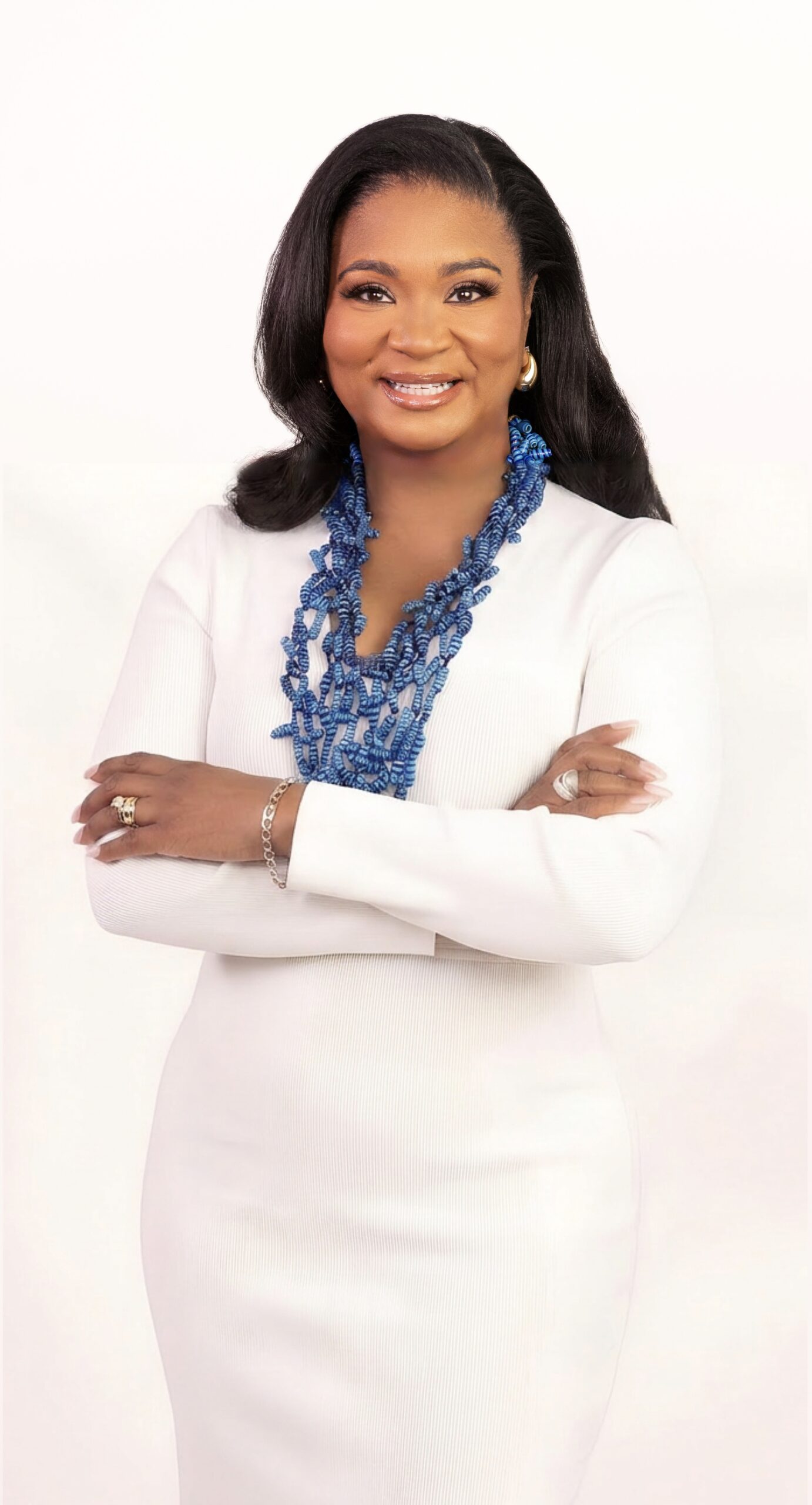
TIA BUCKHAM-WHITE
Culture. Behavior. Business Outcomes.
Four Perspectives. One Transformational Voice.
The Architecture of Awareness
How One Leader Is Rebuilding Organizational Culture From the Inside Out
PERSPECTIVE ONE: THE EXECUTIVE LENS
In boardrooms across America, a quiet crisis is unfolding. Leaders with impressive credentials and polished strategies are presiding over organizations that are quietly fracturing — not from market forces, but from a fundamental disconnect between who leaders think they are and how they actually show up. Tia Buckham-White has made it her life’s work to close that gap.
As the founder of Notre Internationale and a sought-after executive advisor, Buckham-White brings a distinct methodology to the C-suite: she believes that organizational culture is not built through mission statements or HR policies, but through the accumulated daily behaviors of those at the top. And those behaviors, she argues, are impossible to change without deep, uncompromising self-awareness. The data backs her up: research by organizational psychologist Dr. Tasha Eurich found that while 95% of leaders believe they are self-aware, only 10–15% actually are. That gap — between who leaders think they are and who they actually are — is precisely where Buckham-White does her most transformative work.
“Culture is not what you post on the wall. It’s what happens when no one is watching — and who you are when no one is watching begins with knowing yourself.”
Her executive engagements are not for the faint of heart. Buckham-White doesn’t traffic in flattery or comfortable affirmations. She asks the hard questions: What unconscious patterns are you bringing into every meeting? How does your emotional state ripple through your team? What stories are you telling yourself about your leadership that simply aren’t true?
The results speak clearly. Organizations that have worked with Buckham-White report measurable shifts in team cohesion, communication transparency, and decision-making velocity. But beyond the metrics, executives consistently describe something more difficult to quantify — a sense of finally understanding why their organizations behave the way they do.
“She helped me see that I was the bottleneck,” one CEO shared. “Not my team, not our processes. Me. And once I saw it, I couldn’t unsee it — and I didn’t want to.” That moment of uncomfortable clarity is exactly what Buckham-White is after. Because in her view, sustainable organizational transformation doesn’t begin with strategy. It begins with truth. And the numbers agree: a joint study by Green Peak Partners and Cornell University found that a high self-awareness score was the strongest single predictor of overall leadership success — outranking technical competence, strategic thinking, and even experience.
The Mirror Most Leaders Fear
Tia Buckham-White on the Science and Soul of Self-Awareness in Leadership
PERSPECTIVE TWO: THE HUMAN BEHAVIOR LENS
There is a particular kind of leader who is deeply committed to growth — who reads the books, attends the retreats, and genuinely believes they are self-aware. Tia Buckham-White has spent years working with exactly this type of leader. And she has found that the confidence of self-awareness is often its greatest obstacle. Research confirms the paradox: studies show that leaders in senior executive positions are actually less likely to be genuinely self-aware than those lower in an organization — in part because they receive less honest, consistent feedback the higher they climb.
Drawing from the fields of behavioral psychology, cultural anthropology, and organizational development, Buckham-White has developed a framework she calls “behavioral alignment” — the practice of ensuring that a leader’s stated values, internal beliefs, and outward actions are genuinely in harmony. The gap between these three elements, she explains, is where cultures quietly collapse.
“Most leaders are managing perception rather than reality. The work I do is helping them fall in love with reality — because that’s where real power lives.”
Her approach is grounded in the understanding that human behavior is layered. What we do is visible. Why we do it is often hidden — even from ourselves. The cultural narratives we absorbed in childhood, the relational patterns formed through trauma or triumph, the subtle biases encoded through years of conditioning — all of these show up in the conference room, whether we invite them or not.
Buckham-White is particularly interested in the intersection of cultural identity and leadership behavior. As a woman who has navigated predominantly white corporate spaces while remaining rooted in her own cultural heritage, she brings a nuanced understanding of what it means to lead authentically across difference. Her workshops create space for leaders to examine not just their individual behaviors, but the broader cultural systems those behaviors operate within.
The outcome of this work, she explains, is not perfection — it is presence. Leaders who have done the inner work don’t pretend to have all the answers. They know how to ask better questions. They hold space for complexity. They lead with the kind of grounded confidence that doesn’t need to perform certainty because it is rooted in something deeper: a genuine understanding of self. According to research, leaders who are self-aware and acknowledge their shortcomings are 7.5 times more likely to maintain employee trust — a figure that makes the case for vulnerability not as weakness, but as one of the most powerful strategic assets a leader can possess.
What Changes When the Leader Changes
Teams Describe the Ripple Effect of a Self-Aware Leader
PERSPECTIVE THREE: THE TEAM MEMBER LENS
Ask anyone who has worked under a leader who has genuinely done the inner work, and they will struggle to explain exactly what shifted. The meetings feel different. The conversations feel safer. The feedback lands differently. There is something almost ineffable about a leader who has looked honestly at themselves — and what Tia Buckham-White has discovered is that teams feel it before they can name it. “The energy changed,” one team member shared after their organization engaged Buckham-White’s process. “Our manager started saying ‘I was wrong’ and ‘I don’t know’ in a way that felt real instead of performative. And something unlocked in the team. People started taking risks again.” This is the downstream impact that Buckham-White is most passionate about — the invisible but powerful way that a leader’s transformation reverberates through an entire organization. Dr. Tasha Eurich’s research puts it plainly: unaware leaders can cut a team’s chances of success in half, while simultaneously increasing team stress, decreasing motivation, and raising the likelihood that top performers will leave.
“When a leader heals, a culture heals. You cannot separate the two. The team is always, always a reflection of its leadership.”
Her work with teams goes beyond observation — she actively equips team members with tools to navigate organizational culture with greater clarity and agency. She helps employees understand their own behavioral patterns, identify the cultural narratives shaping their responses, and communicate with leaders more effectively. The goal is not just better leaders, but healthier relational ecosystems.
Particularly powerful is Buckham-White’s work with teams navigating cultural diversity and generational difference. In organizations where multiple cultural frameworks coexist, the potential for misalignment is immense. Her facilitation creates space for these differences to be named, understood, and ultimately leveraged as organizational strengths rather than sources of friction.
Employees who have experienced her process describe a shift from feeling managed to feeling led — a distinction that seems subtle but is, in practice, everything. Being managed implies compliance. Being led implies shared direction, mutual respect, and the sense that someone at the front of the room has done the work to be worthy of the trust being placed in them. The stakes are real: only 33% of employees currently feel engaged at work, and 69% say they would work harder if they felt more appreciated and seen by their leaders. Tia Buckham-White is in the business of creating leaders worthy of that trust — and organizations worthy of their people.
Leadership as a Cultural Act
Why Tia Buckham-White Believes the Future of Business Is Inseparable From the Future of Culture
PERSPECTIVE FOUR: THE CULTURAL & SOCIETAL LENS
There is a moment in every great social transition when the personal becomes political, when the interior becomes exterior, when private transformation begins to reshape public life. We are living through such a moment now — a period of unprecedented cultural reckoning in which institutions, organizations, and the individuals who lead them are being asked to account for who they truly are. Tia Buckham-White has been preparing for this moment for decades.
Her thesis is deceptively simple: you cannot build an equitable, humane, and sustainable organization without leaders who are genuinely committed to understanding themselves. Not the curated, LinkedIn-ready version of themselves. The full, complicated, historically-shaped, culturally-formed human beings they actually are. The data reinforces the urgency: 77% of companies currently report that their leadership is ineffective, and employee trust in business leaders has dropped from 80% in 2022 to just 69% in 2024. We are not experiencing a strategy crisis. We are experiencing a self-awareness crisis — and Buckham-White has been sounding the alarm long before the numbers caught up.
“We cannot build a more just world through unjust habits of mind. The revolution — in business, in culture, in society — begins in the interior.”
Buckham-White is acutely aware of the particular urgency this work holds for leaders of color, women, and others who have historically been excluded from positions of organizational power. For these leaders, self-awareness is not just a performance tool — it is a survival strategy, a grounding mechanism that allows them to navigate systems designed for someone else without losing themselves in the process.
But her vision extends beyond individual leaders. She sees organizational culture as a microcosm of broader social culture — and believes that the transformation happening inside our most progressive organizations is quietly reshaping society itself. When a Black woman CEO learns to lead with unapologetic authenticity, she is not just improving her organization’s outcomes. She is expanding the cultural imagination of what leadership can look like. She is changing the story.
This is the dimension of Tia Buckham-White’s work that resists easy quantification. It cannot be captured in a quarterly report or measured in employee satisfaction scores. It lives in the accumulation of thousands of small moments — a leader who pauses before reacting, a team that tells the truth, an organization that holds complexity without fracturing. What we do know is this: companies with more self-aware leaders consistently outperform their peers financially, and a Korn Ferry study found that high-earning companies disproportionately employ professionals with elevated levels of self-awareness. These moments, multiplied across industries and institutions, are how culture changes. And Tia Buckham-White is convinced that it changes one self-aware leader at a time.
— About Tia Buckham-White —
Tia Buckham-White is a thought leader, speaker, and founder of Notre Internationale, dedicated to transforming leadership through self-awareness, cultural alignment, and the science of human behavior.
For speaking engagements and organizational consulting, visit notreinternationale.com.
To Book Tia, send an email to: SpeakerTeam@NotreInternationale.com | Website: www.TiaBuckhamWhite.com
About The Author