A Role Most Concertgoers Never See
A sold-out arena has ushers, sound engineers, security, and a crew that can strike a stage and load it into trucks in a few hours. It also, often, has a physician on call who has nothing to do with the audience. That doctor is there for the performers: the singer whose voice is giving out two songs before encore, the drummer who tweaked a shoulder during soundcheck, the band member managing a chronic condition while living out of a tour bus.
This is not emergency medicine in the usual sense, and it is not a typical house-call practice either. It sits in its own narrow lane, and most people who work in medicine never touch it.
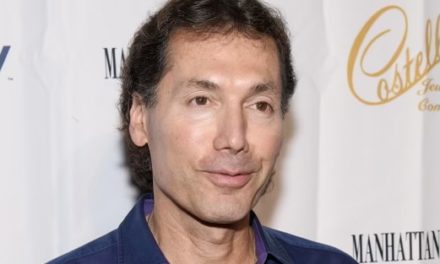
Edward Witt, a retired physician who spent 30 years practicing family medicine in Huntsville, Alabama, is one of the people who has. For years he served as the on-call physician, sometimes called a “Rock Doc,” for performers passing through Huntsville’s Civic Center, an arena that seats around 10,000 people. He cared for acts including Bob Dylan, Lynyrd Skynyrd, Chicago, Bryan Adams, Heart, and Rod Stewart, among others, and worked as a doctor for Elton John and for Hall & Oates over extended stretches of their touring careers.
Why a Touring Act Needs a Local Doctor at All
A national tour usually does not travel with a full medical staff. Crews are lean, and schedules move fast: load in, soundcheck, show, load out, drive to the next city. When something comes up, whether it is a sore throat before a vocal-heavy set or a stomach bug two hours before doors open, there often is not time to find a walk-in clinic and wait in a lobby.
That is the gap a venue physician fills. The arrangement usually runs through the venue rather than the tour itself: a local doctor who already knows the building, keeps flexible hours during show dates, and can be reached quickly if something comes up backstage. Over time, if a performer returns to the same city on repeat tours, that relationship can last years, which is part of why Witt’s work with the same artists continued for over a decade in some cases.
What the Job Involves
The medicine itself is not exotic. It is dehydration, strained vocal cords, minor injuries, travel fatigue, and the ordinary health conditions that do not pause because someone is on stage that night. What makes the job different is the setting.
There is no file on the patient. No years of history, no prior labs, often no time for a full workup before a decision has to get made. The physician has to assess quickly, treat conservatively, and understand that the patient has a show in a few hours regardless of what the diagnosis turns out to be. That pressure does not change the standard of care, but it does change how a doctor has to work: faster judgment, fewer resources, and a setting that was never built for medicine in the first place.
A Shift Toward Designated Venue Physicians
Large venues did not always formalize this role. For years, medical coverage for touring performers was handled informally, arranged by tour managers on the fly or left to whoever the local promoter happened to know. As tours have grown larger and liability has become a bigger concern for venues and promoters alike, more arenas now keep an established relationship with a local physician rather than scrambling each time an act comes through.
That shift matters for venue operators and promoters more than for the audience. A designated physician who already knows the building, the typical schedule of a show night, and the kind of issues that come up repeatedly can respond faster than someone brought in cold. It also gives touring acts some consistency: an artist returning to the same city can expect the same level of care each time, instead of a different unknown quantity on every stop.
What Venues Should Look For
Not every doctor is suited to this work, and the skills that matter here are not the ones a typical resume highlights. A background in family medicine or emergency care covers the clinical side. What is harder to find is a physician comfortable making decisions without a full chart, working around someone else’s schedule instead of their own, and handling a patient population that includes some very recognizable names.
Discretion belongs on that list as much as clinical judgment does. A venue physician sees people at moments they would rather not have witnessed by strangers: exhausted, unwell, anxious before a performance. Part of the job is treating that information the way any physician would treat any patient’s privacy, without exception for who the patient happens to be.
The Part That Does Not Show up on a Resume
Witt has said the work gave him a different view of performers than the one audiences get. The people on stage are, backstage, dealing with the same physical limits as anyone else: fatigue, illness, injury, stress. Treating that reality with the same seriousness given to any other patient, without changing how the exam room gets run because of who is sitting in it, is what the job actually asks of a physician. The medicine stays ordinary. The setting and the discretion it requires are not.
About The Author