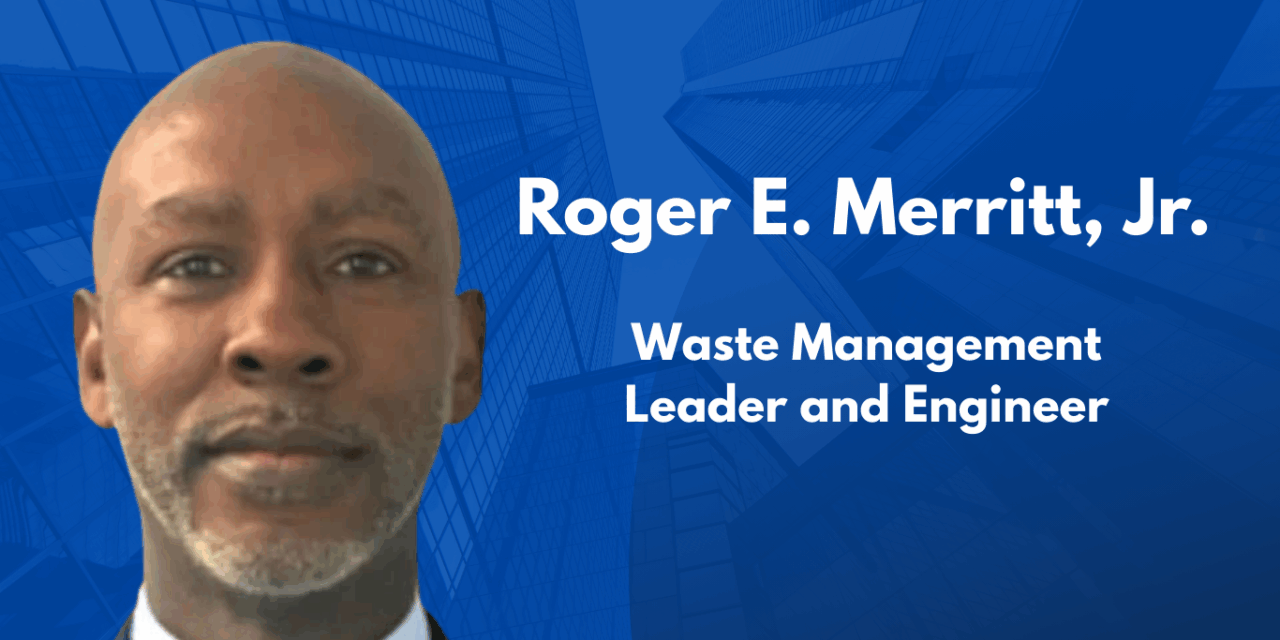
Roger E. Merritt, Jr. has spent nearly 30 years building a career that few notice but everyone depends on. He works in waste management—not the most glamorous field, but one that affects every community, every day. And that’s exactly what drew him in.
As a kid, Roger was always curious about how things worked. That curiosity led him to study civil engineering at Texas A&M University. But it wasn’t until he joined Georgia’s Environmental Protection Division that he saw how environmental systems connect to people’s lives.
He later moved into the private sector and took on bigger roles at Waste Management and EnviroSolutions. There, he led large teams, solved tough problems, and helped save millions in costs. Still, he stayed grounded. “It’s about getting things done right, not just fast,” he often says.
When hurricanes hit the U.S. Virgin Islands, Roger led the Waste Management Authority through the crisis. His calm and clear leadership made a big difference. He didn’t chase praise—he focused on service.
Roger also mentors young professionals. He teaches them that technical skills matter, but so do communication, respect, and follow-through. Many say his guidance helped shape their careers.
Today, through his own firm, REM Consulting, Roger E. Merritt Jr., advises global communities on sustainability. His work speaks for itself—quietly but powerfully.
In a world full of noise, Roger Merritt shows what steady, thoughtful leadership can do. Not by saying more—but by doing more.
What inspires you the most in your work and life?
I’m most inspired by systems that quietly keep the world running—like waste and wastewater infrastructure. People don’t think much about trash once it’s picked up, but that’s the point. Good systems are invisible when they work right. I’ve spent my life trying to build or fix those systems.
Also, seeing people grow in their roles—people I’ve mentored—has been a big source of inspiration. When someone you’ve coached gets promoted or handles a challenge better than they did six months ago, that sticks with you.
What first sparked your interest in engineering and environmental work?
As a kid, I wanted to understand how things were built. Roads, buildings, bridges—I’d watch crews work and think, “How did someone plan all of that?” That led me to study civil engineering at Texas A&M. Over time, I realized my passion was in infrastructure that protects people and the environment. That’s what got me into environmental engineering.
My early work with Georgia’s Environmental Protection Division gave me a close-up view of how regulations impact daily life. It wasn’t just paperwork—it affected communities, especially underserved ones. That opened my eyes to how engineering and public service could work together.
What’s an experience that taught you how to inspire confidence in a team?
In the U.S. Virgin Islands, I served as Executive Director of the Waste Management Authority. We had to manage everything—waste, wastewater, emergencies, natural disasters. When hurricanes hit, there was no time to hesitate. You can’t fake calm in a crisis. Your tone, your pace, how you listen—it all tells your team if they can trust you.
I had to build confidence not just in what I was saying, but in how I said it. That meant transparency: “Here’s what we know. Here’s what we don’t. Here’s what we’re doing next.” That kind of clarity is what helps people push through.
You’ve worked in both the public and private sectors. What inspires risk-taking in leadership?
Risk in my line of work is different from the start-up world. We’re talking about environmental risks, regulatory risks, financial risks—but you still have to move forward.
When I was Director of Landfill Engineering at EnviroSolutions, we made the decision to streamline operations across multiple states. That meant re-evaluating every dollar spent. Some leaders feared pushback, but I believed in the numbers. The outcome? We saved over $21 million. But the real win was showing the team that good data plus good judgment equals smart risk.
You don’t inspire people by being reckless. You inspire them by showing that taking action—when grounded in facts—is better than standing still.
How do you personally stay inspired over such a long career?
Mentorship is a big part of it. When someone you’ve mentored comes back years later to say, “That conversation we had changed my mindset”—that’s a real boost. I’ve always tried to lead by example. I’ll roll up my sleeves. I’ll listen before I talk.
Also, I read a lot. Not just technical manuals—things on leadership, crisis communication, international case studies. I’m still learning. That keeps you humble and inspired.
What’s your advice for someone trying to inspire others with their ideas?
Start by listening. Too many people rush to pitch without understanding the audience. Whether it’s your team, your boss, or a room full of stakeholders—if you haven’t taken the time to understand their concerns, your “great idea” won’t land.
Also, be ready to back up your ideas with data. At Waste Management, I didn’t win people over by being loud. I showed them how a plan could cut costs, reduce risks, or improve safety. That’s what builds trust.
And finally—do the work. People are inspired by consistency more than charisma. Show up prepared. Keep your word. Over time, people will follow that.
Looking back, what’s one decision that shaped how you inspire today?
Going back to school for my Executive MBA in Finance was pivotal. I already had an engineering background, but I wanted to understand the full business picture. That decision gave me the tools to bridge technical and financial conversations.
It also taught me the value of empathy. Because when you understand both sides—the people building the system and the people funding it—you can bring them together. That’s what real leadership is about.
About The Author