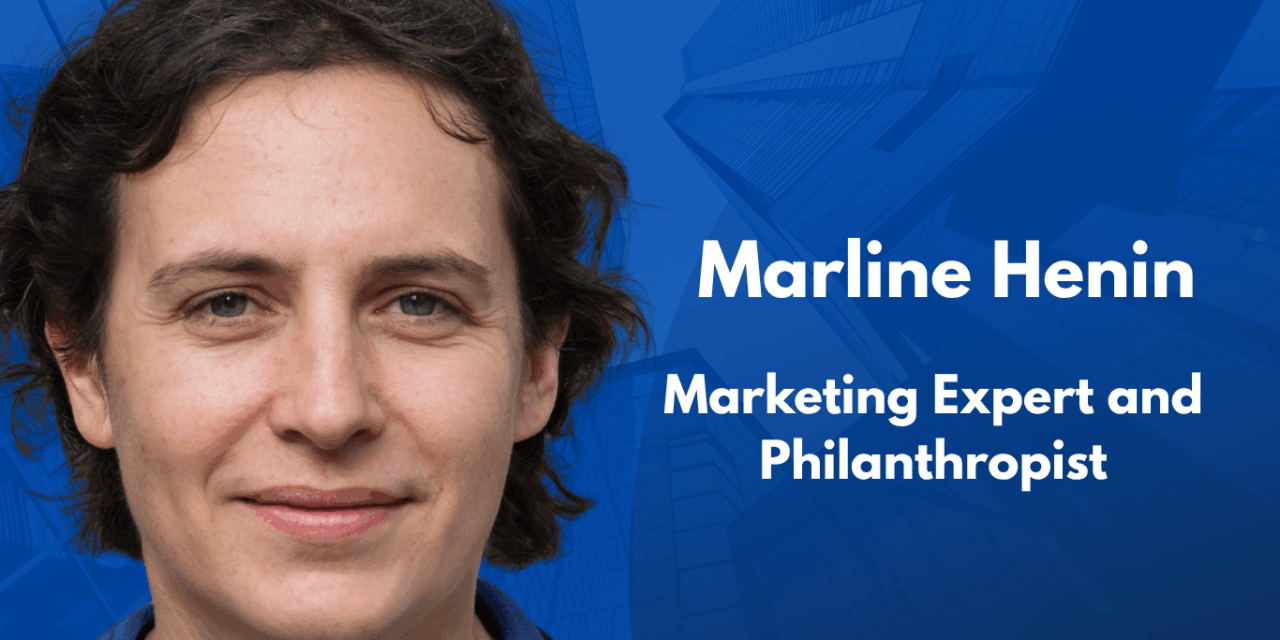
Marline Henin is a Canadian marketing strategist, business consultant, and founder of a boutique consultancy that helps companies unlock transformative growth. With over a decade of experience and an MBA specializing in marketing and strategic planning, Marline has built a reputation for guiding brands from stagnation to market leadership through data-driven insights, brand alignment, and customer-centric strategy. She began her career as an intern at a small enterprise, quickly rising through the ranks thanks to her analytical mindset and innate ability to connect strategy with execution. Within five years, she launched her firm and has helped clients scale revenue from modest figures to multi-million-dollar benchmarks. Her disciplined and empathetic approach combines metrics with market psychology to drive lasting impact.
Beyond business, Marline is a committed philanthropist who focuses on supporting homeless children. Her work reflects a deep belief that financial success is not the only measure of success, but that lives touched in the process of success also matters. Today, Marline continues to consult internationally while mentoring young women in business and using her platform to advocate for ethical growth, inclusive leadership, and community impact. Her journey is a testament to resilience, purpose, and the power of aligning professional strategy with personal values.
What inspired you to transition from interning at a small firm to launching your own consultancy and helping businesses scale globally?
When I started as an intern, I was fueled by curiosity and a desire to learn. I didn’t come from a business family or have insider connections. I just knew I wanted to understand what made companies thrive or fail. Over time, I noticed a recurring pattern: companies with incredible potential were underperforming not because of a bad product, but due to a fragmented or outdated strategy. That realization sparked something in me. I wanted to help businesses unlock that dormant potential. Launching my own consultancy was both a leap of faith and a deliberate decision to make a more profound impact across industries, markets, and communities.
Throughout your journey, was there a particular moment or client success story that reaffirmed your purpose in this industry?
There’s one story that stands out above the rest. I worked with a mid-sized client stuck at a $5 million annual revenue ceiling for several years. The owners were passionate, the product was solid, but their brand positioning and marketing strategy hadn’t evolved with the market. After conducting a full audit and reworking their go-to-market plan, we rebuilt their messaging, restructured their channels, and refined their pricing model. Within three years, they hit $30 million. But what touched me most wasn’t the numbers; it was when the founder told me, “You didn’t just grow our business, you gave us a second chance at believing in ourselves.”
In your work with scaling businesses, what’s the most surprising challenge you see companies underestimate when trying to grow?
Many leaders underestimate how critical internal alignment is to external success. Businesses often focus heavily on customer acquisition, competitive analysis, or digital ad spend, but overlook the importance of ensuring their teams are unified around a shared vision. Growth puts stress on systems and people. Scaling can amplify weaknesses rather than strengths without a cohesive culture and transparent internal communication. Great marketing campaigns fell flat because the customer experience wasn’t aligned with the brand promise. Sustainable growth demands more than tactics; it requires a mindset shift at every level of the organization. That’s a harder sell, but it’s where transformation truly begins.
How has your marketing and strategic planning background influenced your philosophy on long-term business growth?
Marketing and strategy are often treated as separate disciplines, but must operate in tandem. Strategic planning gives you the roadmap, and marketing is the vehicle that takes you there. My MBA gave me the theoretical framework, but real-world experience taught me the nuances. I don’t believe in short-term fixes or hype-driven tactics. Growth that lasts is rooted in knowing your market, positioning your brand authentically, and continuously listening to your customers. My approach blends analytical rigour with creative adaptability. It’s about staying data-informed but people-focused. That fusion is what allows businesses not just to grow, but to evolve with purpose.
You’ve donated significantly to causes supporting homeless children. What motivated your philanthropic work, and how does it intersect with your professional identity?
Philanthropy is deeply personal to me. I’ve seen what it means to grow up with uncertainty and the impact that even small acts of generosity can have on someone’s life trajectory. Supporting homeless children is about giving dignity, not just donations. These kids are often forgotten, but they have dreams like anyone else. In my professional life, I help companies unlock growth potential. In my philanthropic work, I try to do the same, unlocking human potential buried by circumstance. I don’t see the two worlds as separate. True success is when your work and values align to serve something bigger than yourself.
Many women in business face structural challenges when launching their ventures. What were some hurdles you had to overcome as a female founder, and how did you push through them?
Starting out, I encountered scepticism about my age, experience, and expertise. It wasn’t always overt, but it was there. I often had to prove myself twice over to be taken seriously, especially in boardrooms dominated by older, male decision-makers. At times, I questioned whether I truly belonged. But I leaned into results. I focused on delivering value, refining my approach, and building a reputation rooted in integrity and performance. Over time, those early doubts, mine and theirs, began to fade. I also sought out strong male and female mentors who helped me reframe setbacks as stepping stones, not dead ends.
You’re known for your data-driven yet human-centric approach to marketing. How do you blend those two seemingly opposite elements in your work?
I don’t see data and empathy as opposites; they’re two sides of the same coin. Data tells you what is happening; empathy tells you why. A campaign might show a high bounce rate, but that doesn’t mean the traffic is bad; it could mean the messaging doesn’t resonate. I always start with the numbers, but I never stop there. I want to understand the human behaviour behind them. What are customers thinking? Feeling? Struggling with? That’s where real insight lives. The best marketing doesn’t just sell, it connects. And to connect, you have to care about the people on the other side of the screen.
Looking ahead, what is your broader vision for the next chapter of your consultancy, and how do you hope to impact your clients and the wider community?
In the coming years, I want to expand my consultancy’s reach into more purpose-driven sectors, education, health, and sustainability, where marketing can do more than drive profit; it can drive progress. I’m also passionate about mentoring young women entering the business world. I want to create a structured program where they can access resources, advice, and real opportunities to lead. On the client side, I focus on helping companies grow with integrity. That means building strategies that honour both their business goals and the communities they serve. Business can be a force for good, and I want to be part of shaping that narrative.
What advice would you give aspiring entrepreneurs, especially women, who are just starting and may be doubting their ability to lead and scale a business?
My first advice is that you are more ready than you think. Doubt is normal; it means you care. But don’t let it paralyze you. Instead, use it to stay sharp and humble. Surround yourself with people who challenge and support you. Learn to listen but also to trust your instincts.
Most importantly, redefine what leadership looks like. You don’t need to be the loudest in the room to lead effectively. You just need clarity, consistency, and courage. There will be moments of failure, which will shape your resilience. Success isn’t about having all the answers; it’s about being willing to figure them out.
Finally, when you reflect on your career so far, what do you consider your greatest accomplishment, not in terms of revenue, but in meaning?
It’s the moments when I’ve helped someone, whether a client, colleague, or mentee, see themselves differently. Numbers are great, but they’re fleeting. The conversations stay with me where someone says, “Because of you, I believed I could do this,” or “You helped me see a way forward when I felt stuck.” That’s legacy. That’s impact. Whether it’s turning around a business or helping a young professional find their voice, those moments remind me why I do what I do. The real accomplishment isn’t in the milestones, it’s in the ripple effect that continues long after the work is done.
About The Author