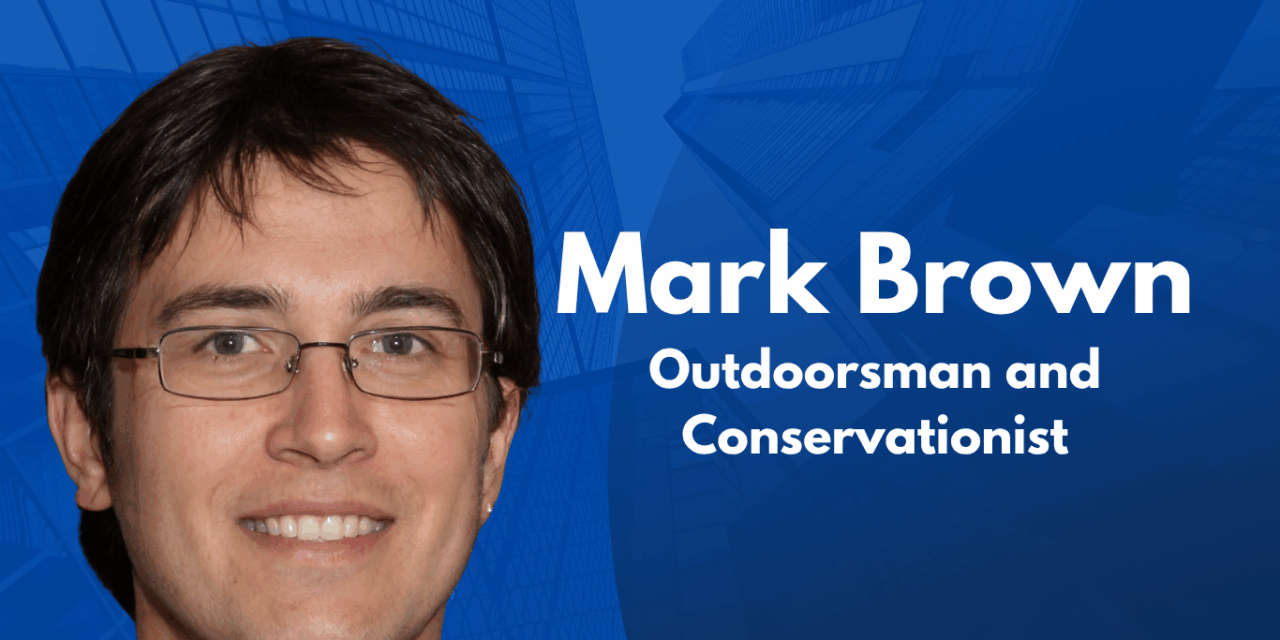
Mark Brown is a seasoned outdoorsman and nature advocate proudly based in northeastern Iowa, serving the communities of Waverly, Waterloo, and Cedar Falls. In his early-50s, Mark has dedicated much of his life to exploring the natural world, becoming a local expert in tree and plant identification, woodworking, and wilderness skills. Whether he’s hiking wooded trails, mushroom hunting, fishing Iowa’s rivers, or sharing stories around a campfire, Mark brings knowledge and heart to everything he does.
Deeply connected to the Iowa landscape, Mark is a passionate conservationist, regularly involved in tree planting initiatives, community clean-ups, and outdoor education. He’s well-known in the Cedar Valley region for hosting hands-on workshops that focus on woodworking, foraging, and outdoor living—helping others reconnect with nature and build practical skills along the way.
Beyond Iowa, Mark has traveled extensively to national parks across the U.S., combining his love for the outdoors with a strong interest in American history, geography, and cultural storytelling. He brings those experiences home by leading talks and events that inspire curiosity about the world and a deeper respect for the environment.
An active member of his local church, Mark finds balance through faith, community service, and a lifelong passion for wrestling, both as a sport and an enduring tradition. He often mentors local youth and shares his knowledge of the sport’s historical roots.
Grounded in Iowa values and fueled by a spirit of adventure, Mark Brown is a trusted voice in outdoor education, environmental stewardship, and community engagement throughout Waverly, Waterloo, and Cedar Falls.
Tell us about your earliest memories of being outdoors in Iowa. How did your passion for nature begin?
Some of my earliest memories are of wandering through the woods near my childhood home in Cedar Falls, Iowa. I was probably five or six when I started noticing the shapes of leaves, the way tree bark felt under my fingers, and how the landscape changed with the seasons. My father used to take me fishing at a local creek, and we’d hike through wooded trails, just the two of us. I think it was that combination of solitude and connection that really sparked something in me. Nature became a quiet place where I felt free, grounded, and curious all at once.
How has growing up in the Cedar Valley region influenced your approach to conservation and environmental education?
Living in the Cedar Valley—where Waverly, Waterloo, and Cedar Falls come together—has given me a strong sense of how deeply people can be tied to a landscape. The rolling fields, the rivers, the oak-hickory forests—those are more than backdrops, they’re part of our identity here. I think that’s why I take such a personal approach to conservation. It’s not just about saving trees or protecting land—it’s about preserving a sense of place, a way of life. When I speak to kids or church groups, I try to make that connection clear: nature isn’t “out there,” it’s part of who we are as Iowans.
You’re known for being both a naturalist and a storyteller. How do those two identities connect for you?
For me, being a storyteller is just an extension of being a naturalist. I’ve always believed that facts alone don’t move people—stories do. I could give you the Latin name of a tree, or I could tell you how a white oak can live for hundreds of years and might have witnessed generations of families pass beneath it. The second version sticks. That’s how I approach education and advocacy. I don’t just want to teach people about the environment—I want them to feel something. When people connect emotionally to nature, they’re more likely to protect it.
Faith plays a big role in your life. How does your spirituality shape your relationship with the outdoors?
Absolutely—it’s at the heart of everything I do. I believe that the natural world is one of the clearest ways we experience God’s presence. When I walk through a forest, I see divine craftsmanship in every branch, every mushroom, every birdsong. My faith teaches stewardship, not ownership. I often speak at local churches in Waverly and Cedar Falls, blending scripture with ecological insight. One of my favorite verses is from Psalms: “The heavens declare the glory of God; the skies proclaim the work of his hands.” That’s how I view nature—sacred, alive, worthy of reverence and care.
You’ve visited over 30 national parks. What inspired those travels, and what have you learned along the way?
I think it started with a trip to Yellowstone when I was in my early twenties. Seeing that vast, untouched wilderness changed me. Since then, I’ve made it a point to visit as many parks as possible—Glacier, Everglades, Grand Teton, Shenandoah, you name it. Each one has taught me something different: the fragility of ecosystems, the resilience of wildlife, the cultural stories embedded in landscapes. But I always bring those lessons back home. I tell folks in Iowa that we don’t need to go far to experience wonder—we just need to learn how to see it in our own backyards.
You work a lot with youth in Iowa. Why is environmental education for kids so important to you?
Because they’re the ones who will shape what Iowa looks like in 50 years. I lead workshops in schools across Waterloo and Waverly, and I’m always struck by how naturally curious kids are. If you show them a leaf and tell them it can “breathe,” they light up. But they also need guidance—someone to show them how to care, how to ask questions, how to get involved. I want them to understand that the outdoors isn’t just a weekend activity—it’s a lifelong relationship. If we can instill that early, we’re setting the stage for a more thoughtful, responsible generation.
You’ve started sharing your knowledge through digital platforms, too. How has that changed your outreach?
Going digital was a big shift for me, but a necessary one. My video series “Sunday in the Woods” started during the pandemic as a way to keep people connected to nature while stuck at home. Now, it’s become a regular part of how I share lessons on ecology, history, and faith. I also use Pinterest, Medium, and even GitBook to post guides on tree identification and native gardening. These platforms allow me to reach folks who might never attend a live event. And what’s great is that the digital audience is just as engaged—they send questions, share stories, and join the conversation.
What do you think Iowa communities can do better when it comes to environmental responsibility?
I think we need to shift our mindset from “using” land to “partnering” with it. That means planting native species, supporting sustainable agriculture, protecting wetlands, and making room for green spaces in urban planning. We also need more public education—not just in schools, but in churches, community centers, and town halls. I’d love to see more local ordinances that support tree preservation and pollinator gardens. But more than policy, we need a cultural shift. When people see nature as part of their heritage, not just a resource, they start to act differently. That’s what I’m working to inspire.
You’ve recently launched an initiative called “Iowa Wild Roots.” What’s the goal behind that project?
“Iowa Wild Roots” is about reconnecting communities to native plants and outdoor spaces, especially in schools and churches. We’re creating small but impactful native gardens—places that serve as outdoor classrooms, pollinator havens, and spots for quiet reflection. The idea is simple: start small, grow big. A patch of prairie grasses in a churchyard can lead to conversations about creation care. A butterfly garden at a school can spark a student’s lifelong love of science. I want people to realize that restoration doesn’t always require massive funding—sometimes it starts with a shovel, a seed, and a story.
What keeps you motivated in this work, especially when progress can feel slow?
It’s the small moments. A third grader pointing out a red oak and getting it right. An elderly couple thanking me after a church talk because it reminded them of their childhood farm. A single parent telling me that their teen now wants to study environmental science. Those moments are proof that it’s working—that stories still matter, that connection still matters. I don’t need big accolades or sweeping change overnight. I just need to know that I helped someone see the world a little differently. That’s what keeps me walking the trails, planting the seeds, and telling the stories.
About The Author