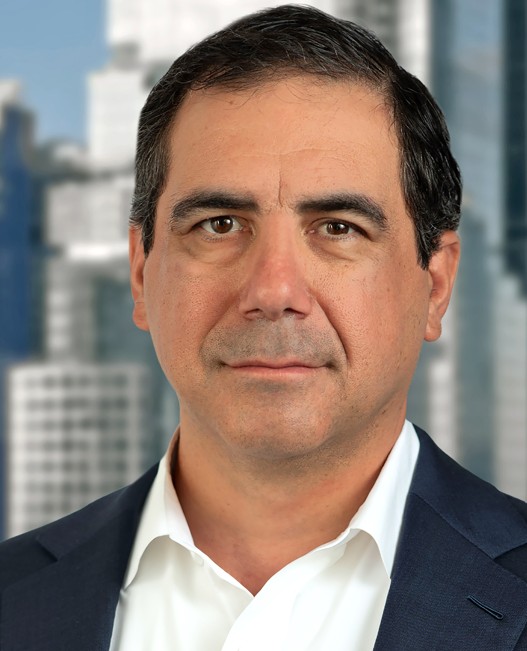
Philip Ashton-Rickardt has spent much of his career working in places where there is no obvious roadmap.
Raised in a working-class family in the UK, he learned early that progress often meant finding his own way forward. He studied at King’s College London and later earned a PhD in Molecular Immunology from the University of Edinburgh before moving to the United States for postdoctoral research at MIT.
An academic career followed, with professorships at the University of Chicago and Imperial College London. But Ashton-Rickardt’s path did not stay within academia. In 2017, he made a major shift. He returned to Boston and founded Smith Therapeutics, beginning a new chapter as a biotech entrepreneur.
That move shaped much of how he now thinks about uncertainty. Rather than seeing confidence as having every answer, he sees it as being willing to keep moving when the outcome is unclear.
His work has since included senior scientific and R&D leadership roles at Sigilon Therapeutics, Flagship Pioneering, Halyard Therapeutics, and BE Therapeutics, where he currently serves as Managing Director and Chief Scientific Officer.
Across those roles, he has remained focused on creating new approaches in engineered cell therapies and helping early ideas become serious scientific programmes.
Outside work, Ashton-Rickardt reads, writes, runs, and follows Liverpool Football Club. He also places a high value on family, curiosity, continual learning, and setting his own measure of progress rather than relying entirely on outside approval.
You have spent your career working on ideas that may take years to prove. How do you stay confident when you cannot know the outcome?
I do not think confidence means convincing yourself that something is definitely going to work. Science teaches you very quickly that you can be wrong, so for me confidence comes from having a strong reason to take the next step. I ask whether the question is important, whether there is enough evidence to keep going, and whether there is something valuable to learn even if the original idea changes.
That is different from blind optimism because you can believe strongly in an idea while still being willing to change it. I think the best kind of confidence leaves room for new evidence.
Has that always come naturally to you?
I grew up in a working-class family in the UK, and there was not a clear path laid out for me into science or academia. I had to chart my own progress through university and then into research, which meant becoming comfortable with uncertainty quite early.
Looking back, that was probably good preparation for starting companies. You learn to find the next door yourself rather than waiting for somebody else to point toward it, and you also learn that you do not always need to see the entire route before beginning.
You spent many years in academia before moving into biotech. What made you willing to start again in a different environment?
There was a difficult period during my time at Imperial College when I had to think seriously about what I wanted the next stage of my career to look like. I eventually decided that I wanted to leave academia, return to Boston, and start a company.
What interests me about that decision now is that it did not feel like a neat career progression at the time. It felt like a genuine risk because I was leaving a world I understood very well for one where I would have to learn quickly. Over time, I came to realise that staying with something familiar simply because you already know how to do it can also become a kind of risk.
How do you know when an idea deserves more confidence and when it is time to change direction?
I think you have to separate attachment to the idea from attachment to the problem. If the problem is important, there may be several ways to approach it, but scientists can become very attached to the first mechanism, platform, or hypothesis they believe in. Entrepreneurs can do the same thing.
I try to stay curious enough to ask whether the evidence is actually taking us somewhere different. Flexibility matters because changing your approach is not necessarily an admission that you failed. Sometimes it is simply evidence that you learned something important.
What makes you trust someone else’s idea?
I pay close attention to how people respond to questions because somebody who has thought deeply about an idea usually does not need to pretend there are no weaknesses. They can tell you what they know, what they do not know, and what experiment or piece of evidence might change their mind.
That creates much more confidence for me than someone who sounds completely certain about everything. Curiosity also matters because the people I enjoy working with tend to ask good questions, even when those questions make the project more complicated.
Do you think leaders sometimes feel pressure to appear more certain than they really are?
There is definitely pressure to project confidence when people are looking to you for direction, but I think there is an important difference between providing direction and pretending to know the future. In biotech, there are simply too many unknowns for that kind of certainty to be realistic.
A leader can say that a decision is the best choice based on what the team knows today while still leaving room for that decision to evolve. I think that can create more confidence in a team because people understand that they are allowed to surface new information instead of defending yesterday’s assumptions.
When you doubt yourself, what helps?
I think back to periods that were harder because that gives me perspective. Problems that feel enormous in the moment often become more manageable when you remember what you have already worked through.
I also try to take things one step at a time rather than feeling that I need to solve the next five years immediately. My family is also a major part of that perspective, and balancing career with family has become increasingly important to how I think about success.
You have moved between universities, established biotech companies, startups, and investment environments. Has your definition of success changed?
I think I am less interested now in using somebody else’s scorecard. I have my own standards, and success has more to do with being authentic, continuing to learn, working on things that have a real reason to exist, and being present for my family.
Titles and institutions change throughout a career, so your own standards have to travel with you. That has become more important to me than chasing a particular version of what success is supposed to look like.
What do you hope younger scientists or entrepreneurs learn from watching your career?
I hope they see that careers do not have to be perfectly linear. You can spend years becoming good at one thing and still decide to use that experience differently, whether that means moving countries, leaving a secure position, or starting again later in your career.
Resilience matters, but so does flexibility. Hard work matters, but curiosity keeps you from simply repeating what you already know. I think the most important thing is remaining willing to create something new and meaningful, even when there is no guarantee that it will work.
About The Author