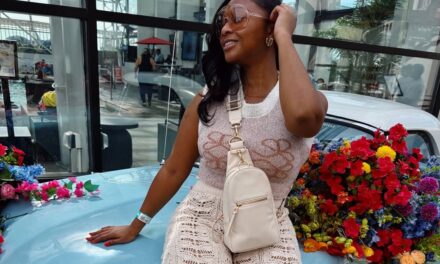
Timothy Caraboolad is an entrepreneur, real estate developer, and designer who has built luxury homes through Arc Design and, more recently, Lad Design in South Florida. He also co-founded Native Sun Wellness, a Massachusetts cannabis dispensary company, and Holland Brands, a recreational retail venture. In this Q&A, he looks back at his own path and talks about what he would change if he were starting over.
You’ve built businesses in real estate and cannabis. If you were starting from scratch today, would you do it in the same order?
Probably not. I got into construction because it was in front of me, my father’s company, a chance to learn on job sites instead of in a classroom. That part I wouldn’t change. But I spent a lot of years managing renovation projects in Brookline and Newton before I let myself start Arc Design on my own terms. If I were starting again, I’d give myself permission to run my own projects sooner. I learned a lot working under someone else’s business, but I also know now that I was ready earlier than I let myself believe.
What’s the biggest mistake you made early on that you wouldn’t repeat?
Underestimating how much time good design takes on the front end. Early in Arc Design, I wanted to move fast, get from concept to construction quickly, because that felt like progress. What I learned is that the projects that went smoothest were the ones where I slowed down at the start, before a single wall went up. Rushing the planning phase to feel productive is a mistake I see other developers make too, and it’s one I had to make myself before I believed it.
Native Sun Wellness came out of a personal experience with your mother’s illness. Looking back, is there anything about how you approached that business you’d handle differently?
I’d have trusted my instincts about the customer experience sooner. When I started Native Sun, I was so focused on the regulatory and licensing side, which was necessary, that I let some early decisions about how the stores actually felt get pushed down the priority list. My father and I were building something meant to feel welcoming and professional, not clinical or intimidating. That instinct was right from the beginning. I just wish I’d trusted it with the same confidence I had about permitting and location.
Did construction teach you anything that you had to unlearn once you moved into cannabis retail?
Construction teaches you that a plan is a plan, and once it’s approved you build to it. Cannabis retail moves differently. Regulations shift, customer behavior shifts, and a floor plan that made sense six months earlier can stop making sense once a store is actually open and you see how people move through it. Early on I held onto layouts too tightly, the way you would hold onto a set of architectural drawings. I had to learn to treat a retail space as something you keep adjusting even after it opens.
You’ve run design-driven businesses and retail businesses. Is there a decision-making habit from one that you wish you’d applied to the other sooner?
Yes. In design work, I never sign off on a finish or a material without seeing it in person, in the actual light of the actual room. It sounds obvious, but I didn’t apply that same rigor to retail early on. I made a few decisions about store layout and fixtures based on drawings and vendor samples instead of walking the actual space at different times of day. Once I started treating retail buildouts with the same on-site scrutiny I use for a home, the results got noticeably better.
If you were advising a younger version of yourself just starting Arc Design, what would you tell him?
Stop trying to prove you can do everything at once. When I started Arc Design, I wanted to be involved in every decision, from the development plan down to the doorknobs, partly because I could and partly because I felt like I needed to justify going out on my own. Staying close to the details is still how I work today, and I don’t regret that. But I’d tell him to build a team he trusts faster, instead of waiting until he was stretched thin to admit he needed one.
Looking at Lad Design now, what does it represent that Arc Design didn’t fully get to?
Lad Design is really the continuation of everything I learned running Arc Design, but with a clearer sense of what I actually want a home to feel like before construction starts. Working in South Florida has changed how I think about that too. Homes here live differently than homes in Boston, more outdoor space, more attention to light and airflow. If I were starting Arc Design again knowing what I know now, I’d have arrived at that clarity years earlier instead of learning it project by project.
Is there a decision outside of work, something in how you live, that changed how you approach the business side?
Spending time outdoors, skiing in Aspen or fishing off the coast of Florida, taught me patience in a way that running a business never did on its own. You can’t force a good day of fly fishing any more than you can force a construction schedule. Both require you to read conditions and adjust. I didn’t always apply that patience to work early on. I wanted things to move on my timeline. Now I’m quicker to recognize when a project or a business decision needs more time, not less.
If you had to name one thing you got right from the very beginning, what would it be?
Staying close to the details. Whatever else I’d change about the order of things or how quickly I moved, I never regretted being the person who shows up to check the finishes myself. That part of how I work hasn’t changed since the first renovation project in Brookline, and I don’t expect it to.
About The Author