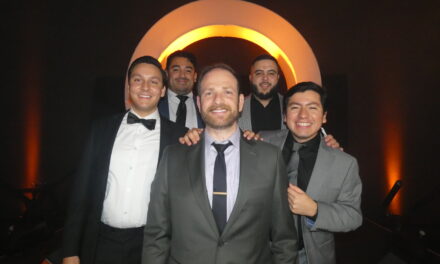
The Radiology Group started with a simple idea in 2005—use new technology to help small-town hospitals. Drs. Anand and Tejal Lalaji had just finished training at Wake Forest University when they moved to rural Georgia with Dr. Mahendra Patel, their father and father-in-law. They opened their first service in a local hospital where few specialists were available. Most doctors at the time still used hard-copy films, but the Lalajis believed in something new: reading images digitally from anywhere. It was the early days of teleradiology.
Instead of chasing big hospital contracts, they chose to stay small and focus only on rural communities. They had lived in these towns. They knew what they needed. It wasn’t just speed—it was connection. Today, The Radiology Group is one of the last teleradiology practices still run by doctors and not private equity.
They built more than a service. They built trust. TRG sends its doctors on regular visits to their hospital partners. They offer a free, secure app so doctors in the field can text or call a radiologist instantly. They make themselves known—not just in reports, but in person.
In a time when many rural hospitals are forgotten, The Radiology Group shows up. They’ve proven that care doesn’t need a big name or a big city to be excellent. It just needs people who remember where they came from—and who are willing to build something better, one quiet town at a time.
Q&A with The Radiology Group: Rooted in Rural Care, Fueled by Quiet Confidence
How a small practice built on connection, clarity, and calculated risk found its place in modern medicine
Q: Where did the inspiration for The Radiology Group originally come from?
A: It started with noticing a gap. In 2005, we—Drs. Anand and Tejal Lalaji—had just finished our training at Wake Forest University. He specialized in musculoskeletal radiology; she in neuro and breast imaging. We saw how the rise of digital transmission and high-speed internet could change everything. Instead of needing to be physically present in a hospital, radiologists could read studies remotely. This was the start of teleradiology, even before it was common. The idea wasn’t to build something revolutionary—it was to use what we had, quietly and effectively, to serve the people who were being left behind.
Q: How did you know this idea was worth the risk?
A: We didn’t, at least not at first. But we knew rural hospitals were struggling to get subspecialty reads. In northeast Georgia, where we settled, we heard firsthand from hospital staff that they were often waiting hours, sometimes days, for reads. We thought, “If we can reduce that wait to minutes—and actually talk to the referring provider when they need us—that would change things.” The risk wasn’t just business. It was personal. We moved our family, gave up job offers, and chose uncertainty over stability. But the need was real, and that grounded us.
Q: What kept you going when you faced early challenges?
A: Trial and error, and stubborn belief. In the beginning, we had issues with bandwidth, server failures, dropped reads. Some hospitals were hesitant to work with a new group using digital reads. But every time something went wrong, we asked two things: “How can we fix it?” and “How can we make sure this doesn’t happen again?” That mindset helped. So did the relationships we built with hospital staff. We weren’t just sending in reports—we were visiting them, having meals in their cafeterias, walking their halls. That connection created a kind of trust that made the early bumps survivable.
Q: What inspires you to keep building this kind of business today?
A: Honestly, it’s the people we serve. Rural hospitals are often overlooked by large systems. They’re told their volume is too low or their location is too remote. But they still have patients showing up at 2 a.m. with strokes or fractures or unknown masses. They still need answers. The fact that we can be a reliable part of that moment—in a quiet way—still inspires us.
Also, our team. Radiologists can burn out easily, especially in remote work. We work hard to support them—technically, professionally, and emotionally. If they feel cared for, the work reflects that.
Q: How do you inspire confidence in others—your team, your hospital partners, your community?
A: We show up. That’s the simplest answer. Whether it’s onboarding a hospital, answering a 3 a.m. text from an ER doctor, or troubleshooting a PACS issue side by side with a tech team, we believe confidence grows from presence. Also, we’re not afraid to say “I don’t know, but I’ll find out.” That honesty has carried us far.
We’ve also kept things simple. Our name is The Radiology Group. No flash. That was on purpose. If we can do the basics—reads, turnaround time, communication—better than anyone else, that’s where confidence builds.
Q: Was there a moment you took a risk that really defined your path?
A: There was a time we were offered a contract with a large urban hospital. Financially, it would’ve been a big win. But it didn’t align with our mission. Their systems were rigid. The communication wasn’t personal. Their expectations were volume-driven, not patient-centered. We walked away from it. That was scary. But it reminded us that focus is strength. We’ve only served rural hospitals since then, and we’ve grown because we became known for that.
Q: What’s one thing people misunderstand about success?
A: That it has to be loud. That growth has to be exponential. For us, success looks like a hospital director emailing at midnight to say thank you for a fast read. It looks like a radiologist saying they finally feel supported after years in larger systems. Success can be steady, quiet, and deeply meaningful—even if no one’s writing headlines about it.
Q: If someone wants to build something meaningful, what should they focus on first?
A: Know who you’re for. Don’t try to please everyone. For us, it was rural hospitals. That decision filtered every other one. We built our systems, schedules, and communication around them. When you know your audience, you stop guessing—and you start delivering.
Key Learnings:
- Clear focus—like serving rural hospitals exclusively—leads to stronger, more trusted outcomes.
- Confidence is built through consistency, presence, and human connection, not just performance.
- Saying no to opportunities that don’t align with your mission can define your path.
- Quiet, meaningful success can outlast flashy, fast wins.
- Showing up—even virtually—remains the foundation of trust and inspiration in service work.

About The Author