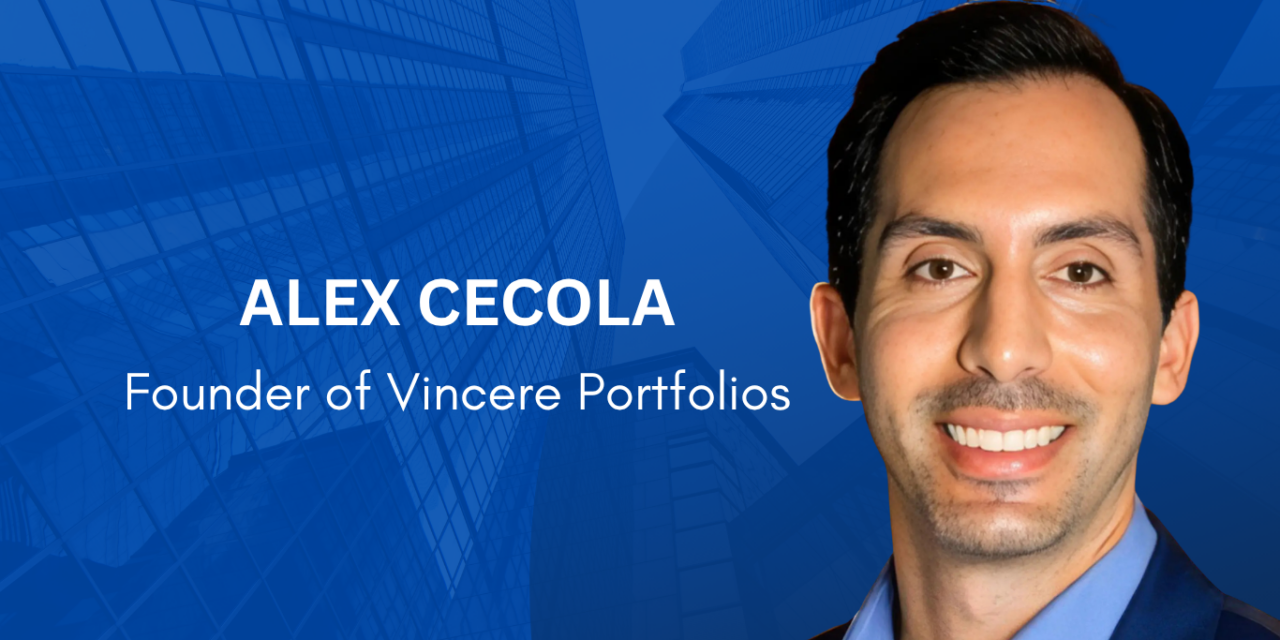
Alex Cecola is the Founder of Vincere Portfolios, a trading technology company focused on making institutional-grade systematic trading tools more accessible to individual investors. Based in Chicago, Illinois, he has spent years studying both discretionary and algorithmic trading approaches, developing a deep understanding of risk management, strategy evaluation, and performance analysis. His work centers on helping traders move beyond emotion-driven decision making and toward disciplined, data-based processes.
Before launching Vincere Portfolios, Cecola invested significant time researching trading systems, market behavior, and quantitative strategies. Through firsthand experience, he recognized that many retail traders lacked access to the type of technology, transparency, and structured methodologies commonly available to large institutions. That realization became the foundation for the company he would eventually build.
Under his leadership, Vincere Portfolios has focused on developing systematic trading solutions designed to bring greater consistency and efficiency to the trading process. The company emphasizes automation, transparency, and education, with a goal of helping traders better understand both the opportunities and risks associated with financial markets.
Cecola believes that long-term success comes from process, preparation, and disciplined execution rather than short-term speculation.
Today, Alex Cecola continues to lead the strategic direction of Vincere Portfolios while
contributing to conversations surrounding algorithmic trading, market technology, and investor education. His work reflects a commitment to bridging the gap between institutional infrastructure and individual market participants seeking a more structured approach to trading.
What first drew you to trading, and was there a specific moment that pulled you in?
It started almost by accident. I was studying markets out of curiosity more than any grand ambition, trying to understand why prices moved the way they did and why so many traders relied on instinct instead of process. The moment that really pulled me in was realizing how much of trading came down to discipline rather than prediction. Once I saw that structure mattered more than gut instinct, I couldn’t stop researching how systematic approaches worked. That curiosity eventually turned into something more serious, and it became the foundation for everything I would later build.
What led you to start Vincere Portfolios?
I spent years researching trading systems and noticed a clear gap between institutional and retail investors. Institutions had access to sophisticated tools, rigorous testing, and structured risk management, while most individual traders were left with guesswork, emotion, and marketing promises that rarely held up. Vincere Portfolios came from wanting to close that gap directly. I wanted to give everyday traders access to the kind of disciplined, systematic approach that had traditionally been reserved for larger firms with more resources, more data, and more experience managing risk across changing market conditions.
You’re based in Chicago. Does the city influence how you think about markets?
Chicago has trading in its bones, from the exchanges downtown to the culture surrounding risk and discipline that’s built into the city itself. Being here keeps me close to people who think about markets seriously rather than casually, which shapes conversations in ways that matter. It’s a practical city, and that practicality influences how I approach strategy too. I’d rather build something reliable and repeatable than chase something flashy that only performs well when conditions happen to be perfect and predictable, which they rarely are.
How do you think about risk management differently than most traders?
Most traders think about risk after they’ve already taken a position, reacting emotionally once something starts to feel uncomfortable or unfamiliar. I try to think about it before anything happens, building rules that remove the need for a reaction in the first place. Risk management should be structural, not emotional, and it should hold up regardless of how someone feels in the moment. If you’re relying on willpower during a stressful trade, the system already has a problem that needs fixing long before the trade was placed.
Has there been a failure that shaped how you operate today?
Early on, I put too much weight on strategies that looked impressive on paper but hadn’t been tested across enough different conditions. When markets eventually shifted, the cracks in that thinking showed up quickly, and I had to confront how much I had overlooked. That experience taught me to respect testing and evaluation far more seriously than I had before starting out. Now, nothing gets built into our process without being challenged from multiple angles first, questioned repeatedly, and stress tested against scenarios we hope never happen.
Why is education such a big part of what Vincere Portfolios does?
Because trust doesn’t come from promises, it comes from actual understanding built over time. If someone doesn’t know how a strategy works, they’re just taking someone’s word for it, and that rarely holds up once markets get difficult or unpredictable. Education gives people the context to make informed decisions and stay committed to a process instead of abandoning it the moment things feel uncomfortable. It’s not a marketing tool for us; it’s part of building a relationship that can actually withstand pressure and doubt.
You talk a lot about transparency. What does that actually look like in practice?
It means being upfront about what a strategy can and cannot do, not just highlighting the wins while staying quiet about the limitations. It means explaining methodology in plain language instead of burying it in jargon that only specialists understand. Transparency also means consistency across everything; what we say publicly should match what we tell someone directly in conversation. If those things ever contradict each other, that’s a problem worth addressing immediately, because inconsistency is usually the first thing investors notice and remember.
What do you do to unwind outside of work?
Honestly, I still end up thinking about markets more than I probably should, even during time that’s supposed to be unrelated to work entirely. But I try to balance that by spending time outdoors and with people who have nothing to do with finance or trading. It resets my perspective in ways that staring at charts never could. Some of my clearest thinking about strategy actually happens when I’m not looking at a screen at all, which took me a long time to accept and trust.
Where do you see Vincere Portfolios heading in the next few years?
We want to keep expanding our research capabilities and refining our strategies as market conditions continue to evolve in unpredictable ways. Longer term, there’s a vision of building something closer to a hedge fund, grounded in the same discipline we apply to our current offering today. Growth doesn’t mean chasing size for its own sake though; it means scaling the process carefully without compromising the standards behind it. I’d rather grow slowly and stay consistent than grow quickly and lose what made the process work.
What advice would you give someone just starting to explore systematic trading?
Slow down before you commit real capital to anything you don’t fully understand yet. Take time to learn the methodology behind any strategy you’re considering, not just the returns it happens to be showing right now. Ask questions, compare multiple sources, and stay skeptical of anything that sounds too polished or too good. Systematic trading rewards patience and process above everything else. If you’re not willing to evaluate something honestly first, you’re probably not ready to trust it with your money yet.
About The Author