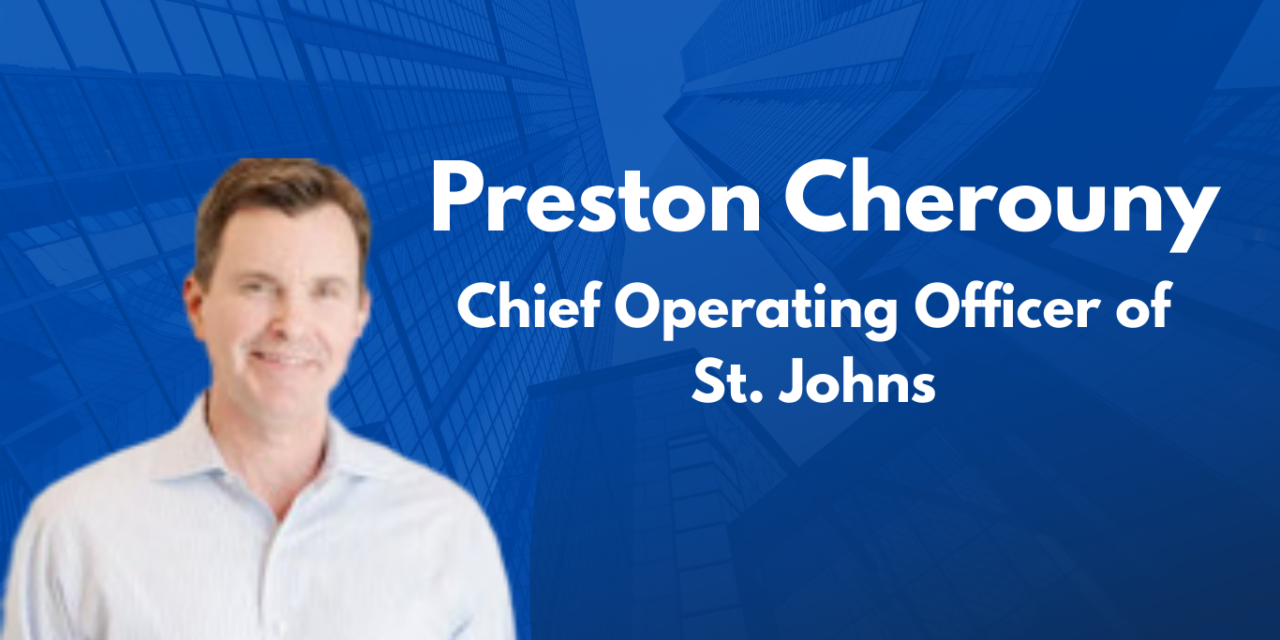
Preston Cherouny has spent much of his life learning how to steady himself through change, challenge, and growth—and the people around him have often found strength in the way he moves through the world. Born in Atlanta in 1965 and raised in Canton, Connecticut, he grew up in a home that valued humility, honesty, and patience. Those lessons stayed with him long after he left for Avon Old Farms School and later Skidmore College, where he studied American Studies and developed a love for golf that would follow him through every stage of life.
In the early 1990s, Preston Cherouny moved to Washington, D.C. He married his wife, Merrell, in 1993 at St. John’s Church, the same place where he would eventually build a meaningful career. Since joining the church staff in 2017, he has held roles as Financial Secretary, Interim Parish Administrator, and now Chief Operating Officer. His work is quiet but steady—focused on people, process, and keeping the community moving forward. Colleagues often note how he listens first, reflects, and then acts with intention.
Preston’s approach to life is shaped by moments of both success and setback. He has spoken openly about learning from his mistakes, slowing down, and rebuilding with care. His steady mindset has influenced those around him, showing that strength can look calm, thoughtful, and grounded.
Outside of work, he finds clarity on the golf course and gives back to schools and community groups that shaped him. In every chapter of his life, Preston’s presence has helped others find their own balance, simply by watching the way he finds his.
When you think about inspiration, what comes to mind first?
For me, inspiration has always come from everyday moments rather than big events. Growing up in Canton, Connecticut, I watched my parents handle challenges with humility and patience. My mother, Mary, had a calm way of dealing with stress, and my dad, Richard, believed in slowing down and doing things right. Those small examples stayed with me.
Later in life, the people who inspired me most were those who showed up consistently—my wife, Merrell, being at the top of that list. She supported me through some difficult seasons. Seeing someone stand by you teaches you a lot about what real strength looks like.
How do you try to inspire others in your work?
I’m not someone who gives long speeches or big motivational lines. My approach is quieter. I try to inspire by being steady, honest, and present. At St. John’s, where I’ve served since 2017, people come to you with their worries—financial concerns, staffing issues, personal struggles. They don’t need perfection. They need someone who will listen without judgement.
A staff member once told me that what helped her most wasn’t advice I gave but the fact that I paused, gave her my full attention, and let her speak without rushing her. Sometimes inspiration comes from the simplest gestures.
How do you inspire confidence in ideas within a team?
I ask people to walk me through not just the idea, but the “why” behind it. When you listen with real curiosity, people bring forward better work.
At one point, we were updating our reporting structure at the church. A younger employee suggested a completely different way of presenting budget summaries. I could tell she wasn’t sure if the idea would be taken seriously. Instead of giving a quick answer, I asked her to draft a mock version. She came back with something clearer than what we’d been using for years.
You inspire confidence by giving people the space to try—without fear of being dismissed.
How do you think about risk-taking in your career?
I’m not a natural risk-taker. I tend to move slowly and think carefully. But I’ve learned that risk doesn’t always mean jumping off a cliff—it can simply mean being willing to face something uncomfortable.
One of the biggest risks I took was stepping into leadership roles at St. John’s after working behind the scenes for years. Suddenly, people were looking to me for answers. I had moments where I felt unprepared. But I reminded myself that showing up honestly was better than pretending to have everything figured out.
Has failure ever inspired you?
Absolutely. My “big mistake,” as I call it, taught me more than any success ever did. I made a serious misjudgement earlier in my career and had to live with the consequences. What inspired me wasn’t the failure—it was the process of rebuilding.
I learnt how to forgive myself, accept responsibility, and move forward without hiding. That experience affects how I lead today. When someone on my team makes an error, I don’t react with frustration. I look for what can be learnt and how to put systems in place to avoid repeating it.
Where do you find inspiration now?
Oddly enough, on the golf course. At the University of Maryland Golf Course, I’ve had conversations with friends, mentors, and even strangers that helped me see problems in a new light. Walking between holes gives you time to reflect without distraction.
Golf teaches patience and humility. You can play beautifully on the front nine and fall apart on the back nine. The way you respond to that says a lot about who you are. I take that mindset into work and life.
What is one lesser-known habit that helps you stay inspired and focused?
I keep a small notebook specifically for “unfinished thoughts.” It’s where I write down ideas that aren’t ready yet—questions, worries, goals, anything. Most people only write when they have clarity. I write when I don’t have it.
Sometimes a note sits there for weeks before it clicks. Other times, it never turns into anything. But the act of capturing the thought gives me space to understand it later.
What do you think helped you get to where you are today?
Consistency. Not the glamorous kind—just the steady, everyday sort. I show up. I listen. I write down my goals. I slow down when things feel chaotic.
If I have inspired anyone along the way, I think it’s because they’ve seen me continue, even when things weren’t easy. People learn more from how you move through your struggles than from how you celebrate your wins.
About The Author