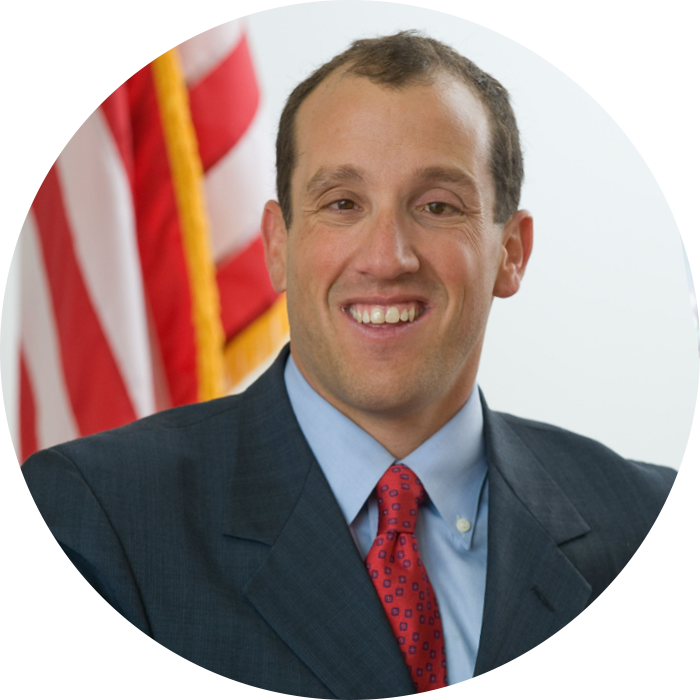
Richard Bernstein has spent much of his career focused on one idea: public spaces and public systems should work for everyone.
That idea shaped his path from law school graduate to disability rights attorney to justice on the Michigan Supreme Court. Along the way, he became known for pushing large institutions to rethink accessibility, fairness, and public participation in practical ways.
Today, Bernstein serves as the first blind justice in Michigan Supreme Court history. But his story did not begin in a courtroom. It began with learning how to navigate a world that often failed to consider people with disabilities in the first place.
“If a system excludes people, then the system needs to improve,” Bernstein said. “Accessibility should never be treated as an afterthought.”
How Richard Bernstein Michigan Built His Career
Richard Bernstein was born legally blind due to retinitis pigmentosa. Growing up, he learned quickly that many environments were designed without accessibility in mind.
Simple tasks often required extra planning. Public spaces could become obstacles instead of tools.
Still, Bernstein focused heavily on academics. He graduated summa cum laude from the University of Michigan before earning his law degree from Northwestern University School of Law.
He says discipline became one of the biggest factors in his success.
“I want to be prepared, thoughtful, and fair in every matter,” Bernstein explained. “Preparation matters more than image.”
That mindset later became central to his legal career.
Why Richard Bernstein Focused on Accessibility Law
Before joining the Michigan Supreme Court, Bernstein practiced law at The Sam Bernstein Law Firm. Much of his work centered on disability rights and public accessibility cases.
His cases were often tied to everyday issues people faced regularly.
“Accessibility cases are not theoretical,” Bernstein said. “They involve whether someone can enter a building, use transportation, attend school events, or participate fully in public life.”
One of the best-known examples involved Michigan Stadium.
Bernstein represented the Michigan Paralyzed Veterans of America in a case connected to stadium accessibility improvements. The resulting agreement expanded wheelchair seating, improved restroom access, added accessible routes, and upgraded parking accommodations.
The project later became viewed as a national model for accessibility in large public venues.
The case also changed how many organizations approached construction planning. Instead of treating accessibility like a late-stage adjustment, more groups began integrating it into early design decisions.
“When public spaces are designed properly, everyone benefits,” Bernstein said.
Becoming the First Blind Justice on the Michigan Supreme Court
In 2014, Bernstein was elected to the Michigan Supreme Court. He officially began serving in January 2015.
The election was historic. He became the first blind justice elected to the court.
Still, Bernstein has consistently avoided framing his career around symbolism alone. He focuses more on the responsibilities tied to the role.
“Courts affect everyday life,” he said. “Decisions impact families, workers, students, veterans, and people with disabilities.”
On the bench, Bernstein is known for detailed preparation and careful review of case records. He often speaks about fairness, equal access to justice, and the importance of public trust in legal systems.
He also believes leadership works best when it focuses on service rather than attention.
“Leadership is service,” Bernstein said. “The best leaders improve systems so other people have greater opportunity to succeed.”
Richard Bernstein’s Athletic Discipline Shaped His Mindset
Outside the legal world, Bernstein became known for something else entirely: endurance athletics.
Over the years, he completed marathons in cities including Detroit, New York, Los Angeles, Miami, and Jerusalem. He also participated in Ironman competitions despite being unable to see.
The training required strict routines and consistency. Bernstein says athletics reinforced many of the same habits he used professionally.
Then, in 2012, his life changed suddenly.
While fast-walking in Central Park, Bernstein was struck by a cyclist. The collision shattered much of the left side of his body and left him hospitalized for months.
Recovery was long and painful.
Many people expected him to slow down permanently.
Instead, Bernstein returned to training after recovering and completed another marathon the following year.
“Setbacks do not define you unless you allow them to stop your progress entirely,” he said.
That approach became one of the defining themes of his public image. Not because it sounded motivational, but because people saw it happen in real time.
Why Richard Bernstein Still Pushes for Better Accessibility
Today, Bernstein continues speaking publicly about accessibility, inclusion, and public participation.
He believes many organizations still misunderstand accessibility. Too often, it is viewed as compliance instead of smart planning.
That creates avoidable problems.
For example, public buildings may technically satisfy legal requirements while still remaining difficult to navigate in practical situations. Stadiums, transportation systems, schools, and businesses often overlook details that directly affect independence and participation.
Bernstein argues that accessibility improves experiences for everyone, not only people with disabilities.
Ramps help parents with strollers. Wider walkways improve crowd flow. Clear signage reduces confusion. Accessible entrances help seniors and injured visitors.
“People do not need to wait for a courtroom decision to improve accessibility,” Bernstein said. “Communities can evaluate whether public spaces are welcoming and whether people are being included fairly.”
According to the CDC, roughly one in four adults in the United States lives with some form of disability. Bernstein believes that statistic alone should change how organizations think about public design and infrastructure.
What Richard Bernstein’s Career Says About Long-Term Impact
Richard Bernstein’s career was not built through dramatic reinvention or flashy branding.
Instead, it developed through years of focused work around accessibility, public service, and practical problem-solving.
His story also reflects a larger shift happening across many industries. Accessibility is increasingly being treated as part of good design rather than a separate category.
That change did not happen automatically. It happened because advocates, attorneys, public officials, and community leaders kept pushing institutions to improve.
Bernstein remains part of that conversation today.
For him, the mission is still straightforward.
Equal access should not depend on luck, workarounds, or special treatment. It should be built into the system from the start.
About The Author